Last Updated: November 12, 2026
Last Updated: November 12, 2026





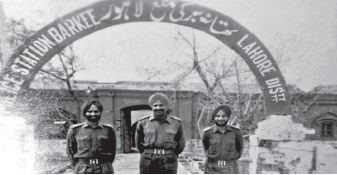
The war was notable for intense tank and infantry battles along the western front and unprecedented aerial combat. India made substantial territorial gains in Jammu and Kashmir, Punjab and Rajasthan while inflicting serious losses on Pakistan. It was the first major conflict fought across the international border since independence and tested India’s endurance and determination. (c)
September 2025 marks six decades since the India–Pakistan War of 1965, a conflict that remains a defining chapter in India’s military history. Beyond its immediate outcomes, the war carries enduring lessons on strategy, preparedness and national will. While it is a moment to honor the courage and sacrifice of soldiers who fought against heavy odds, it is also a time to reflect on the larger historical, tactical and strategic contexts that shaped the conflict and their relevance today.
The war was notable for intense tank and infantry battles along the western front and unprecedented aerial combat. India made substantial territorial gains in Jammu and Kashmir, Punjab and Rajasthan while inflicting serious losses on Pakistan. It was the first major conflict fought across the international border since independence and tested India’s endurance and determination.
Pakistan’s Miscalculation
The seeds of the war were rooted in Pakistan’s assumption that India was vulnerable. In the years following partition, India had fought the 1947–48 conflict in Jammu and Kashmir and the 1962 war with China. The latter exposed shortcomings in India’s military preparedness, intelligence and political coordination. Pakistan, meanwhile, had built military strength through its alliances with CENTO and SEATO, receiving significant American military equipment. However, those arms were intended for the containment of communism, not for use against India.
Domestically, Pakistan’s President Ayub Khan faced declining popularity after a contested election in early 1965. War offered an opportunity to rally public opinion and restore the military’s central role. Pakistan also felt the need to strike before India’s modernization efforts, spurred by post-1962 U.S. assistance, could take effect. The death of Prime Minister Jawaharlal Nehru in 1964 further encouraged the perception of political weakness in New Delhi.
In February 1965, Pakistan tested the waters with Operation Desert Hawk in the Rann of Kutch. India responded with a limited mobilization, but eventually accepted a ceasefire brokered by the UK. In August, Pakistan launched Operation Gibraltar, sending infiltrators into Kashmir with the expectation of sparking an uprising. The operation failed, as local support did not materialize. Indian forces under Western Command moved swiftly to block infiltration routes and captured strategic positions such as Haji Pir, creating one of the enduring images of the war.
Escalation Across the Border
In September, Pakistan escalated further with Operation Grand Slam, an armored thrust into Chhamb. Though initially successful, the offensive faltered when Pakistan unexpectedly replaced its commander mid-operation. India countered by opening a front across the international border. This marked a turning point: for the first time since independence, India’s army carried the fight deep into enemy territory.
The battles that followed became legendary. Indian forces advanced towards Lahore, capturing Dograi in a fierce fight. Though briefly pulled back, they recaptured the town days later in a determined assault. In Khem Karan, Indian defenses turned back a major Pakistani offensive in what became the Battle of Assal Uttar. Here, CQMH Abdul Hamid of 4 Grenadiers was posthumously awarded the Param Vir Chakra after destroying multiple Patton tanks, and 3 Cavalry earned the title of “Patton Wreckers.”
Meanwhile, I Corps launched Operation Nepal into the Sialkot sector. Intense tank battles around Phillora and Chawinda resulted in heavy Pakistani losses, with Indian units destroying over 100 tanks. By the war’s end, Indian troops had advanced deep into Pakistani territory, while also consolidating gains in Jammu and Kashmir and the desert sectors of Rajasthan.
Roles Beyond the Battlefield
The war was not fought by the armed forces alone. The Punjab Police, in the absence of a fully formed Border Security Force, guarded the border and helped foil attempts to target airbases. The National Cadet Corps also contributed through air defense support, first aid, evacuation and essential services.
Enduring Lessons
The 1965 war revealed the dangers of inadequate preparedness but also highlighted the resilience of India’s armed forces. Lessons included the importance of joint planning between services, the risks of underestimating an adversary, and the need for indigenous capacity building. In its aftermath, both India and Pakistan faced U.S. sanctions, prompting India to turn to the Soviet Union for defense supplies.
Sixty years later, echoes of those lessons remain. State-sponsored terrorism, unresolved borders and external alignments continue to challenge India. More recently, incidents like Kargil in 1999, the Galwan clash in 2020 and cross-border counter-terror operations illustrate how the basic dynamics of infiltration, escalation and deterrence persist.
At the same time, warfare has evolved into multi-domain operations spanning land, air, sea, space, cyber and information spheres. With the growing collusion between China and Pakistan, India faces both traditional and non-traditional security threats.
Conclusion
The 1965 war demonstrated national resolve and the ability of Indian forces to deliver under pressure. It also underscored the need for foresight, preparedness and technological self-reliance. While the country has made strides through Atmanirbharta and international defense partnerships, the lesson remains that sovereignty and security require constant vigilance. The sacrifices of 1965 serve as both inspiration and reminder as India navigates the complex security landscape of today.
AIMIM chief Asaduddin Owaisi and Chandrashekhar Azad have announced the Samajik Parivartan Morcha for the 2027 Uttar Pradesh...
Former Delhi Chief Minister and Aam Aadmi Party (AAP) national convener Arvind Kejriwal has received a death threat.
Hyderabad (Telangana): According to the police, a woman was found dead lying on the floor with blood stains...

Mananthavady (Keralam): Congress’ Wayanad MP Priyanka Gandhi lashed out at the BJP alleging that the party had for...
In Faridabad, Haryana, a neighbor shot and killed 42-year-old Paramjeet Dhankhar over a parking dispute and other minor...

New Delhi: Union Home Minister Amit Shah will visit Delhi Police Headquarters on Thursday to take stock of...
Aries: The day will be auspicious...