Last Updated: October 28, 2026
Last Updated: October 28, 2026





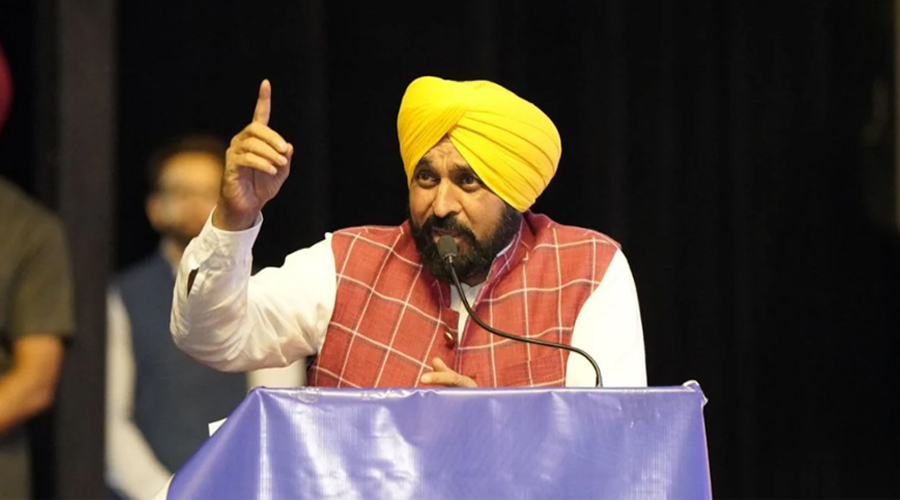
With the aim of reshaping the education, health, and empowerment of girls in the state, the Punjab Government, led by Chief Minister Bhagwant Singh Mann, has launched a historic initiative. Under this initiative, over 3.4 lakh adolescent girls studying in 3,600 government schools across the state have been connected to menstrual health education.
This program, one of the largest school-based menstrual health education initiatives in the country, will not only increase health awareness among adolescent girls but also strengthen gender-sensitive education.
The government believes that this initiative will provide a new impetus to the self-confidence, health, and educational development of girls. On the occasion of Menstrual Hygiene Day on May 28th, the Punjab Government announced the phased expansion of the “Menstrual Hygiene Curriculum” across all 23 government high and senior secondary schools in the state.
The first session of the curriculum will be conducted in these government schools tomorrow, May 29, 2026. This initiative is expected to directly benefit over 3.4 lakh girl students from sixth to tenth grades studying in over 3,600 government schools.
This initiative reflects the Bhagwant Mann government’s priority towards modernizing and making the public education system accessible to all, providing girls with awareness, confidence, respect, and access to quality health information. By taking menstrual health education to classrooms on such a large scale, the Punjab government has attempted to address a topic that has traditionally been shrouded in silence, hesitation, myths, and social fears.
Officials stated that the initiative aims to ensure that menstruation never hinders girls’ education, confidence, participation, well-being, or school life. This program is in line with the observations of the Supreme Court of India, which acknowledged that menstrual health and hygiene are directly linked to the dignity, education, and equality of adolescent girls.
The Bhagwant Mann government launched this program in collaboration with WASH United, an international non-profit organization working in the field of menstrual health education and awareness. This initiative will provide specially designed classroom sessions, delivered in Punjabi, through a structured curriculum titled “Menstrual Hygiene Management,” to help students better understand the content.
The sessions feature the story of a 10-year-old girl, Ruby, as the main character in the guide. Classroom discussions and participatory activities are also included to make the learning process engaging, participatory, and safe for students. These sessions focus on helping students understand menstruation and bodily changes, educating them on hygiene and self-care practices, building confidence and self-esteem, and fostering a supportive environment at school and among peers.
To ensure effective implementation across the state, the Punjab government has already trained approximately 7,200 teachers to facilitate these sessions in classrooms. The program operates under a structured three-session intervention model, which includes story-based learning and age-appropriate menstrual health education.
The Bhagwant Mann government conducted extensive teacher training before launching the program statewide. Nearly 100 state resource persons were first trained as master trainers, followed by sequential training sessions in districts to prepare thousands of government school teachers. Officials said this teacher training will help create a safe classroom environment where girls can openly ask questions and receive accurate information without feeling embarrassed or afraid.
The initiative was launched following the encouraging results of a pilot program conducted in over 100 government schools across all 23 districts of Punjab, involving over 45,000 students. According to results shared by the Punjab government, 97 percent of teachers involved in the pilot program said they felt comfortable providing period education through the new curriculum, while 94 percent recommended that the program be expanded across Punjab. Nearly 88 percent of teachers found the curriculum simpler and more effective than previous methods, while 80 percent observed active participation from female students during classroom sessions.
Punjab Chief Minister Bhagwant Mann on Tuesday took a tough stand on the state's river water rights in...
Amidst preparations for the upcoming Punjab Assembly elections, the Election Commission of India (ECI) has issued directives regarding...
The Punjab Police's counter-intelligence team has busted a cross-border illegal arms smuggling module in Amritsar, arresting three accused.

The Punjab and Haryana High Court on Tuesday took a tough stand on the pending payment of dearness...
Punjab Congress leaders Pargat Singh and Sukhpal Singh Khaira have questioned Khaira’s suspension from the Assembly, while Finance...
Tensions escalated between the ruling Aam Aadmi Party (AAP) and Congress in the Punjab Assembly on Tuesday. Chief...
Aries: The day will be auspicious...