Last Updated: October 21, 2026
Last Updated: October 21, 2026





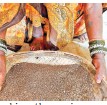
Fonio in West Africa and Sikiya in central India share a common identity as wild millets from the crabgrass family, long valued by rural and tribal communities. Fonio grows across the West African savannas, while Sikiya thrives in Madhya Pradesh’s Dindori district. Both are traditional foods, but their journeys have diverged sharply.
Fonio has gained global recognition in recent years. Although it was once overshadowed by cash crops due to socio-economic changes linked partly to colonial history, renewed interest has emerged thanks to the efforts of chef Fatmata Binta of the Fulani community. She has brought Fonio into the international spotlight by championing indigenous African grains and cuisines. Millets expert Don Osborn notes that a major barrier to the wider acceptance of Fonio was its difficult processing. Dehulling the grain required significant manual labour and discouraged farmers from expanding cultivation. Over recent decades, however, innovators developed machines that eased the dehulling process, making the grain more accessible and attractive to growers.
Despite these improvements, the burden of millet processing continues to fall primarily on women. In Togo, Fonio has long been regarded as a women’s crop, with dehulling done almost entirely by women. Similar patterns persist in India, where rural women handle most millet processing through labour-intensive traditional methods.
Sikiya, by contrast, remains largely unknown beyond the Baiga tribal communities who cherish it. While older Baiga women recall Sikiya with affection, its presence is fading as monoculture spreads. Advocates for indigenous crops warn that such erasure is part of a larger global pattern. Susan Owiti of the Kenyan Peasants League stresses the need for food decolonisation, arguing that traditional grains are climate resilient, nutritionally rich, and vital for biodiversity. She notes that many of these seeds have survived for generations because they were preserved outside commercial systems. Their decline, she says, reflects the loss of control over local food systems.
Owiti also highlights how women’s limited land ownership restricts their ability to influence crop choices. Decisions about cultivation are often driven by market pressures rather than nutritional or ecological considerations. Examples from India show how profitable crops like pineapples in Niyamgiri have displaced millets.
In Dindori, Sikiya survives mainly through traditional bewar cultivation practiced by the Baigas, which supports multiple crops. Activist Naresh Biswas has worked to revive interest in Sikiya, even sending samples to the Indian Institute of Millets Research for nutritional assessment. He has also experimented with value-added products like Sikiya biscuits showcased at exhibitions. Yet the millet remains far less known than staples like ragi.
The contrasting paths of Fonio and Sikiya show how indigenous grains can thrive when supported and disappear when neglected. Their future depends on recognition, research, and community-led preservation.
State Bank of India has confirmed that 3,897 customer records containing personal information were found on the dark...

A fire in a hut in Nonapar village of Deoria district claimed three lives, including those of a...

Amit Shah paid tribute to police personnel who died in the line of duty at the National Police...

Reduced water levels at Har Ki Pauri and other Haridwar ghats have inconvenienced pilgrims during the Upper Ganga...

Six people returning from a Dussehra Mela were seriously injured when a car hit them on National Highway...

Two people were killed and ten injured after a passenger bus met with an accident at Gala Pachound...

Aries: The day will be auspicious...