Last Updated: October 12, 2026
Last Updated: October 12, 2026





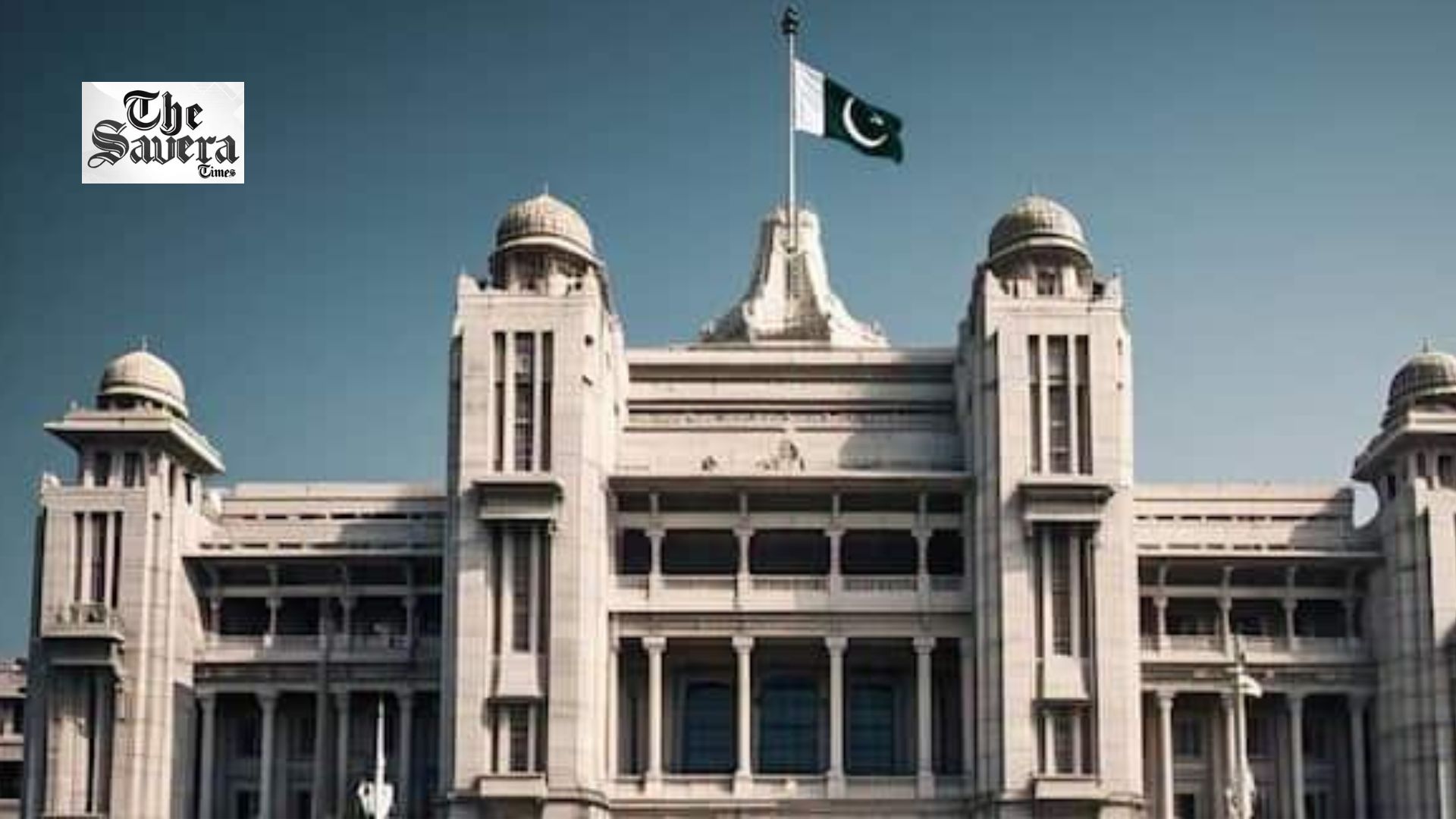
It was a sore point for Pakistan when the US Ambassador to India, Sergio Gor, stated that Jammu and Kashmir is an integral part of India and indicated a review of travel advisories for American tourists visiting the region. Sergio Gor was on a two-day visit to Jammu & Kashmir and Ladakh.
Previously, the US had maintained that the abrogation of Articles 370 and 35-A in Jammu & Kashmir and the Kashmir issue itself were internal matters between India and Pakistan. Following this statement, the situation has become clear for India while causing frustration for Pakistan.
Pakistan was already agitated by several steps taken by India. Diplomatic relations have been strained—halting bilateral dealings, suspending the Indus Waters Treaty, and stopping trade at the Attari-Wagah border—following the events surrounding ‘Operation Sindoor’.
Irritated by the US Ambassador’s statement, Pakistan removed security barricades and parking poles from around the Indian High Commission in its territory. India immediately retaliated by dismantling security perimeters, visa section structures, and illegal constructions in the outer areas of the Pakistan High Commission in Chanakyapuri, Delhi.
India had already ceased diplomatic dialogue with Pakistan following the Pahalgam attack. Clearly, with the ongoing tension, diplomatic relations between the two nations have been reduced to a nominal level.
Meanwhile, Pakistan raised a hue and cry over US Ambassador Sergio Gor’s statement affirming Kashmir as an integral part of India; Islamabad summoned the US Chargé d’Affaires to register a strong protest. It is evident that the spirit of friendship between Pakistan and India has vanished, regardless of the rhetoric employed.
The Attari-Wagah border, which served as a trade route between India and Pakistan, remains completely closed, with no plans to reopen it in the near future. Pakistan’s politics hinges on hateful rhetoric surrounding the Kashmir issue.
Leveraging this, the country not only creates a clamor at the United Nations but also persists in harboring terrorist camps within its own borders. Given this context, what else can one expect from Pakistani Prime Minister Shehbaz Sharif and Army Chief Asif Munir other than displays of hostility?
India responded in kind—tit-for-tat—to the disruptive actions Pakistan took outside the Indian High Commission in Islamabad. It is a classic case of “tit for tat.”
From a trade perspective, the suggestion has frequently been made that the Attari-Wagah border should be opened for commerce and the Kartarpur Corridor made operational to foster an atmosphere of goodwill.
Additionally, the India-Pakistan Friendship Forum’s annual tradition of illuminating the border on August 15th should be revived.
We believe there is no animosity between the ordinary citizens of the two nations; rather, it is Pakistan’s policy of shielding terrorist camps—maintained to sustain its own hold on power—that has prevented the normalization of relations.
Both nations are classified as developing countries. It is no secret how economically devastated Pakistan has become due to this hostile stance.
Across the country—from Balochistan and the Pashtun regions to Pakistan-occupied Kashmir—residents are raising the banner of protest against Pakistan’s narrow-minded policies.
We can only hope that Pakistan develops the wisdom to realize that fueling this fire of dissent ultimately causes it self-inflicted harm.
A Sudanese rights group says at least 72 gold miners were killed in an air strike near the...

US President Donald Trump is scheduled to attend the ASEAN summit in Manila on November 16 before travelling...
An Indian national injured in the October 10 attack on Riyadh’s King Khalid International Airport has died, taking...

Ukrainian President Volodymyr Zelenskyy says he was unaware of Donald Trump’s announcement of an immediate energy ceasefire between...
Colombian businessman Alvaro Pulido Vargas has been arrested in Florida over two US federal cases involving alleged bribery...
Republican Senator Thom Tillis has questioned the legality of Trump's Russian diesel deal, while John Barrasso defended it...
Aries: The day will be auspicious...