Last Updated: October 21, 2026
Last Updated: October 21, 2026





Tarun Chugh
National General Secretary of the Bharatiya Janata Party
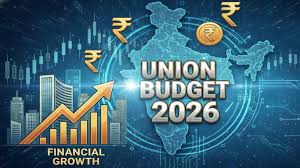
On February 1, 2026, Union Minister for Finance and Corporate Affairs, Smt. Nirmala Sitharaman, presented the Union Budget 2026-27, marking a pivotal moment in India’s journey toward becoming a Viksit Bharat by 2047. Delivering her ninth consecutive budget, the Finance Minister has unveiled a sophisticated growth system that places digital innovation, infrastructure, and manufacturing at its core.
By binding energy security, trade, and inclusive skilling into a single coherent framework, this budget serves as a powerful symbol of India’s transition from Antyodaya to true self-reliance, a future-ready roadmap designed to empower every family through policy sustainability and good governance.
This landmark fiscal plan, notably the first prepared in Kartavya Bhawan, is fundamentally inspired by three core “kartavyas”. The first duty seeks to accelerate and sustain economic growth by enhancing productivity and competitiveness while building resilience against volatile global dynamics. The second focuses on fulfilling the aspirations of the people and building their capacity, positioning them as strong partners in the nation’s path to prosperity. Finally, aligned with the vision of Sabka Sath, Sabka Vikas, the third duty ensures that every family, community, region, and sector has access to the resources, amenities, and opportunities required for meaningful participation in India’s progress.
The financial architecture of the budget reflects a disciplined approach to these goals, with total expenditure for 2026-27 estimated at Rs 53.5 lakh crore against non-debt receipts of Rs 36.5 lakh crore. The Centre’s net tax receipts are projected to reach Rs 28.7 lakh crore, while gross market borrowings are estimated at Rs 17.2 lakh crore, with net market borrowings from dated securities at Rs 11.7 lakh crore. This follows a year of steady performance, as the Revised Estimates for 2025-26 show non-debt receipts of Rs 34 lakh crore and total expenditure of Rs 49.6 lakh crore, featuring a substantial capital expenditure of approximately Rs 11 lakh crore.
Maintaining a clear focus on fiscal health, the government has estimated the fiscal deficit for 2026-27 at 4.3 percent of GDP, a slight reduction from the 4.4 percent recorded in the 2025-26 Revised Estimates. This trajectory of stability is further evidenced by the debt-to-GDP ratio, which is projected to improve to 55.6 percent in the upcoming fiscal year from 56.1 percent in the previous period. Through these precise estimates and duty-bound initiatives, the budget reinforces a sustainable framework for governance and long-term economic strength.
In furtherance of the first kartavya to accelerate and sustain economic growth, the budget proposes six decisive interventions designed to enhance productivity and global competitiveness. At the forefront of this strategy is the scaling up of manufacturing across seven strategic and frontier sectors. To transform India into a global hub for life sciences, the government announced Biopharma SHAKTI (Strategy for Healthcare Advancement through Knowledge, Technology and Innovation) with an outlay of Rs 10,000 crore over five years. This initiative will be bolstered by a biopharma-focused network, including the creation of three new National Institutes of Pharmaceutical Education and Research (NIPER), the upgrading of seven existing institutes, and the establishment of a network of over 1,000 accredited clinical trial sites across the country.
Parallel to healthcare, the technological landscape will be reshaped through India Semiconductor Mission (ISM) 2.0, which pivots toward producing equipment and materials, designing full-stack Indian IP, and fortifying supply chains through industry-led research centers. To complement this, the outlay for the Electronics Components Manufacturing Scheme has been significantly increased to Rs 40,000 crore. Furthermore, the government is tapping into mineral wealth by establishing Dedicated Rare Earth Corridors to support Odisha, Kerala, Andhra Pradesh, and Tamil Nadu in mining, processing, and research.
Additionally, a new scheme will support states in establishing three dedicated Chemical Parks using a cluster-based, plug-and-play model to streamline industrial entry.
The budget also places a heavy emphasis on strengthening capital goods and infrastructure capabilities. Central Public Sector Enterprises (CPSEs) will establish Hi-Tech Tool Rooms at two locations, serving as digitally enabled service bureaus for the high-precision manufacturing of components at scale. To modernize the building blocks of the nation, a new Scheme for Enhancement of Construction and Infrastructure Equipment (CIE) will be introduced, alongside a Rs 10,000 crore Container Manufacturing Scheme aimed at building a globally competitive logistics ecosystem over the next five years.
The textile sector—a cornerstone of Indian industry—receives a comprehensive revitalization through an Integrated Programme. This includes the National Fibre Scheme for self-reliance in natural, man-made, and new-age fibres, as well as the Textile Expansion and Employment Scheme to modernize traditional clusters with advanced machinery and testing centers. Mega Textile Parks will be developed in challenge mode with a specific focus on technical textiles. Complementing these industrial efforts is the Mahatma Gandhi Gram Swaraj initiative, which is set to strengthen khadi, handloom, and handicrafts by providing global market linkages, branding support, and streamlined training to ensure quality and production excellence at the grassroots level.
In continuity with the manufacturing push, the budget directs significant attention toward rejuvenating legacy industrial sectors and fortifying the small business ecosystem. A new scheme has been announced to revive 200 legacy industrial clusters, focusing on improving their cost competitiveness and efficiency through targeted infrastructure and technology upgrades. To transition small businesses into global players, the government is introducing a dedicated Rs 10,000 crore SME Growth Fund aimed at creating “Champion SMEs.” This is complemented by an additional Rs 2,000 crore allocation to the Self-Reliant India Fund to ensure micro-enterprises maintain access to vital risk capital.
Furthermore, to bridge the professional gap in smaller urban centers, institutions like ICAI and ICSI will design modular courses to develop a cadre of ‘Corporate Mitras’, providing specialized support to businesses in Tier-II and Tier-III towns.
The momentum of national development is further propelled by a powerful push to infrastructure, with public capital expenditure set to increase to Rs 12.2 lakh crore for FY 2026-27. To de-risk the sector and invite private participation, an Infrastructure Risk Guarantee Fund will be established to provide confidence during the volatile construction phase. Additionally, the government plans to accelerate the recycling of CPSE real estate assets through dedicated Real Estate Investment Trusts (REITs). Connectivity remains a priority, highlighted by the establishment of new Dedicated Freight Corridors connecting Dankuni in the East to Surat in the West, ensuring a seamless flow of goods across the industrial heartland.
A major shift toward environmentally sustainable logistics is also underway, with 20 new National Waterways set to be operationalized over the next five years. This begins with National Waterway-5 in Odisha, connecting the mineral-rich areas of Talcher and Angul to the major ports of Paradeep and Dhamra. To support this maritime transition, regional Training Institutes will be established as Centres of Excellence, and a specialized ship repair ecosystem will be developed in Varanasi and Patna.
Furthermore, the Coastal Cargo Promotion Scheme aims to double the share of inland waterways and coastal shipping from 6% to 12% by 2047, supported by incentives for indigenized seaplane manufacturing and a dedicated Seaplane Viability Gap Funding (VGF) scheme to enhance remote connectivity and tourism.
To ensure long-term energy security and stability, the budget looks toward the future of decarbonization. A substantial outlay of Rs 20,000 crore over the next five years has been announced for Carbon Capture Utilization and Storage (CCUS) technologies. This investment underscores the government’s commitment to balancing aggressive industrial growth with global climate goals, ensuring that India’s path to 2047 remains both economically robust and environmentally responsible.
Building on these industrial and energy-related goals, the final pillar of the first kartavya focuses on developing City Economic Regions (CERs) as high-intensity growth hubs. To achieve this, the government has announced an allocation of Rs 5,000 crore over five years per CER, utilizing a challenge-mode and results-based financing mechanism to drive urban reforms. To further empower large metropolitan areas, the budget introduces a significant fiscal incentive for Municipal Bonds, offering Rs 100 crore for a single bond issuance exceeding Rs 1,000 crore. This move is designed to encourage large cities to tap into capital markets for high-value urban infrastructure projects, fostering financial independence at the municipal level.
Facilitating this urban transition are seven new High-Speed Rail corridors—including routes such as Mumbai–Pune, Pune–Hyderabad, Hyderabad-Bengaluru, Hyderabad-Chennai, Chennai-Bengaluru, Delhi–Varanasi, and Varanasi–Siliguri—which will serve as “growth connectors” to promote environmentally sustainable and rapid passenger movement across the country.
To support this physical expansion with a robust financial backbone, the government is establishing a “High Level Committee on Banking for Viksit Bharat.” This committee will comprehensively review the banking sector to align it with the nation’s 2047 growth goals while ensuring financial stability and consumer protection. Complementing these reforms is the restructuring of the Power Finance Corporation (PFC) and Rural Electrification Corporation (REC), a move designed to achieve greater scale and operational efficiency among public sector NBFCs. Finally, to streamline international capital flows, a comprehensive review of the Foreign Exchange Management (Non-debt Instruments) Rules has been proposed to create a contemporary, user-friendly framework for foreign investments that remains consistent with India’s evolving economic priorities.
Moving from structural economic growth to human capital, the second kartavya focuses on fulfilling the aspirations and building the capacity of the nation’s citizens. Central to this vision is the establishment of a high-powered ‘Education to Employment and Enterprise’ Standing Committee, tasked with recommending strategies to position the services sector as a primary driver of a developed India. A key focus remains the creation of specialized professionals; to this end, the government plans to add 100,000 Allied Health Professionals (AHPs) over the next five years by upgrading existing institutions and establishing new ones in both the private and government sectors.
This expansion is reinforced by the creation of five Regional Medical Hubs to promote India as a global destination for medical tourism, alongside the establishment of three new All India Institutes of Ayurveda.
The budget also extends its capacity-building efforts to the primary sector and the creative “Orange Economy.” In animal husbandry, the government aims to increase the pool of veterinary professionals by over 20,000 through a loan-linked capital subsidy scheme for private veterinary colleges, hospitals, and diagnostic labs. Simultaneously, the Indian Institute of Creative Technologies in Mumbai will spearhead a digital revolution by supporting the setup of AVGC (Animation, Visual Effects, Gaming, and Comics) Content Creator Labs in 15,000 secondary schools and 500 colleges. This initiative ensures that India’s youth are equipped with the skills necessary for the modern digital economy.
In the realm of education and social infrastructure, the government intends to create five University Townships located near major industrial and logistic corridors, selected through a competitive challenge route. Prioritizing gender inclusivity, capital support will be provided to establish at least one girls’ hostel in every district. The tourism and hospitality sector will also see a major upgrade, with the National Council for Hotel Management and Catering Technology being elevated to a National Institute of Hospitality. To enhance the visitor experience, a pilot scheme in collaboration with an IIM will upskill 10,000 guides through a high-quality, hybrid training course.
The budget also emphasizes the preservation and promotion of India’s vast cultural wealth. A National Destination Digital Knowledge Grid will be established to document all cultural, spiritual, and heritage sites digitally. Furthermore, 15 significant archaeological sites—including Lothal, Dholavira, and Sarnath—will be developed into vibrant, experiential destinations to boost heritage tourism. Complementing this holistic development plan is the launch of the Khelo India Mission, a decade-long initiative designed to transform the sports sector and nurture athletic talent across the nation. Deeply rooted in the vision of Sabka Sath, Sabka Vikas, the third kartavya focuses on inclusive progress through targeted interventions in four critical areas.
To increase farmer incomes, the government has announced the integrated development of 500 reservoirs and Amrit Sarovars. A specific push for high-value agriculture will see dedicated support for crops such as coconut, sandalwood, cocoa, and cashew in coastal regions, bolstered by a new Coconut Promotion Scheme to enhance productivity. Central to this agricultural transformation is Bharat-VISTAAR (Virtually Integrated System to Access Agricultural Resources), a multilingual AI tool designed to integrate AgriStack portals with ICAR’s agricultural practices, providing farmers with real-time, tech-driven insights.
Empowerment also extends to citizens with disabilities through the Divyangjan Kaushal Yojana. This initiative will offer task-oriented and process-driven training in high-growth sectors such as IT, AVGC, Hospitality, and Food and Beverages, ensuring meaningful employment opportunities. Furthermore, the budget demonstrates a profound commitment to mental health and trauma care by announcing the establishment of NIMHANS-2 in North India. To strengthen the existing healthcare network, the National Mental Health Institutes in Ranchi and Tezpur will be upgraded to Regional Apex Institutions, ensuring high-quality psychiatric care is accessible across different geographies.
A significant portion of the roadmap is dedicated to the Purvodaya states and the North-Eastern region to bridge regional disparities. The government plans to develop an integrated East Coast Industrial Corridor with a strategic node at Durgapur, alongside the creation of five new tourism destinations across the five Purvodaya states and the deployment of 4,000 e-buses. Cultural and spiritual connectivity will be enhanced through a new scheme for developing Buddhist Circuits across Arunachal Pradesh, Sikkim, Assam, Manipur, Mizoram, and Tripura.
To ensure the financial health of the states and support these localized developments, the government has allocated Rs 1.4 lakh crore for FY 2026-27 as Finance Commission Grants, following the recommendations of the 16th Finance Commission. This robust fiscal transfer underscores a collaborative approach to governance, providing states with the necessary resources to implement these transformative policies at the grassroots level.
Building upon the transformative roadmap of the three kartavyas, the Union Budget 2026-27 has introduced sweeping structural reforms in tax administration and customs procedures. A cornerstone of these reforms is the New Income Tax Act, 2025, which is set to come into effect from April 2026. Supported by simplified rules and forms redesigned for easy compliance by ordinary citizens. Significant “Ease of Living” measures include the total tax exemption of interest awarded by the Motor Accident Claims Tribunal to natural persons and the removal of associated TDS. TCS rates have been rationalized to a flat 2% for overseas tour packages (from current 2-20%) and LRS remittances for education and medical purposes (down from 5%). For businesses, manpower supply TDS provisions have been simplified, and a new automated, rule-based process will allow small taxpayers to obtain lower or nil deduction certificates instead of filing applications with the assessor.
Filing efficiency is further enhanced by single-window depository filing for Forms 15G and 15H, a staggered return-filing timeline, and an extension of the deadline for revising returns to March 31st with a nominal fee. Notably, property transactions involving NRIs will now use the resident buyer’s PAN-based challan instead of a TAN, and a one-time six-month disclosure scheme has been introduced for small taxpayers to report overseas income or assets.
Building on these compliance efforts, the government has proposed integrating IT assessment and penalty proceedings into a common order. Taxpayers can now update returns even after reassessment has begun by paying an additional 10% tax, and immunity from penalty for misreporting is available upon payment of additional tax. Crucially, the prosecution framework is being rationalized: the non-production of books and documents, as well as TDS payments made in kind, are being decriminalized.
Furthermore, retrospective immunity from October 1, 2024, is granted for the non-disclosure of non-immovable foreign assets valued under Rs 20 lakh. For cooperatives, tax deductions are extended to those supplying cattle feed and cotton seed, and inter-cooperative dividend income is now deductible if distributed to members. Additionally, a three-year exemption is granted to dividends received by notified national cooperative federations on investments made through January 2026, provided they are redistributed to member cooperatives.
To bolster the IT sector, software development, ITeS, KPO, and contract R&D are now clubbed under a single “Information Technology Services” category with a common 15.5% safe harbour margin. The safe harbour threshold has been increased from Rs 300 crore to Rs 2,000 crore, approved via an automated process valid for five-year stretches. Unilateral Advanced Pricing Agreements (APA) will be fast-tracked to a two-year conclusion, and modified return facilities will extend to associated entities of APA applicants. To attract global business, foreign companies providing cloud services via Indian data centers will receive a tax holiday until 2047. Furthermore, a 15% safe harbour on costs is provided for related-entity data center providers, and a 2% profit margin safe harbour is established for non-residents using bonded warehouses for component storage. Non-residents also receive a five-year tax exemption for providing capital goods to toll manufacturers in bonded zones and for global income earned by experts under notified schemes.
Additionally, Minimum Alternate Tax (MAT) is exempted for all non-residents paying tax on a presumptive basis. Administrative reforms further include a Joint Committee between the MCA and CBDT to integrate Income Computation and Disclosure Standards (ICDS) directly into Indian Accounting Standards (IndAS), eliminating separate ICDS requirements by the 2027-28 tax year. In capital markets, buybacks for all shareholders will now be taxed as Capital Gains, with promoters paying an additional tax at an effective rate of 22% for corporates and 30% for non-corporates. Securities Transaction Tax (STT) on futures rises to 0.05%, while options premium and exercise rates increase to 0.15%. Regarding MAT, the rate is reduced to 14% and will become a final tax with no further credit accumulation from April 1, 2026.
However, companies moving to the new regime can set off brought-forward MAT credit against up to one-fourth of their tax liability. Additionally, TCS rates for sellers of scrap, minerals, and alcoholic liquor are rationalized to 2%, with tendu leaves also reduced to 2%.
Customs duties have been strategically adjusted to favor growth and energy security, with the duty-free import limit for seafood processing inputs increasing to 3% of FOB value and similar access extended to leather and synthetic footwear inputs. Basic Customs Duty (BCD) exemptions are extended for Lithium-Ion cell manufacturing equipment, solar glass manufacture (sodium antimonate), and nuclear power projects until 2035. BCD is also waived for capital goods used in critical mineral processing and components for civilian and defense aircraft manufacture and maintenance. For environmental sustainability, the value of biogas is excluded when calculating excise duty on blended CNG.
Electronics see a boost with BCD exemptions on microwave oven parts, while SEZ units are granted a one-time measure to sell to the Domestic Tariff Area at concessional rates. For individuals, the tariff on goods for personal use is halved to 10%, and BCD is exempted for 17 drugs/medicines, including duty-free imports for seven additional rare diseases.
Finally, customs processes are transitioning to a trust-based, operator-centric system where the duty deferral period for Tier 2 and 3 Authorised Economic Operators (AEOs) is extended to 30 days, and the validity of advance rulings increases to five years. By April 2026, 70% of interdicted cargo will be processed through a single digital window, with the full Customs Integrated System (CIS) rolling out within two years. New export opportunities are created by making fish caught by Indian vessels in the EEZ duty-free and removing the Rs 10 lakh value cap on courier exports to aid e-commerce.
Furthermore, ease of living is enhanced through revised baggage clearance rules with higher duty-free allowances and a dispute settlement mechanism allowing honest taxpayers to close cases by paying an additional amount in lieu of penalties. The Union Budget 2026-27 is much more than just a financial statement; it is a blueprint that balances careful spending with achievable goals for our nation. By rooting these plans in a clear sense of duty toward every citizen, the government has focused on a long-term system that builds a stronger, more resilient India.
This visionary roadmap secures our daily lives today through easier tax rules and support for local manufacturing, while also protecting our children’s future by investing in clean energy, creative skills, and the well-being of every family. It ensures that no one is left behind, whether they are farmers in our villages or innovators in our cities. We are grateful to our Prime Minister Narendra Modi for his visionary leadership and for believing in the potential of every Indian. Under his guidance, this budget provides the stable ground and the spark we need to carry the hope toward the goal of Viksit Bharat by 2047. The path ahead is clear, the promise is strong, and India’s future looks brighter than ever.
(Writer is the National General Secretary of the Bharatiya Janata Party)
We are very proud that at present India is the number one country in the world by surpassing...

Every investor wants the wealth-creating power of equity and the reassuring stability of debt. Balanced Advantage Funds attempt...
Tourism is a major source of government revenue in our country. There are different types of tourism. Scenic...

Good Evening Viewers! Catch up on the day's biggest stories with The Savera Times Evening Bulletin. Get the...

Congress leaders continued their protest outside the Jaipur Police Commissionerate on Tuesday, demanding the registration of a zero...
On the auspicious occasion of Vijayadashami, Prime Minister Narendra Modi on Tuesday called on the countrymen to unite...
Aries: The day will be auspicious...