Last Updated: October 20, 2026
Last Updated: October 20, 2026





Abhishek Vij
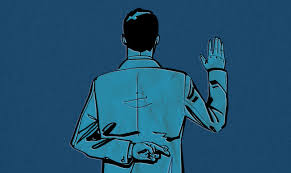
The government enacted laws to improve the face of politics. Anti-defection laws were enacted to ensure that leaders did not engage in self-interest politics but instead advocated for public welfare, did not change parties for the sake of power, and did not justify their defections.
This law stipulated that defection would be considered valid only if two-thirds of a party’s members defected. With the enactment of the law, the leaders who deceived them were exposed, and the anti-defection laws became nonexistent. Recently, seven Rajya Sabha MPs from the country’s leading party, the Aam Aadmi Party, under the leadership of Raghav Chadha, left the party and offered to merge with the BJP. This demand for merger sparked intense political debate. Pro- and anti-defection rhetoric erupted. Legal experts began offering their own one-sided opinions, and those who defected began campaigning to portray others as traitors.
But in our country, whatever happens, it’s accepted and presented as a stage for change. The latest news is that the departure of seven of the ten AAP MPs in the Rajya Sabha, including Raghav Chadha, who had left the party, a move that sparked considerable debate over its legality and illegality, has been legally proven, and the Rajya Sabha Deputy Chairman has granted these seven members permission to merge with the BJP. In politics, there are technical and ethical standards. What passes the technical test may not necessarily pass the ethical test.
Now, the rebel AAP leaders have received authoritative permission to merge, and statements are emerging in which they attempt to justify themselves. This attempt to justify itself has become political.
In this country, even a highly corrupt leader is caught, calling it a vendetta. When a leader caught for a crime is released on bail after serving time in custody, he is greeted as if he has conquered a fortress. Leaders’ faces are engrossed in politics, and the public’s interests are seemingly absent. We see this politics not only at the state level but also globally; we’ve been witnessing it at the national level for years.
Now, to sell weapons globally, brutal wars are waged for years and months. This may disrupt not only the Third World but even the rich countries of Europe, but the policies of politicians reflect nothing but the height of their ego. The machinations of politics are strange, in which even a party change is labeled a revolution. Similarly, ideological foundations in politics are lost and caste bases become dominant, which is why we even call the caste census a landmark decision.
Politics doesn’t consider that for over a century we’ve talked about giving new life to the backward, enacting reservation laws for them, yet why do the backward remain backward? The caste census gives rise to a new element: the extra-backward parties. Later, politics begins to appease these classes, and supporting them is considered public service. This daily decline in politics should be a matter of concern for the common man of the country.
A historic milestone was achieved on Tuesday in the expansion of Chhattisgarh's rail networkA historic milestone was achieved...

Model Shraddha Dubey, one of the main accused in the death of Lucknow businessman Shiv Sharma, has been...

Rashtriya Swayamsevak Sangh (RSS) chief Mohan Bhagwat on Tuesday called for strengthening national unity, social harmony, indigenous practices...
Amidst comparisons of youth protests in India to political movements and regime changes in France, Nepal, and Bangladesh,...

Rashtriya Swayamsevak Sangh (RSS) chief Mohan Bhagwat appealed for maintaining social unity in his Vijayadashami address in Nagpur...
Good Afternoon Viewers! Stay updated with The Savera Times Afternoon Bulletin, bringing you the latest news from Punjab,...

Aries: The day will be auspicious...