Last Updated: October 22, 2026
Last Updated: October 22, 2026





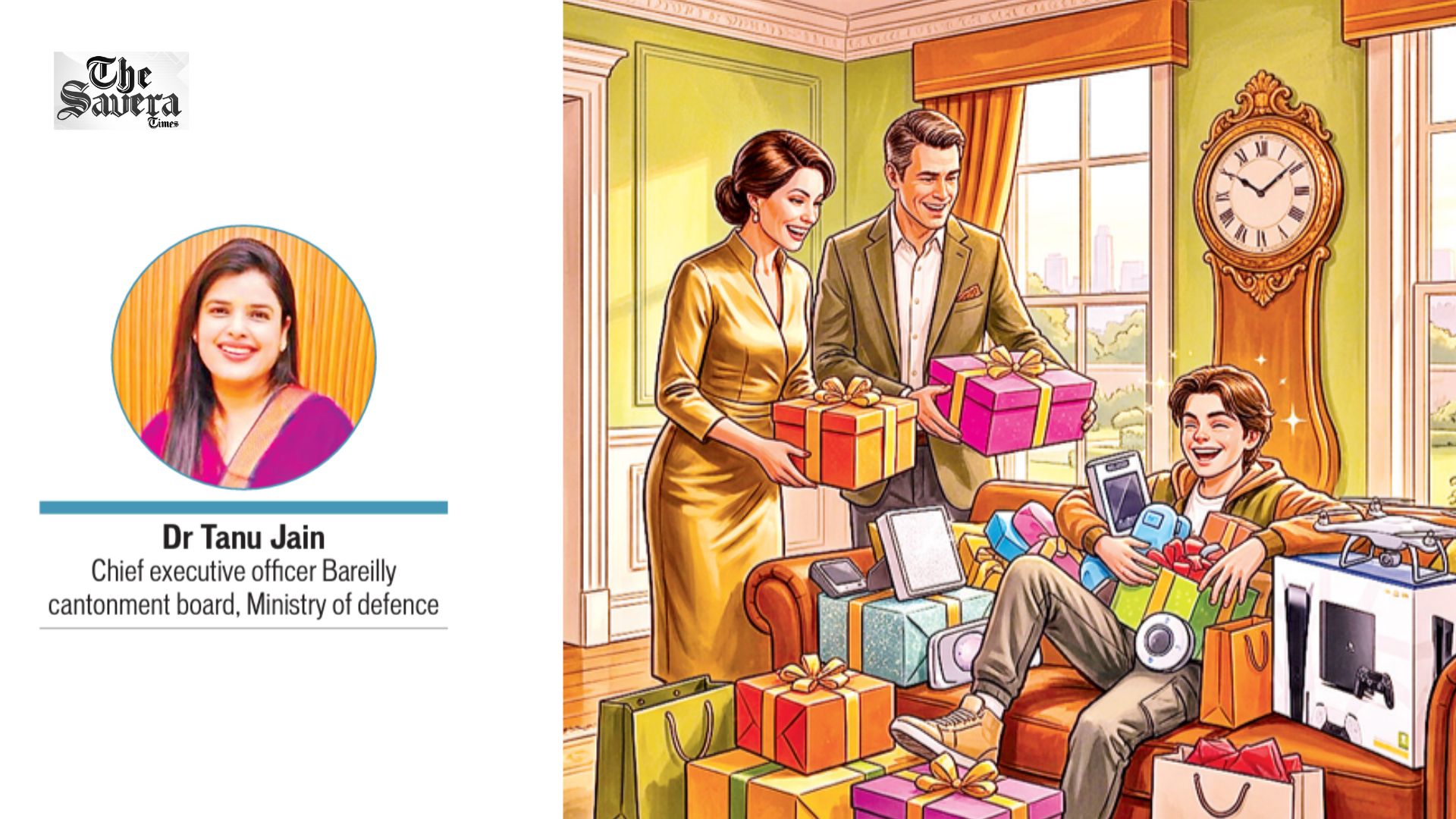
There are moments when a seemingly ordinary incident forces us to pause and ask a much larger question: What exactly are we teaching the next generation? A few nights ago, at around two in the morning, I received a call concerning young people from affluent families who had been taken into police custody after creating a disturbance. Their parents were worried, anxious and making calls in the middle of the night, trying to resolve a situation that their children had created through sheer recklessness. The incident itself may be small. But the social question behind it is enormous. When young people have access to money, cars, influence and every conceivable comfort without having experienced the discipline of earning any of it, privilege can sometimes become entitlement. They begin to believe that rules are meant for others, that consequences can always be managed, and that a phone call to an influential person can make an uncomfortable situation disappear. This is not an indictment of wealthy families or privileged children. Money is not the problem. The absence of responsibility is. When Affluence Becomes a Substitute for Achievement Psychologically, children who receive everything without having to work for it may develop what is sometimes described as an entitlement mindset—the expectation that they deserve special treatment simply because of who they are or what their family possesses. If every mistake is immediately rescued, the child never learns the natural relationship between action and consequence. If a child damages something, the parent pays. If the child gets into trouble, the parent calls someone. If the child behaves badly, influence is used to smooth things over. If the child fails, another opportunity is purchased. Slowly, an extremely dangerous message is communicated: “You do not have to change. Someone else will fix everything for you.” That is not privilege. That is a failure of parenting. The Sociology of Entitlement Indian society has traditionally placed enormous importance on family, reputation and social standing. Yet rapid economic growth, consumerism and social media have created a new culture in which visibility, lifestyle and consumption are sometimes mistaken for success. Young people constantly see images of luxury cars, expensive holidays, designer clothes, parties and celebrity lifestyles. The distinction between having and achieving becomes blurred. There is another problem: status without substance. A surname, wealth, political connection or social network can open doors. But it cannot manufacture character. And when society repeatedly rewards connections more quickly than competence, young people can begin to believe that influence is more valuable than integrity. That is when institutions suffer. Police officers are pressured. Public servants receive midnight calls. Parents panic. Friends intervene. Rules become negotiable. And eventually, the young person grows into an adult who has never learned how to stand independently on their own feet. Where Are We Going Wrong? Perhaps we have confused giving children the best with giving children everything. The best education is not merely an expensive school. The best upbringing is not unlimited pocket money. The best parenting is not protecting a child from every uncomfortable consequence. The best inheritance is discipline, humility, competence and a sense of responsibility. Children should know that privilege comes with obligations. If they have more resources than others, they should be encouraged to contribute more—not behave as though the world owes them something. They should work. They should volunteer. They should travel without luxury at times. They should understand the dignity of ordinary labour. They should learn to apologise. They should experience failure. And, most importantly, they should understand that their parents’ achievements are not their own achievements. A father’s wealth cannot become a son’s character. A mother’s position cannot become a daughter’s wisdom. Every generation has to earn its own credibility. The Solution Is Not Punishment Alone The answer is neither moral outrage nor excessive policing. The deeper solution is character education. Schools must teach civic responsibility, emotional regulation, empathy, digital behaviour, respect for public institutions and the consequences of irresponsible conduct—not merely academic achievement. Parents must learn to say “No.” That small word may be one of the greatest gifts a parent can give a child. When a child makes a mistake, parents should not immediately ask, “Whom can I call?” They should first ask: “What did my child do, and what should my child learn from it?” Institutions too must remain impartial. Wealth, influence and social standing cannot be allowed to create one law for the powerful and another for everyone else. A Better India Begins at Home The transformation of Indian society will not come only through new laws, new policies or new institutions. It will begin in homes. We need a generation that understands that freedom is inseparable from responsibility; that wealth is not wisdom; that influence is not achievement; and that being able to escape consequences is not the same as being successful. Young people should be taught to build something of their own— to earn, create, serve, struggle and contribute. Because ultimately, the real measure of a privileged life is not how much one receives, but how responsibly one uses what one has received. A society becomes truly progressive when its privileged citizens become more accountable, not less. And perhaps the most important lesson parents can give their children is this: “We may be able to protect you from consequences today. But we cannot build your character for you. That is your responsibility.”
Imagine a universe where stars still shine, planets still form and water exists, but liquids are so thick...

In This is the age of artificiality, of artificial intelligence. A few years ago, experiments were conducted to...

International clean air funding during 2023-24 showed a dual win for global public health, as targeted clean air...
Sri Krishna says, "He who has renounced action through yoga and dispelled his doubts with knowledge becomes established...
Two oxygen-producing compounds, including one that boosts performance in some laundry detergents, might one day play a key...

A significant loss of plant diversity could result in grasslands wor ldwide , including meadows and pastures, absorbing...

Aries: The day will be auspicious...