Last Updated: October 21, 2026
Last Updated: October 21, 2026





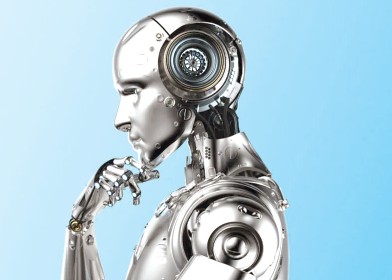
The artificial intelligence revolution is advancing at a speed that has left the world both awed and apprehensive. At the heart of this surge is Alphabet, Google’s parent company, under the leadership of Sundar Pichai. In recent months, the company’s market value has soared to $3.5 trillion, a jump attributed largely to its AI initiatives, including the Gemini chatbot and massive investments in AI chips. Yet, Pichai himself admits that amid this frenzy, there is an undeniable streak of “irrationality.”
The tension between enthusiasm and caution defines the current AI landscape. Companies across the globe are rushing to deploy AI technologies to cut costs, optimize operations, and boost profits. The rush is reminiscent of past technological waves, but there is a heightened sense of urgency now, amplified by the billions being poured into AI development. Pichai draws a parallel to the internet boom of the late 1990s, acknowledging that while overinvestment was evident then, the transformative power of the technology itself remained unquestioned. Similarly, AI, he argues, combines profound potential with speculative excess.
The very term “bubble” captures the anxieties swirling around AI. A bubble occurs when speculation inflates asset prices far beyond their intrinsic value, often resulting in abrupt collapses. The dot-com crash of 2000 serves as a cautionary tale: companies with little substance enjoyed skyrocketing valuations, only to tumble when reality caught up. Today, AI’s financial dynamics echo elements of that era, with soaring valuations prompting debates about whether the sector is heading toward a similar implosion.
Yet, Pichai’s view, nuanced as it is, underscores a crucial distinction: while speculation exists, the technology’s fundamental significance remains intact. AI, much like the internet before it, is reshaping the way humans work, learn, and communicate. Its applications span industries from healthcare to finance, manufacturing to entertainment, making it far more than a fleeting market craze. “It’s both rational and there are elements of irrationality,” Pichai observes, capturing the dual nature of this technological surge.
Tech leaders beyond Alphabet echo this cautious optimism. Sam Altman, CEO of OpenAI, recently described parts of the AI ecosystem as “kind of bubbly,” acknowledging the speculative fervor without dismissing the transformative potential. Jeff Bezos, too, has spoken about AI as creating an “industrial bubble,” distinct from the perilous financial bubbles of the past. He argues that while financial bubbles, like those leading to the 2008 crisis, are inherently destructive, industrial bubbles can generate lasting societal benefits. Even if overinvestment temporarily distorts the market, the innovations that emerge often create long-term value.
In many ways, this tension between hype and reality reflects the broader human experience with new technologies. Every major innovation—from electricity to the internet—has followed a pattern of initial exuberance, overvaluation, correction, and eventual integration into everyday life. AI is no different. The current surge may be accompanied by speculation and inflated valuations, yet its potential to reshape industries, enhance productivity, and create entirely new possibilities is profound.
Ultimately, the AI boom embodies both caution and promise. It is a moment where technological ambition meets market speculation, and where the line between rational investment and bubble-like excess is often blurred. What makes this era unique is the technology’s transformative power: even as valuations fluctuate, the underlying innovations have the potential to redefine the global economy and everyday life. Sundar Pichai’s reflections, along with insights from Altman and Bezos, remind us that while caution is necessary, the AI revolution is far more than a bubble—it is a fundamental shift in human capability.
Protests in Jakarta, Yogyakarta and Bandung brought students onto the streets over rising costs, forest fires and civil...

Organisations linked to Neville Roy Singham are under US congressional scrutiny over funding. Their coverage of protests in...

US President Donald Trump says Washington and New Delhi are close to a trade agreement that will differ...
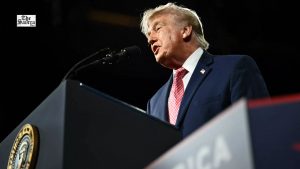
Iran has ruled out transferring its enriched uranium stockpile outside the country, with security official Mohsen Rezaei reiterating...

Donald Trump has urged Volodymyr Zelensky to pursue a peace deal with Russia, warning that Ukraine could face...

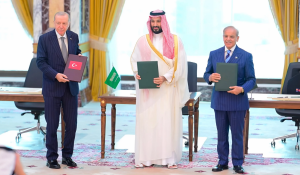
Pakistan, battling insurgencies at home and tensions along multiple borders, is too overstretched to offer meaningful military support...
Aries: The day will be auspicious...