Last Updated: October 21, 2026
Last Updated: October 21, 2026





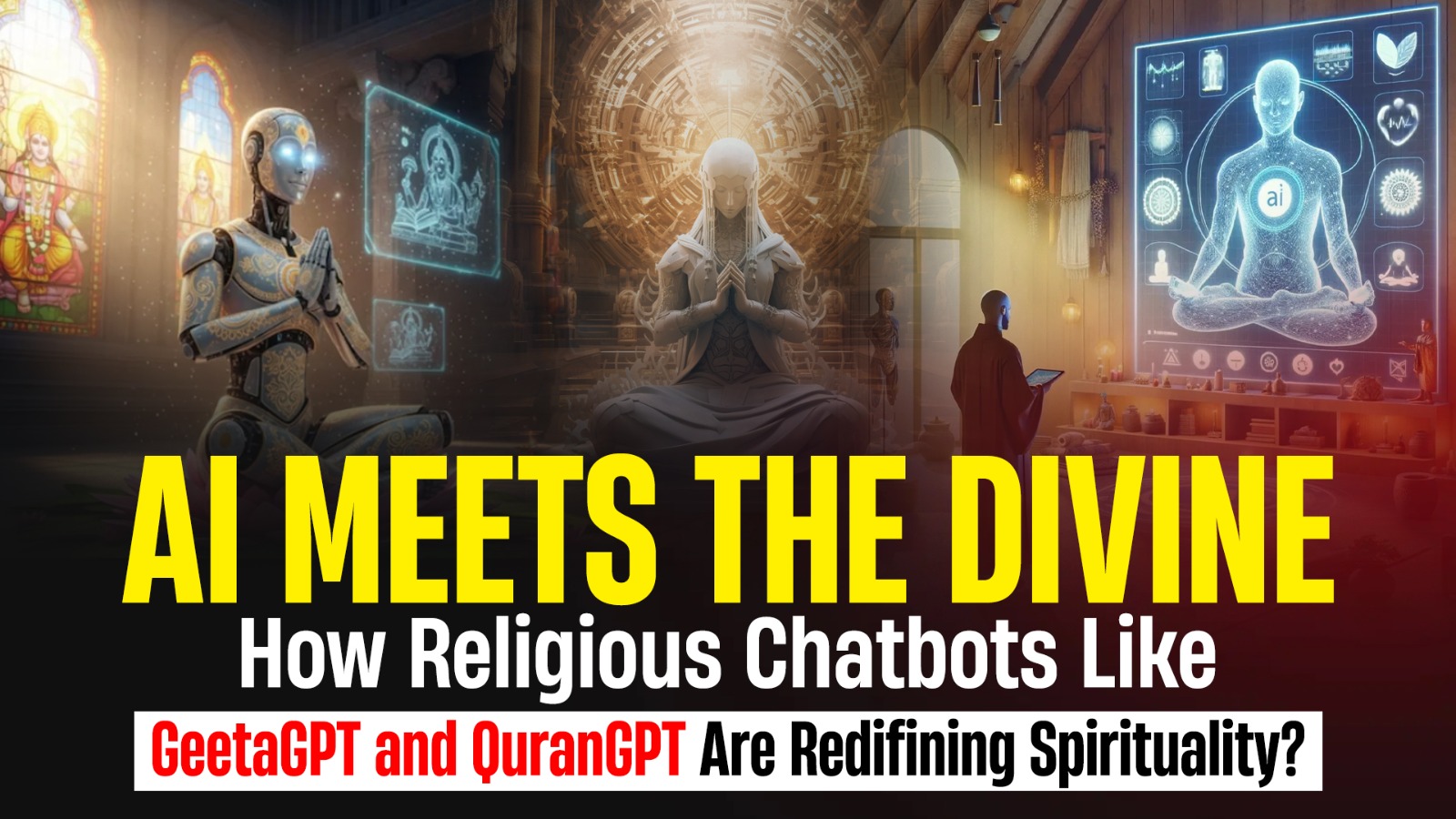
After ChatGPT changed how people seek information, artificial intelligence is now reshaping how we seek spirituality. Across the world, a new generation of AI tools—like GeetaGPT, QuranGPT, and Bible chatbots—is blending ancient wisdom with modern technology, making divine guidance accessible through a simple chat window.
What Are Religious AI Chatbots?
Religious AI chatbots use large language models (LLMs) trained on sacred scriptures such as the Bhagavad Gita, Quran, Bible, and Buddhist texts. They allow users to ask questions and receive answers drawn directly from holy verses—sometimes even written in the voice of divine figures.
For instance, GeetaGPT responds as Lord Krishna, interpreting the 700 verses of the Bhagavad Gita. QuranGPT offers Quranic perspectives on everyday dilemmas, while tools like Bible.AI and BuddhaBot serve Christian and Buddhist audiences. These apps are designed not to replace scripture, but to make it conversational and approachable.
Why Are They So Popular?
Convenience and personalization are driving their rise. Many users—especially younger ones—seek spiritual comfort but lack time for deep study or in-person rituals. These chatbots provide instant, on-demand access to faith.
From personalized prayers and guided meditations to interpretations of festivals and rituals, users can connect to spirituality wherever they are. In India, where religion is integral to daily life, apps like GeetaGPT are seeing widespread use during occasions such as Shivratri. Globally, platforms like Text with Jesus and Bible Chat have recorded millions of downloads—at times even outpacing entertainment apps.
How AI Is Enhancing Religious Experiences
Artificial intelligence is transforming how believers interact with faith traditions. It enables:
These tools are also sparking interfaith dialogue, allowing followers of different religions to exchange ideas on the same digital platforms. For people in remote areas—or those exploring faith independently—AI provides new pathways to spiritual connection.
Real-World Impact
In India, GeetaGPT, created by Vikas Sahu, a business student from Rajasthan, has become a digital companion for Hindu devotees. Meanwhile, QuranGPT, launched by 20-year-old Raihan Khan from Kolkata during Ramadan 2023, reportedly reached millions of users within months. Around the world, similar chatbots inspired by Martin Luther and Confucius are also attracting attention, highlighting the global appetite for AI-based spirituality.
The Challenges
Despite their popularity, religious AI chatbots raise questions. Because AI systems can misinterpret or oversimplify sacred texts, there’s concern about theological accuracy. Some experts warn that turning prayer into a subscription service—like the app Halo, which charges up to £70 a year for AI-guided prayers—risks commercializing faith. Others caution that AI cannot replicate true empathy, community, or divine intuition, which lie at the heart of spirituality.
AI chatbots may make religion more accessible than ever, but they should complement, not replace, traditional practices. The real essence of faith—devotion, community, and shared experience—remains beyond the reach of algorithms.
As technology continues to evolve, believers and developers alike are learning one thing: the future of spirituality may be digital, but its soul is still human.
In This is the age of artificiality, of artificial intelligence. A few years ago, experiments were conducted to...

International clean air funding during 2023-24 showed a dual win for global public health, as targeted clean air...

Sri Krishna says, "He who has renounced action through yoga and dispelled his doubts with knowledge becomes established...
Two oxygen-producing compounds, including one that boosts performance in some laundry detergents, might one day play a key...

A significant loss of plant diversity could result in grasslands wor ldwide , including meadows and pastures, absorbing...

Cancer is believed to be the most deadly disease in India, with its expensive treatment. A family affected...

Aries: The day will be auspicious...