Last Updated: October 20, 2026
Last Updated: October 20, 2026





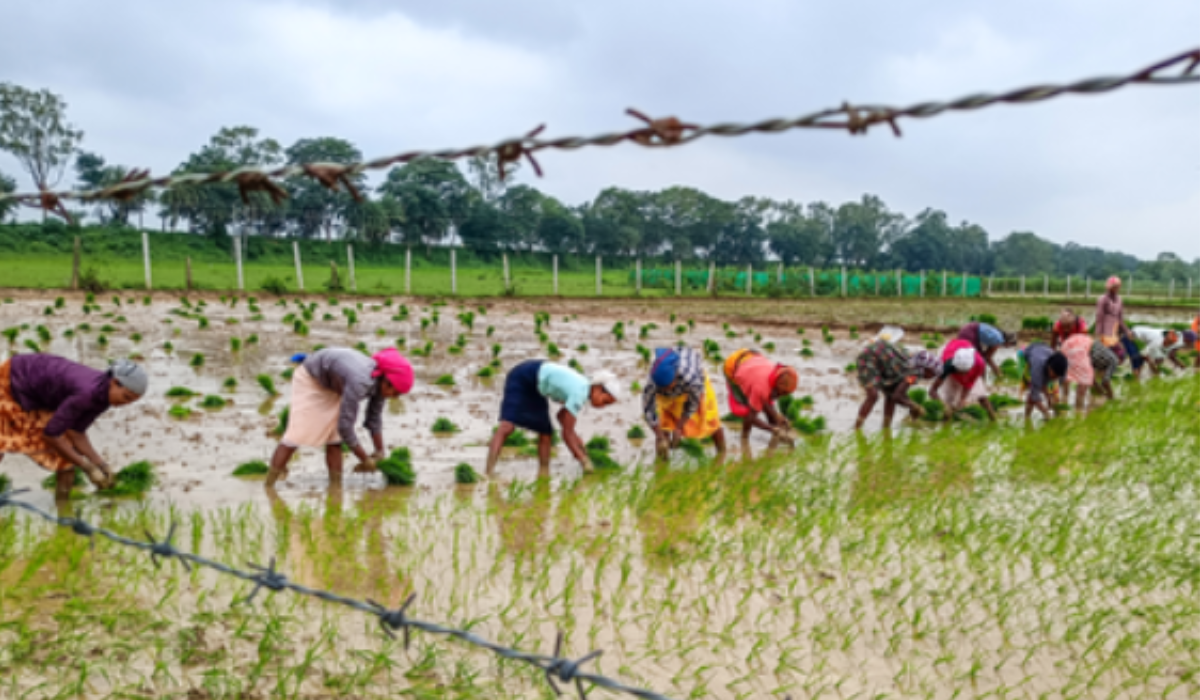
India has built a strong technology and innovation ecosystem over the past few decades. However, its agriculture sector still faces the pressure of feeding a growing population while dealing with climate change, fragmented landholdings, and limited resources. With more than 42 per cent of the population dependent on agriculture for livelihood, improving productivity and sustainability has become critical. Traditional farming methods alone cannot meet the rising demand, making agricultural automation and artificial intelligence (AI) essential for the sector’s future.
The global hunger challenge, with around 820 million people affected and a $200 billion annual investment gap in food and agriculture goals, further highlights the urgency for technological solutions. Emerging market trends show optimism for AI in agriculture, with the sector projected to grow at a compound annual rate of 23 per cent until 2028. AI, big data, and information and communication technologies (ICTs) are reshaping modern agriculture by automating field operations, improving efficiency, and helping small farmers address long-standing challenges.
India’s agriculture is witnessing g r o w i n g i n t e g ra t i o n o f e-governance and digital tools such as mobile applications, the Internet of Things (IoT), blockchain, GIS mapping, and AI-based forecasting systems. These technologies support automation, transparency, and better monitoring of agricultural performance.
AI-driven tools like remote sensors, GPS-based irrigation, and predictive analytics help detect soil moisture, optimize water use, and assess crop health. Combining satellite data with local algorithms allows for region-specific solutions suited to India’s diverse agro-climatic zones. AI and ICTs are also transforming post-harvest management by enabling efficient processing, packaging, cold storage, and online marketing. Farmers now have access to real-time data and market trends through mobile connectivity, helping them make informed decisions. Government initiatives such as soil health cards, digital land records, and crop insurance have laid the foundation for data-driven agriculture.
Practical applications of AI include the use of drones for monitoring crops, smart machinery for precision farming, and automation in fertiliser and pesticide use. The integration of AI in genetic engineering and breeding also promises improved crop resilience and productivity. In Telangana, the Saagu Baagu project has benefited over 500,000 farmers by using AI for better farming decisions, showcasing the potential of technology-driven agriculture.
Going forward, strengthening the role of AI, ICT, and big data in agriculture requires greater investment, policy support, and farmer education. Building digital literacy, promoting agri-entrepreneurship, and establishing innovation funds for rural start-ups can help bridge the technology gap. At the same time, clear regulatory frameworks and stronger intellectual property protections are needed to safeguard farmers’ interests and promote innovation.
Revisiting existing IP laws, incentivising private investment, and enforcing transparent mechanisms will ensure technology benefits reach farmers equitably. With continued innovation, policy alignment, and inclusive growth strategies, India’s agriculture sector can transition toward a more efficient, knowledgebased, and sustainable future powered by AI and data-driven technologies.
Good Evening Viewers! Catch up on the day's biggest stories with The Savera Times Evening Bulletin. Get the...

Congress leaders continued their protest outside the Jaipur Police Commissionerate on Tuesday, demanding the registration of a zero...
On the auspicious occasion of Vijayadashami, Prime Minister Narendra Modi on Tuesday called on the countrymen to unite...
A historic milestone was achieved on Tuesday in the expansion of Chhattisgarh's rail networkA historic milestone was achieved...

Model Shraddha Dubey, one of the main accused in the death of Lucknow businessman Shiv Sharma, has been...

Rashtriya Swayamsevak Sangh (RSS) chief Mohan Bhagwat on Tuesday called for strengthening national unity, social harmony, indigenous practices...
Aries: The day will be auspicious...