Last Updated: October 21, 2026
Last Updated: October 21, 2026





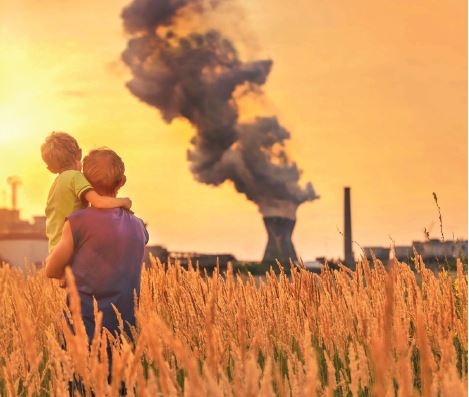
It is now the second largest global killer after high blood pressure. South Asia suffered a disproportionate share of this burden, with 2.6 million deaths, of which 2.1 million occurred in India. The report underscored a disturbing figure: more than 700,000 children under the age of five died due to air pollution, making it the second leading risk factor for child mortality globally, after malnutrition. (c)
Air pollution has become one of the most severe public health threats worldwide. The State of Global Air 2024 report, published by the Health Effects Institute and the Global Burden of Disease project, found that air pollution caused 8.1 million deaths in 2021. It is now the second largest global killer after high blood pressure. South Asia suffered a disproportionate share of this burden, with 2.6 million deaths, of which 2.1 million occurred in India. The report underscored a disturbing figure: more than 700,000 children under the age of five died due to air pollution, making it the second leading risk factor for child mortality globally, after malnutrition.
A major contributor to child deaths in low and middle-income countries is household air pollution from burning solid fuels such as wood, coal and agricultural residue for cooking. In Africa and Asia, this accounted for 500,000 deaths among children. South Asia alone recorded 260,600 such deaths. Despite progress in access to clean cooking fuels and healthcare, the death rate among under-five children in South Asia remains 164 deaths per 100,000, higher than the global average of 108.
Particulate matter of 2.5 micrometres or smaller (PM2.5) remains the primary pollutant responsible for the health burden, contributing to cardiovascular diseases, lung disorders, and respiratory infections. However, nitrogen dioxide, largely emitted by vehicles and industrial activity, has emerged as an increasing concern. Long-term exposure to nitrogen dioxide is linked to asthma, reduced lung function and heart disease. About 55 percent of the countries assessed do not meet the World Health Organization’s annual nitrogen dioxide guideline. Ozone pollution is also rising, linked with nearly 490,000 deaths in 2021. Ozone formation intensifies in warmer conditions, highlighting the growing connection between climate change and deteriorating air quality.
India and China accounted for more than half of the global deaths from PM2.5 exposure. Air pollution has also sharply reduced life expectancy in India. According to the Air Quality Life Index released by the University of Chicago in 2022, the average Indian loses five years of life due to polluted air. In the Indo-Gangetic Plain, where pollution levels remain persistently high, the loss reaches seven to nine years in several districts.
The health impact is visible in hospitals across northern India, especially during winter when pollution worsens due to stagnant air, crop residue burning and increased combustion. Hospitals in Delhi and other Indo-Gangetic cities regularly report surges in respiratory illnesses among children. Doctors stress that children are particularly vulnerable because they breathe faster and have smaller airways. Fine particulate matter can enter the bloodstream, reach vital organs and interfere with the development of lungs, brain and immunity. Studies have linked prenatal and early-life exposure to air pollution with low birthweight, impaired cognitive development, stunting, asthma and increased risk of chronic illnesses in adulthood.
Research from different regions of India has demonstrated the link between PM2.5 and neonatal mortality, anaemia in children, and increased risk of respiratory infections. Evidence also suggests that pollutants can cross the placenta and affect foetal development. Emerging studies are investigating possible connections between pollution and childhood cancers, although this remains an under-researched area in India.
The Indo-Gangetic region’s geography intensifies pollution. Seasonal temperature inversions trap pollutants close to the ground, while emissions from vehicles, industry, household fuels and agricultural burning accumulate across state boundaries. Studies show that air pollution moves across regions, making isolated city-level measures insufficient. Effective clean air management will require coordinated regional action, shared monitoring systems and clear governance frameworks.
Public health experts argue that reducing air pollution must be treated as a national emergency. They stress that cleaner fuels, stronger emissions regulations, better urban planning, and expansion of healthcare readiness are critical. Evidence is already overwhelming and continuing inaction will deepen the crisis.
Start your day with The Savera Morning Brief, bringing you the latest news from India and around the...

Union Home Minister Amit Shah will pay tribute to police martyrs at the National Police Memorial in New...

Four more people, including two women, have been arrested in the Tiger Shroff firing case. Delhi Police are...
We are very proud that at present India is the number one country in the world by surpassing...

Every investor wants the wealth-creating power of equity and the reassuring stability of debt. Balanced Advantage Funds attempt...

Tourism is a major source of government revenue in our country. There are different types of tourism. Scenic...

Aries: The day will be auspicious...