Last Updated: November 25, 2026
Last Updated: November 25, 2026




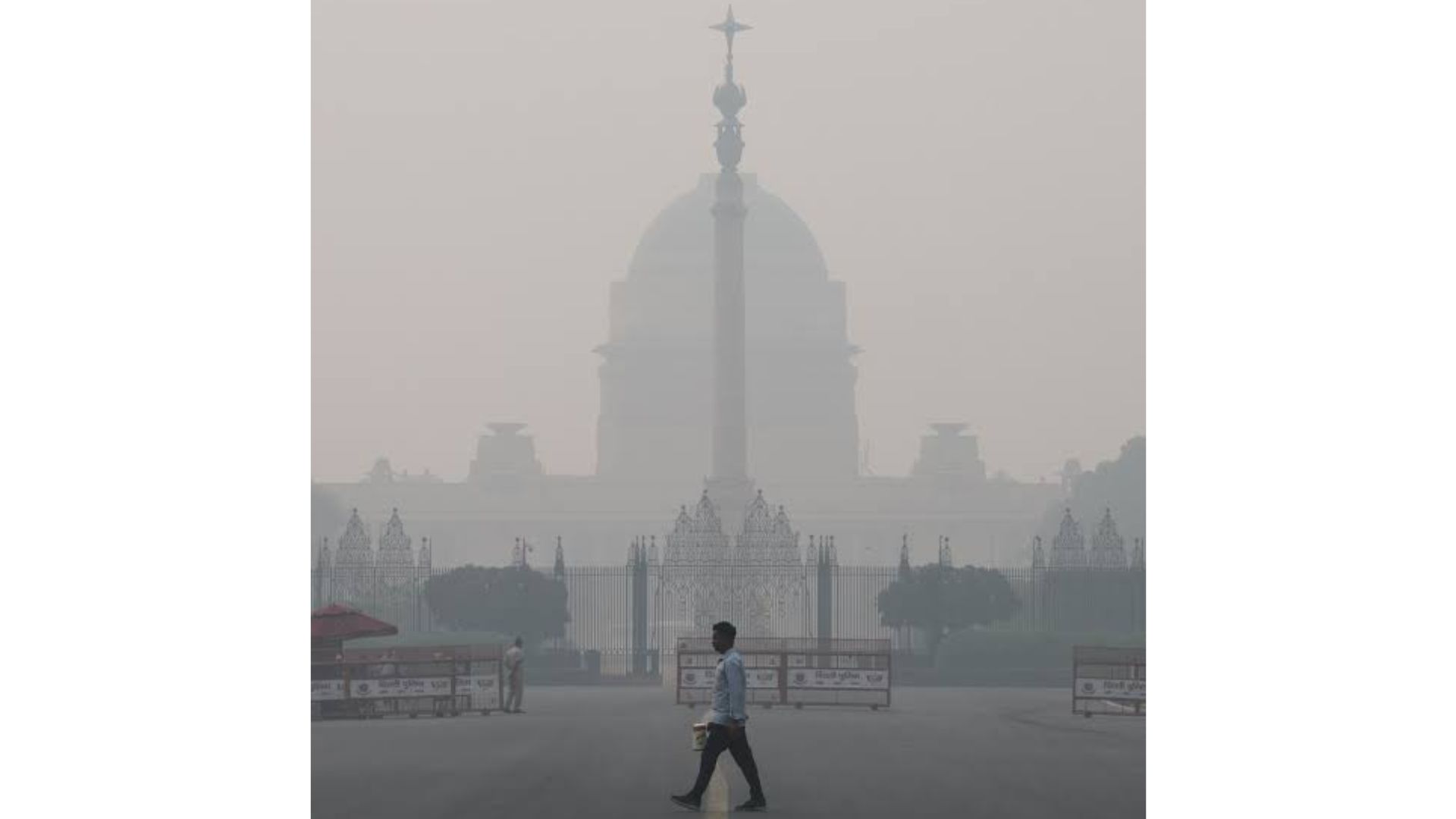
India and Pakistan had 42 of the world’s 50 most polluted cities in 2025. Millions now face another toxic winter. As winter approaches in the Northern Hemisphere, so does smog season, and few places are hit harder than South Asia. Cities across the region, from New Delhi to Dhaka, are blanketed in a thick grey haze, with the Air Quality Index (AQI) exceeding 350 in several parts of India’s capital last week, a level classed as “hazardous”, according to the air quality monitoring platform IQAir. In winter, a layer of warmer air can trap cooler air near the ground. Combined with low wind speeds, this stops pollution from vehicles, industry and crop burning from dispersing. Al Jazeera visualises which cities have the worst air quality, how it is measured, how smog affects your health and what you can do to protect yourself. What causes smog? Smog mostly comes from burning fossil fuels, particularly coal, along with exhaust from vehicles and factories, and smoke from forest and crop fires. Summer smog and winter smog form differently. In summer, sunlight reacts with nitrogen oxides and other pollutants to form ground-level ozone. In winter, a layer of warm air can sit on top of cooler air near the ground, trapping pollution and stopping it from dispersing. In South Asia, winter smog is made worse by geography. The Indo-Gangetic Plain, which stretches across parts of Pakistan, northern India, Nepal and Bangladesh, is one of the world’s most polluted regions. Hemmed in by the Himalayas to the north, the plain has weak winds and a shallow layer of air in winter, so pollution has nowhere to go. How is air quality measured? The air we breathe is mostly nitrogen and oxygen, but it also contains small amounts of other gases and tiny particles, some of which are harmful. Monitoring stations track six main pollutants, including ozone, nitrogen dioxide and particulate matter (PM), tiny particles suspended in the air. The most harmful is PM2.5, particles 2.5 micrometres or less in diameter, about 30 times thinner than a human hair. They can travel deep into the lungs and enter the bloodstream. These readings are combined into an Air Quality Index (AQI). The US AQI runs from 0 to 500 and is split into six colour-coded categories: Green (0-50), good: little or no risk. Yellow (51-100), moderate: acceptable for most people. Orange (101-150), unhealthy for sensitive groups: children, older adults and people with heart or lung conditions. Red (151-200), unhealthy: the general public may be affected. Purple (201-300), very unhealthy: health risks for everyone. Maroon (301+), hazardous: emergency conditions. Which cities have the most polluted air? All 50 of the world’s most polluted cities in 2025 were in Asia, according to IQAir, with 42 of them in India and Pakistan. Loni, on the outskirts of Delhi in Uttar Pradesh state, topped the list with average PM2.5 levels of 112.5 µg/m³ (micrograms per cubic metre), more than 22 times the WHO’s recommended limit, followed by Hotan in China and Byrnihat and New Delhi in India. Vehicles account for 23 percent of Delhi’s winter pollution, while biomass burning, including farm stubble fires, contributes 20 percent, according to India’s Ministry of Environment, Forest and Climate Change.
Good morning, viewers! Catch up on the top India and world news, politics, crime, business, sports and major...

The Samajwadi Party (SP) has released its first list of five candidates for the 2027 Uttar Pradesh Assembly...

The Supreme Court will hear separate bail pleas from student activists Umar Khalid and Sharjeel Imam on Wednesday.
Air quality in the national capital, Delhi, remained in the ‘poor’ category on Wednesday morning
A case of an alleged gang-rape of a 22-year-old woman inside a cafe in Preet Vihar, East Delhi,...
Some studies on the drivers of global deforestation inaccurately attribute forest loss to shifting cultivation.

Aries: The day will be auspicious...