Last Updated: November 26, 2026
Last Updated: November 26, 2026




-Abhishek Vij
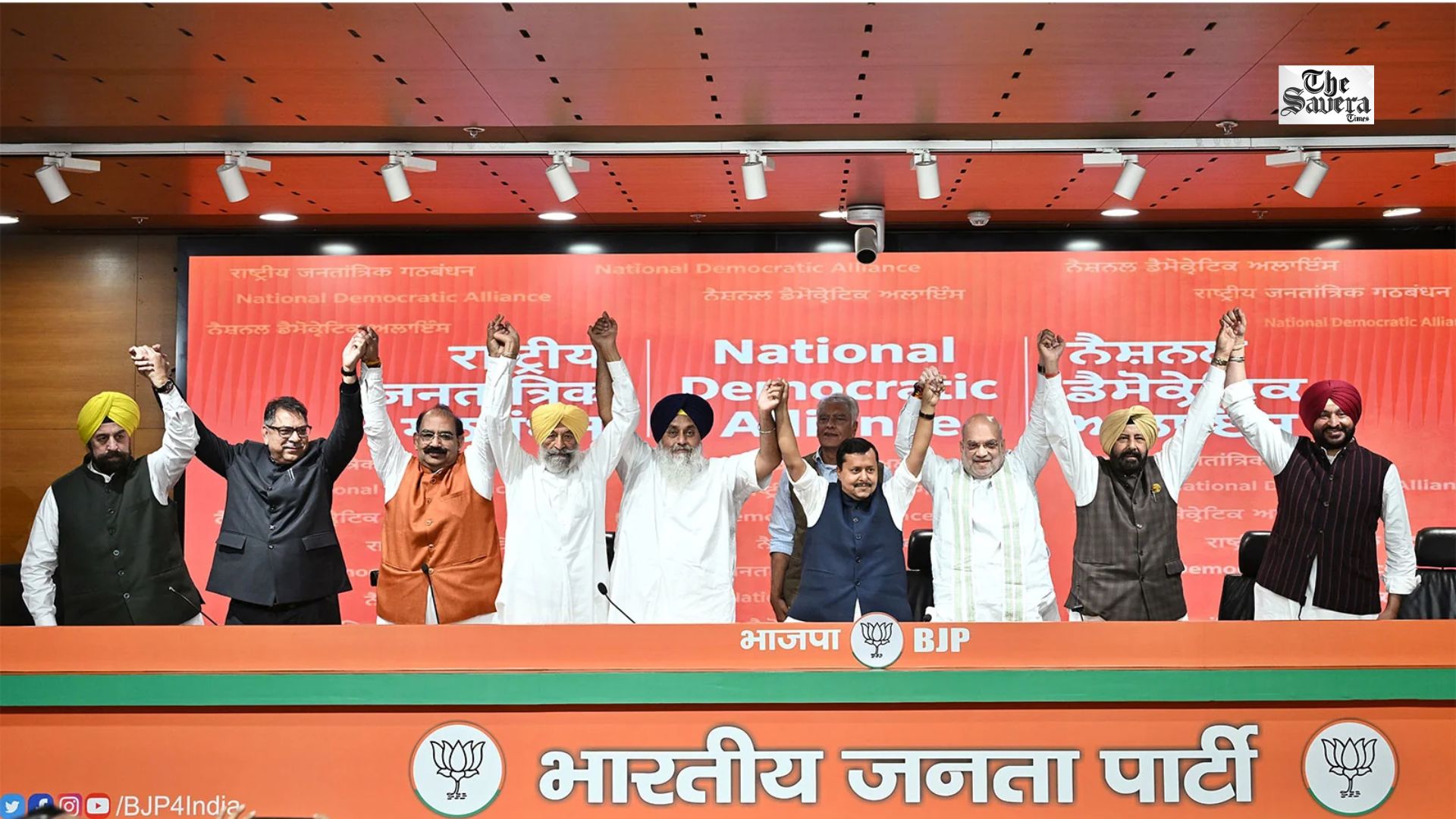
On Tuesday, coinciding with the birth anniversary (Prakash Parv) of Sri Guru Nanak Dev Ji, Union Home Minister Amit Shah announced an alliance between the Akali Dal and the BJP for the upcoming Punjab Assembly elections. Present at the time of the announcement were Punjab BJP President Kewal Singh Dhillon, BJP National General Secretary Nitin Nabin, senior BJP leader Sunil Jakhar, former state BJP president Ashwani Sharma, Shiromani Akali Dal President Sukhbir Badal, and other senior Akali leaders. This marks the revival of the Akali-BJP alliance in Punjab after a gap of six years. Previously, the two parties had formed coalition governments under the leadership of the late Parkash Singh Badal in 1997, 2007, and again in 2012. The alliance had collapsed in September 2020 over the farm reform laws. As a consequence of this split, the two parties—contesting separately—managed to secure only 5 out of the 117 total assembly seats; the Akali Dal won 3, while the BJP won 2. In 2022, the electorate chose the Aam Aadmi Party (AAP), which formed the government in Punjab with a resounding majority of 92 seats. Chief Minister Bhagwant Mann has led the government successfully over the past five years. The Aam Aadmi Party is now preparing to enter the electoral fray with full vigor and confidence. AAP leaders are firmly convinced that, given the substantive work accomplished by the Bhagwant Mann-led government over the last five years— including the fulfillment of all the guarantees made during the previous election—the people of Punjab will grant them another opportunity to serve. Undoubtedly, the formation of the AkaliBJP alliance has somewhat altered the political landscape of Punjab. While this partnership may provide the two parties with greater strength, the Aam Aadmi Party remains confident that its track record will secure its return to power. Following the formation of the alliance, both the Akali Dal and the BJP are confident of victory. With the Akali Dal now part of the NDA, the specific seat-sharing arrangement may be finalized later; however, it is certain that the Akali Dal will take the lead— acting as the ‘elder brother’—while the BJP will fulfill its role as the ‘younger brother.’ The seats will be divided in a 60:40 ratio, and Sukhbir Badal will be the face for the Chief Minister’s post. Framing this alliance as a symbol of Hindu-Sikh unity, the sentiment once expressed by the late Parkash Singh Badal—that Hindus and Sikhs in Punjab share an inseparable, ‘flesh-and-nail’ bond—is being echoed. Prior to the alliance, both parties had announced plans to contest all 117 seats in the state; however, demonstrating discipline, they have now reached a consensus on seat-sharing. While those who do not receive a ticket may feel disappointed, the prospect of forming an alliance government could potentially allow for their accommodation elsewhere. The electoral landscape will shift for both the Aam Aadmi Party (AAP) and the Congress. In effect, the contest in Punjab will primarily be a three-way race between the Aam Aadmi Party, the Congress, and the Akali-BJP alliance. The Aam Aadmi Party, having reached every village in Punjab on the strength of its development initiatives, remains confident in its strong position despite the Akali-BJP alliance.
Stay updated with the latest news from Punjab, India and around the world with The Savera Times Evening...

New Delhi: The Delhi High Court on Wednesday refused to entertain a Public Interest Litigation (PIL) seeking directions...
Chandigarh: Former Punjab BJP President Sunil Jakhar on Wednesday alleged that the AAP government in the state, disregarding...
New Delhi: The Union Cabinet, chaired by Prime Minister Narendra Modi, on Wednesday approved the proposed project for...

Major changes have been made in the police administration in Punjab. The Punjab government has carried out a...

New Delhi: The Supreme Court on Wednesday set aside the Allahabad High Court’s directions to the Central Bureau...
Aries: The day will be auspicious...