Last Updated: October 15, 2026
Last Updated: October 15, 2026





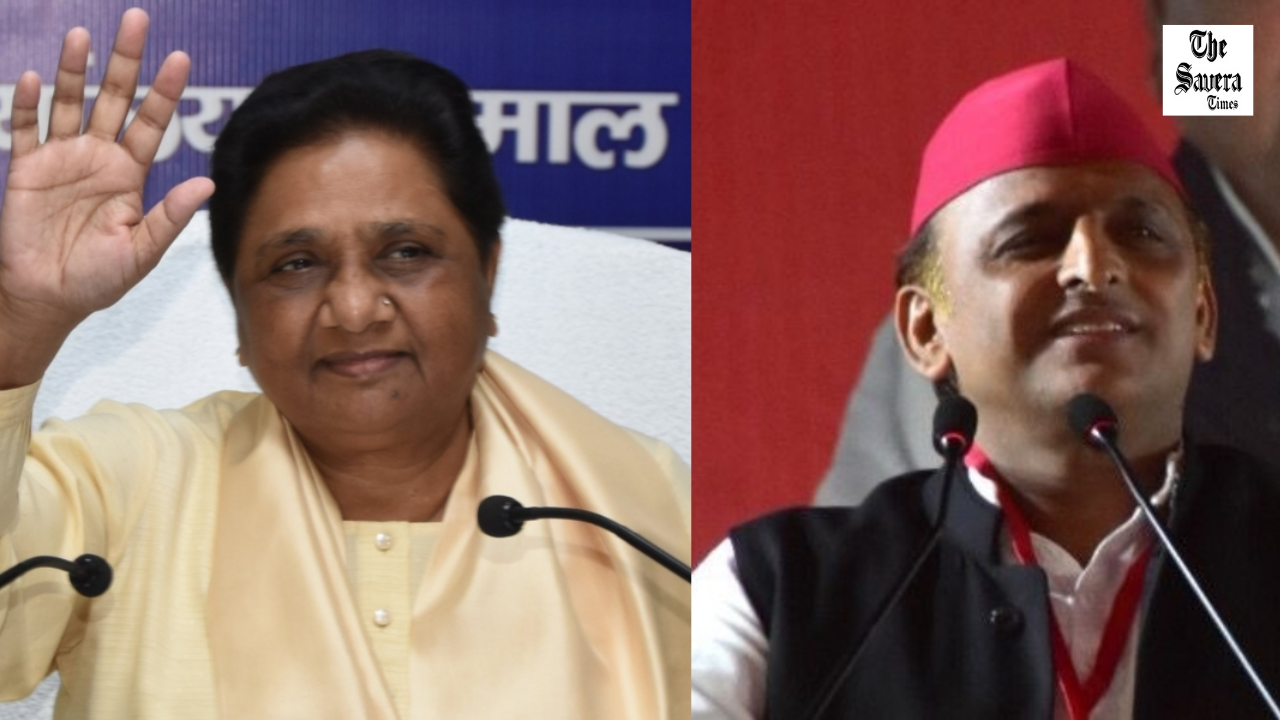
Samajwadi Party chief Akhilesh Yadav recently stirred political debate after saying that his party had once supported the idea of Mayawati becoming Prime Minister. The remark came during a press interaction in Lucknow, where he also mentioned that opposition parties earlier wanted Nitish Kumar to become Prime Minister under the opposition alliance.
Political observers say the statement is not merely rhetorical, but part of a broader strategy aimed at reshaping social equations in Uttar Pradesh ahead of the 2027 Assembly elections. According to analysts, the remarks are designed to appeal to key social groups and reposition the Samajwadi Party in the state’s evolving political landscape.
Experts believe the statement about Mayawati has deeper political implications. By publicly acknowledging that he once supported Mayawati for the country’s top post, Akhilesh Yadav appears to be reaching out to Dalit voters, especially the Jatav community, which forms a major support base of the Bahujan Samaj Party.
Similarly, his comments regarding Nitish Kumar are seen as an effort to connect with the Kurmi community, a prominent Other Backward Classes (OBC) group. Nitish Kumar belongs to the Kurmi caste, and his political stature has long resonated with this section of voters.
Political analysts say these remarks aim to revive the idea of broader social alliances in Uttar Pradesh politics by appealing simultaneously to Dalit and OBC communities.
The remarks are also being interpreted in the context of preparations for the 2027 Uttar Pradesh Assembly elections. According to observers, Akhilesh Yadav’s strategy is to expand the Samajwadi Party’s voter base beyond its traditional support groups.
By invoking Mayawati’s name for the prime ministerial post, he is attempting to create goodwill among Dalit voters who historically supported the BSP. At the same time, highlighting Nitish Kumar’s leadership appeals to Kurmi voters and other OBC groups who identify with him politically.
Analysts note that Uttar Pradesh has a significant Kurmi population and several MPs from this community have been elected from the state, including many on the Samajwadi Party ticket. Strengthening support among such groups could play a crucial role in upcoming elections.
Akhilesh Yadav’s remarks also reflect his attempt to project himself as a leader who supports broader opposition unity. He said that when the SP and BSP formed an alliance earlier, his party had supported Mayawati for the Prime Minister’s post, and later opposition leaders discussed Nitish Kumar as a possible candidate for the role.
The statement highlights the shifting alliances and strategies among opposition parties in India, particularly as they prepare for upcoming national and state elections.
However, the comments have also triggered discussions about whether such political messaging could revive cooperation between parties that have historically been rivals in Uttar Pradesh.
While supporters of the Samajwadi Party view the statement as a sign of inclusive politics, critics argue it is primarily a strategic move aimed at consolidating caste-based vote banks.
Political analysts say the effectiveness of this approach will depend on how voters respond to the outreach efforts and whether opposition parties are able to build meaningful alliances in the future.
For now, Akhilesh Yadav’s remarks have reignited debate over caste equations, alliance politics and leadership narratives in Uttar Pradesh — factors that are likely to shape the state’s political landscape in the coming years.
Uttar Pradesh Police arrested a 28-year-old alleged criminal after an encounter in Noida’s Sector 63. Police said around...

Yogi Adityanath and Nitin Gadkari extend greetings on the third day of Shardiya Navratri, seeking Maa Chandraghanta's blessings...
Uttar Pradesh Chief Minister Yogi Adityanath extends greetings on the second day of Shardiya Navratri, dedicated to Maa...

Uttar Pradesh CM Yogi Adityanath and Union Minister Nitin Gadkari greet people on the first day of Sharadiya...
Pauri: A woman was killed in a leopard attack near Khandah village on the Srinagar-Pauri road in Uttarakhand’s...

Lucknow: The Uttar Pradesh Cabinet on Friday approved a number of proposals, including continuation of the scheme to...
Aries: The day will be auspicious...