Last Updated: October 21, 2026
Last Updated: October 21, 2026





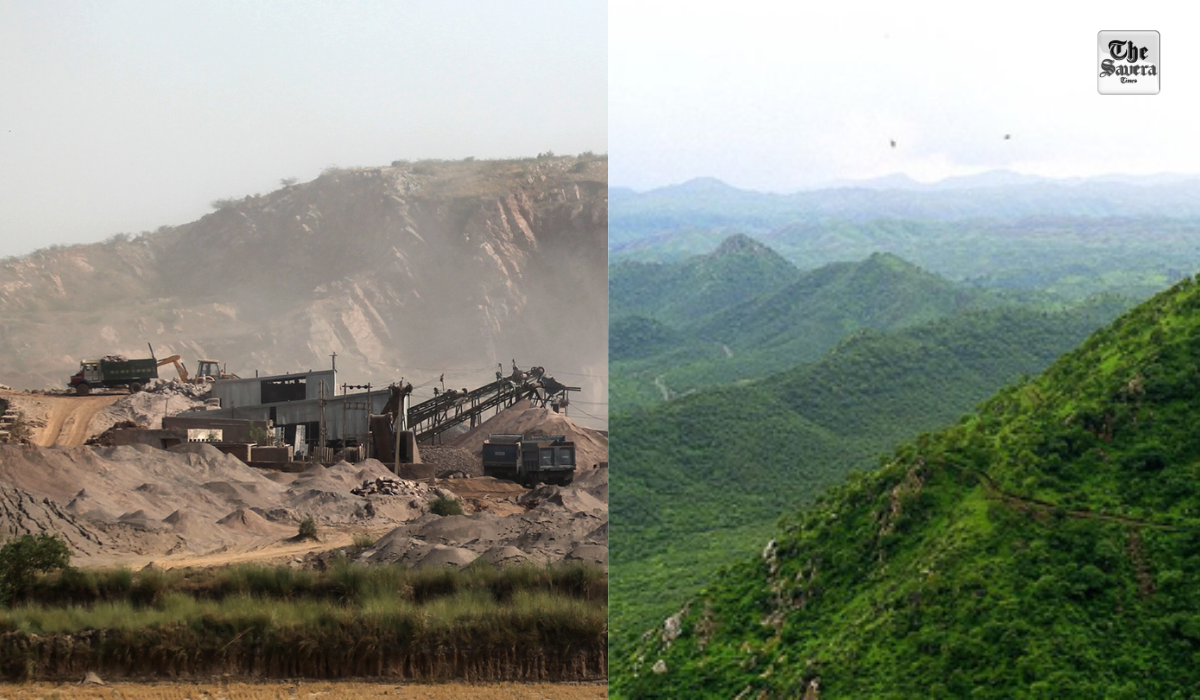
New Delhi / Northern India: Protests have erupted across northern India following the Supreme Court’s recent redefinition of the Aravalli Hills, one of the world’s oldest geological formations. Spanning Rajasthan, Haryana, Gujarat, and Delhi, the Aravallis play a crucial ecological and geological role in the region.
Under the court’s new definition, accepted following federal government recommendations, an Aravalli hill is now classified as any landform rising at least 100 metres (328 ft) above the surrounding terrain. Furthermore, two or more such hills within 500 metres of each other, along with the land connecting them, are considered an Aravalli range.
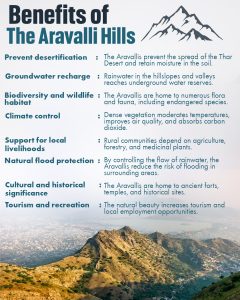
The Aravalli Range is one of the world’s oldest mountain ranges and India’s oldest fold mountain range, estimated to be approximately 1.5 to 2 billion years old. Stretching for approximately 800 kilometers, it begins in Delhi, passes through Haryana and Rajasthan, and ends in Gujarat. Its highest peak is Mount Abu’s Guru Shikhar (1,722 meters). Although the range has eroded significantly over time, its environmental significance remains significant. The Aravalli Range plays a vital role in preventing the expansion of the Thar Desert, recharging groundwater, moderating temperatures, and reducing dust and air pollution in Delhi-NCR. The region is also a major source of biodiversity, wildlife corridors, and forest resources, helping prevent soil erosion and flooding. However, rapid urbanisation, mining, illegal construction and encroachment are posing a serious threat to the existence of the Aravallis, with experts fearing that its degradation could further aggravate water crisis, heat intensity, pollution and desertification.
In short: The Aravalli Hills are ancient, ecologically vital, and geographically extensive, but they face serious threats from human activity that can harm water resources, wildlife, and local livelihoods.
The Aravalli Hills are crucial for the ecological health of Delhi-NCR, acting as a natural protective barrier for the region. They help block dust and air pollution, especially from the Thar Desert, and play a key role in recharging groundwater by allowing rainwater to percolate slowly into underground aquifers. The presence of forests and rocky terrain in the Aravallis also helps moderate temperatures, reducing the intensity of heatwaves and extreme heat conditions. Additionally, the hills regulate the flow of rainwater, thereby lowering the risk of urban flooding during heavy monsoons. Owing to these vital functions, environmentalists often refer to the Aravallis as Delhi’s “Green Wall.”
The connection between the Aravallis and groundwater is particularly significant. The porous rock formations and forest cover enable rainwater to seep deep into the soil, naturally replenishing aquifers that supply water to Delhi, Gurugram, Faridabad, and Alwar. Beyond recharge, the Aravalli hills also act as natural filters, preventing contaminants from easily entering groundwater sources and thereby protecting water quality across the region.
Environmentalists argue that this height-based definition risks leaving numerous lower, scrub-covered but ecologically vital hills unprotected. These smaller hills are critical for:
Local residents, farmers, environmental activists, lawyers, and some political parties have organized peaceful demonstrations in cities like Gurugram and Udaipur over the weekend
The federal government has sought to downplay concerns, stating that the new definition is intended to strengthen regulation and bring uniformity in mining and development control. Key points from the government:
Environment Minister Bhupender Yadav stated that the policy does not allow unrestricted mining, and areas below 100 metres will not automatically be opened for exploitation.
The redefinition of the Aravalli hills highlights the tension between development and ecological conservation in India. While the government claims the new framework will standardize regulation, environmentalists argue that height alone is not a sufficient criterion to preserve ecosystems.
The Aravallis are critical for preventing desertification, maintaining groundwater levels, and supporting biodiversity in northwestern India. Excluding smaller hills from protection could lead to fragmented ecosystems, threatening wildlife corridors and natural water recharge areas.
The protests are likely to continue as activists explore legal avenues to challenge the Supreme Court’s new definition. Observers note that this debate reflects a broader national challenge: balancing economic development, mining, and urban expansion with the need to preserve ecologically sensitive areas.
Reduced water levels at Har Ki Pauri and other Haridwar ghats have inconvenienced pilgrims during the Upper Ganga...
Six people returning from a Dussehra Mela were seriously injured when a car hit them on National Highway...

A bus travelling from Pachiound to Ramnagar fell into a gorge at Gulli Gula in Udhampur district. Nine...
Start your day with The Savera Morning Brief, bringing you the latest news from India and around the...

Union Home Minister Amit Shah will pay tribute to police martyrs at the National Police Memorial in New...

Four more people, including two women, have been arrested in the Tiger Shroff firing case. Delhi Police are...

Aries: The day will be auspicious...