Last Updated: October 21, 2026
Last Updated: October 21, 2026





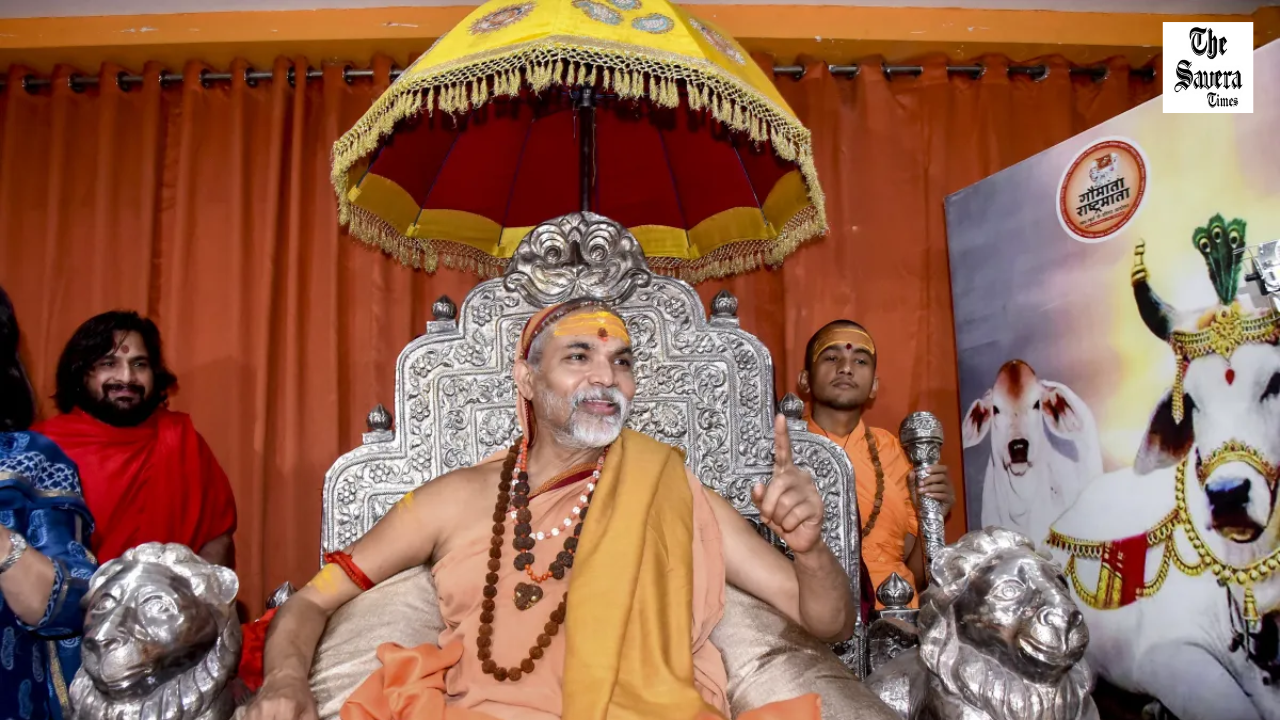
The Allahabad High Court on 27 February 2026 granted interim relief to Shankaracharya Swami Avimukteshwaranand by staying his arrest in connection with a controversial case linked to statements made during a religious gathering. The court’s order came after the seer approached it seeking protection from arrest, arguing that he was being wrongfully dragged into criminal proceedings. This development has temporarily eased the legal pressure on the religious leader, albeit without quashing the FIR or charges against him.
Justice Sanjay Kumar Singh of the Allahabad High Court heard the petition and directed that no coercive action should be taken against Swami Avimukteshwaranand until 2 March 2026, the next scheduled hearing date. The bench also asked opposing parties to file their responses before the next hearing.
The case against Swami Avimukteshwaranand, a senior Shankaracharya from Uttarakhand’s Gurukul Kangri Ashram, stems from alleged statements he made during a religious sermon in Haridwar in early 2026. Controversy erupted after a video of his speech went viral, prompting complaints that his remarks amounted to “hate speech” and could incite social disharmony.
Following public outrage and political criticism, a First Information Report (FIR) was registered at a police station in Haridwar district under relevant sections of the Indian Penal Code (IPC). The FIR named Swami Avimukteshwaranand and others as accused in the case.
Soon after the FIR was filed, the Swami approached the Allahabad High Court seeking a stay on his arrest and protection from coercive action, arguing that his statements were being misrepresented and taken out of context.
During the hearing, the High Court highlighted that the right to freedom of speech, especially in religious or spiritual discourse, must be balanced with societal harmony, but also cautioned that arrest should not be the first recourse without careful judicial scrutiny. Justice Sanjay Kumar Singh emphasized the need for fair legal process and noted that the petitioner had cooperated with the investigation so far.
The court’s order does not dismiss the case but merely prevents authorities from arresting the Swami at this stage. This relief is temporary and limited to the next hearing date. The bench instructed that the criminal proceedings continue and that the state and complainants submit their detailed replies by the next listed date of 2 March 2026.
Legal experts believe the High Court’s order reflects judicial caution in matters involving religious leaders and sensitive public discourse. Senior advocates note that courts usually grant interim protection in cases where arrest may seem premature, especially when the accused has shown willingness to cooperate in the investigation. They pointed out that the court’s approach ensures that the investigative process is not hampered while also protecting constitutional rights until allegations are tested.
Some analysts believe this case will hinge on whether the prosecution can demonstrate that the statements attributed to the Swami actually constitute an offence under the law, particularly given the tension between freedom of expression and public order provisions.
The interim order has drawn mixed reactions. Followers of Swami Avimukteshwaranand and some religious organisations welcomed the court’s decision, calling it a vindication of spiritual freedom and due process. They argue that religious discourse should not be criminalized without clear intent to incite violence or hatred.
Conversely, several civil society groups and critics maintained that the legal process should take its course and that public figures, including religious leaders, must be held accountable if complaints allege violation of law and social harmony. Some political commentators have also weighed in, saying the case underscores growing tensions between societal values, religious expression, and legal boundaries.
The High Court will resume hearing the case on 2 March 2026, when more detailed arguments and responses from the prosecution and complainants will be considered. Until then, the stay on arrest remains in effect, providing Swami Avimukteshwaranand temporary relief from custodial action.
Based on submissions, the court may then decide whether to continue protective orders, direct further investigation, or set aside the FIR in due course. The case is likely to continue attracting attention owing to its intersection with free speech, religious discourse, and law enforcement.
Union Home Minister Amit Shah will pay tribute to police martyrs at the National Police Memorial in New...
Four more people, including two women, have been arrested in the Tiger Shroff firing case. Delhi Police are...

We are very proud that at present India is the number one country in the world by surpassing...

Every investor wants the wealth-creating power of equity and the reassuring stability of debt. Balanced Advantage Funds attempt...

Tourism is a major source of government revenue in our country. There are different types of tourism. Scenic...
Good Evening Viewers! Catch up on the day's biggest stories with The Savera Times Evening Bulletin. Get the...

Aries: The day will be auspicious...