Last Updated: October 12, 2026
Last Updated: October 12, 2026





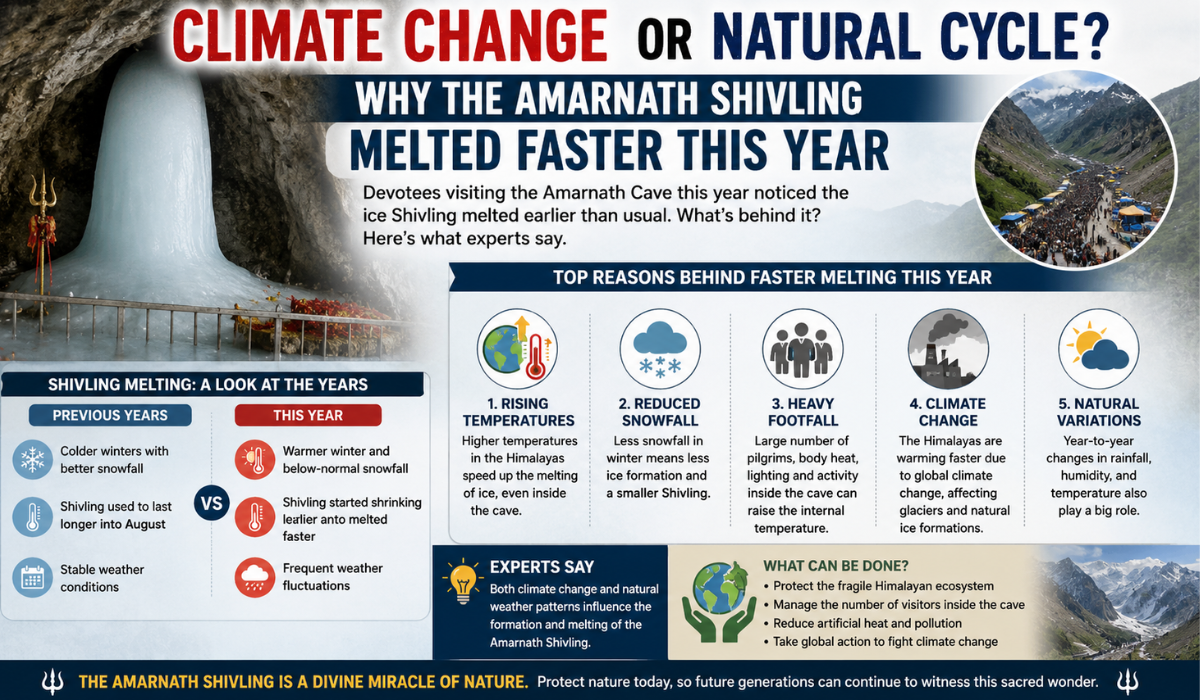
Every year, millions of devotees undertake the Amarnath Yatra to witness the naturally formed ice Shivling inside the Amarnath Cave in Jammu and Kashmir. In recent years, however, many pilgrims have noticed that the ice formation appears smaller or melts much earlier than expected. Scientists say climate change is one of the key reasons.
The Amarnath Shivling is a naturally occurring ice stalagmite that forms inside the cave as water droplets freeze in low temperatures. It is not carved by humans but develops through a natural freezing process.
1. Rising temperatures
Global warming has increased average temperatures in the Himalayan region. Even small temperature increases can speed up the melting of ice inside the cave.
2. Changing snowfall patterns
The Shivling depends on freezing conditions and water seepage. Reduced snowfall and warmer winters can affect both the size and longevity of the ice formation.
3. Heat generated by large crowds
During the Yatra, thousands of pilgrims visit the cave daily. Human body heat, lighting, and movement can slightly raise the cave’s internal temperature, contributing to faster melting, especially during warmer years.
4. Extreme weather events
Climate change is making weather in the Himalayas more unpredictable, with heat waves, erratic rainfall, and shorter cold periods that influence ice formation.
Yes. The ice Shivling generally forms every year during winter and grows before the annual pilgrimage. However, its size and how long it lasts vary depending on weather conditions.
No. Experts say climate change is not the sole reason behind the early melting of the Amarnath Shivling. Its size and lifespan depend on a combination of natural and environmental factors, including seasonal temperature fluctuations, the amount of snowfall and rainfall during winter, humidity levels inside the cave, and the number of pilgrims visiting the shrine. These conditions naturally vary from year to year, which is why the Shivling does not form to the same size or last for the same duration every season. While long-term climate change may be increasing temperatures in the Himalayan region, experts believe this year’s early melting is likely the result of multiple factors working together.
Researchers have reported that the Himalayas are warming faster than the global average in many areas. This affects glaciers, snow cover, and the natural ice-forming processes that sustain formations like the Amarnath Shivling.
While the formation and melting of the Amarnath Shivling are natural processes that cannot be controlled, experts believe certain measures can help minimize human impact on the fragile cave environment. Regulating the number of pilgrims allowed inside the cave at any given time, limiting artificial heat sources such as excessive lighting, and protecting the delicate Himalayan ecosystem can help preserve the natural conditions required for ice formation. Experts also stress that tackling the broader challenge of climate change by reducing greenhouse gas emissions is crucial to slowing the long-term warming of the Himalayan region and safeguarding natural wonders like the Amarnath Shivling for future generations.
The Amarnath Shivling is both a sacred symbol for millions of devotees and a remarkable natural ice formation. Its changing size is influenced by natural weather cycles as well as broader environmental changes. While no single factor explains every year’s conditions, scientists agree that a warming climate is increasingly affecting the Himalayan region, making the preservation of these fragile natural formations more challenging.
One of the most common questions people ask these days is how to lose belly fat. Belly fat...

The weather took a turn in Punjab on Wednesday morning. Pathankot experienced heavy rain in the morning. A
Turtle doves picking fallen grain from Paddy fields, Cicada chirping on willow trees and the cackle of migratory...

Andre Agassi became one of the greatest tennis players in the world. Agassi’s father, Mike, a former Olympic...

Have you ever wondered how the words you speak can influence your thoughts, emotions, behavior, relationships and even...

Ac There’s no doubt that smoking can cause serious health related problems and also up the risk of...

Aries: The day will be auspicious...