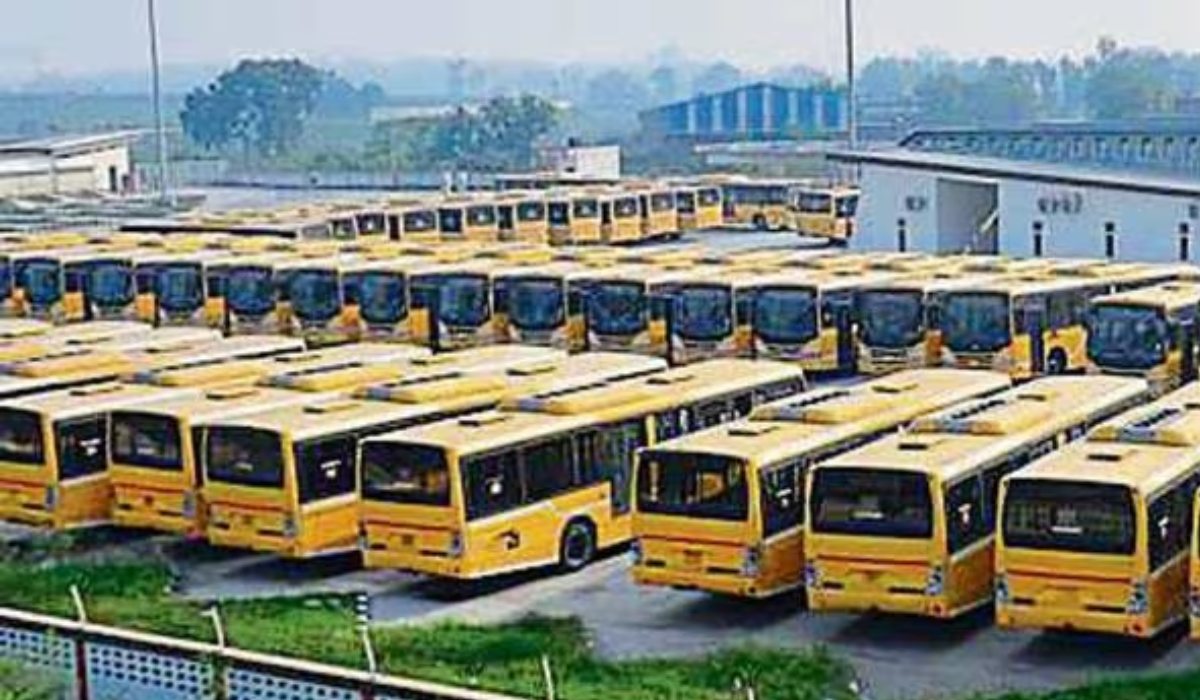
Amritsar: The Amritsar Bus Rapid Transit System (BRTS), built at a cost of around ₹600 crore, is set to be discontinued in its existing form, with the dedicated corridors built in the middle of roads to be dismantled.
The corridor platforms and railings will also be removed. The government says this will create more space for regular traffic and improve movement on city roads.
BRTS Failed to Gain Expected Popularity
The first phase of the Amritsar BRTS project was launched on December 15, 2016, and was inaugurated by then Deputy Chief Minister Sukhbir Singh Badal.
Several attempts were later made to improve the system during the Congress government, including free bus services for students. However, the BRTS failed to gain the popularity expected among commuters.
‘Original Concept Not Suitable for Amritsar’
Former Punjab minister Dr Inderbir Singh Nijjar said the basic BRTS concept was not suitable for a city like Amritsar.
According to him, the centrally located corridors made it difficult for passengers to reach bus stations and exit them. The large distance between several stations also encouraged commuters to prefer autos and three-wheelers instead of BRTS buses.
₹2 Crore Monthly Loss
Dr Nijjar said BRTS ridership had at one point reached around 60,000 passengers a day. Despite this, the system was incurring losses of nearly ₹2 crore every month, making it difficult to continue operating the project under the existing model.
100 Electric Buses Planned by November
The government is now preparing to introduce around 100 electric buses on regular routes. These buses are expected to hit the roads by November.
Parking and charging infrastructure is also being developed at Mall Mandi at a cost of around ₹3.5 crore, in addition to the existing parking facility at Verka.
Mayor Jatinder Singh Moti Bhatia said the BRTS corridor occupies nearly 30 feet of road space. Removing it is expected to open up the roads and provide relief from traffic congestion.
New Bus Model to Have More Stops
The government has clarified that public bus services will not end with the removal of the BRTS corridor. Instead, the model is being changed.
The new electric buses will operate on normal roads rather than dedicated corridors and are expected to have more stops, making it easier for passengers to access public transport without having to walk long distances to reach a station.