Last Updated: October 21, 2026
Last Updated: October 21, 2026





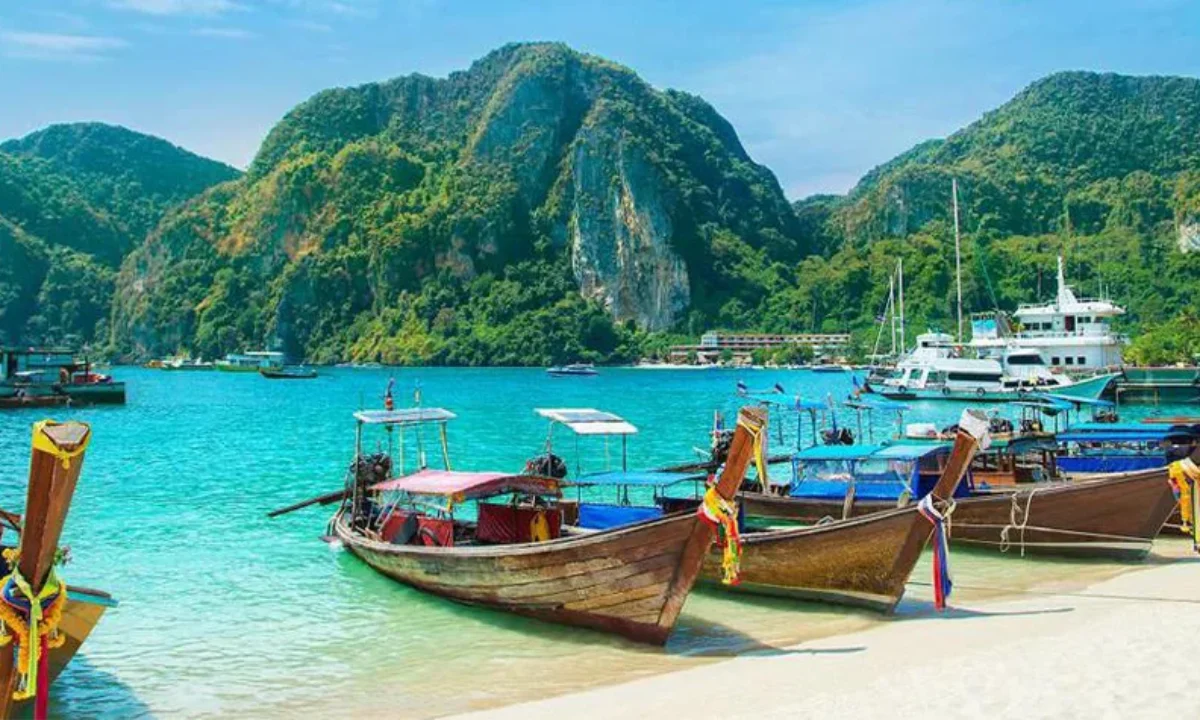
The Andaman & Nicobar Islands are poised to become a strategic gateway for India, a world-class transhipment and logistics hub for the Bay of Bengal, and a model of ecological stewardship, with the government approving the ambitious ₹81,000 crore Great Nicobar Island Development Project (GNIDP).
This holistic project aims to transform Great Nicobar Island into a multimodal hub comprising a transhipment port, an international airport, a township and a power plant, with the vision of developing the island as a sustainable, green, global destination for business, trade and leisure.
Its proximity to the Six Degree Channel and the Strait of Malacca, along with its location on major international shipping routes, makes Great Nicobar a strategically important maritime transhipment hub for India.
The dual-use Greenfield International Airport is planned to handle 4,000 passengers per hour during peak operations and will support both civilian and military flights.
The power plant will have a capacity of 450 MVA and will supply electricity to the International Container Transhipment Terminal (ICTT) and the integrated township. The township includes two new greenfield cities at Campbell Bay and Galathea Bay, along with a cruise terminal, luxury resorts and industrial facilities.
The project marks the first comprehensive effort to integrate national security objectives with regional economic development in the Bay of Bengal by positioning the islands as a strategic economic hub.
Geography played a decisive role in selecting Great Nicobar Island for the project. The island lies just 40 nautical miles from the East-West shipping route that passes through the Six Degree Channel and the Strait of Malacca.
Galathea Bay, located at the southern tip of the island, is considered an ideal site for a transhipment port due to its natural 20-metre draft, allowing large supertankers and container vessels to dock.
The article also notes that the Andaman & Nicobar Islands, with a coastline of about 1,962 kilometres, generate an Exclusive Economic Zone (EEZ) of nearly 600,000 square kilometres in the eastern Indian Ocean under the provisions of the United Nations Convention on the Law of the Sea (UNCLOS), accounting for roughly one-third of India’s total EEZ.
Once the GNIDP becomes operational, combat aircraft can be stationed at the dual-use airport and naval warships at the ICTT, enabling surveillance across the Andaman Sea and extending to the South China Sea. The Six Degree Channel, frequently used by military vessels moving between the Indian and Pacific Oceans, further enhances Galathea Bay’s strategic value for monitoring maritime activity.
The article also highlights the possibility of offshore oil discoveries in the region. Oil exploration around the islands began only in 2020, as the Andaman & Nicobar Islands had previously been designated a “no-go zone” for oil exploration.
Environmental sustainability remains a key focus of the project. Of the 130 sq km forest area affected, 65 sq km will remain untouched. The remaining area contains around 18 lakh trees, of which nearly 7.1 lakh are proposed to be removed over the next 30 years.
Before any tree felling begins, around 2.4 lakh trees have already been planted under the “Ek Ped Maa Ke Naam” campaign. Another 6 lakh trees are planned before Phase I commences, taking the total number of trees planted to more than those proposed to be cut, reflecting the project’s emphasis on ecological conservation alongside infrastructure development.
A balloon containing a suspected flammable chemical burst during a stage play in Siwan, injuring around 10 spectators....

State Bank of India has confirmed that 3,897 customer records containing personal information were found on the dark...

A fire in a hut in Nonapar village of Deoria district claimed three lives, including those of a...

Amit Shah paid tribute to police personnel who died in the line of duty at the National Police...

Reduced water levels at Har Ki Pauri and other Haridwar ghats have inconvenienced pilgrims during the Upper Ganga...
Six people returning from a Dussehra Mela were seriously injured when a car hit them on National Highway...

Aries: The day will be auspicious...