Last Updated: October 15, 2026
Last Updated: October 15, 2026





Sheena Sandhu
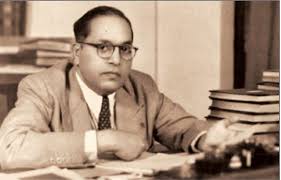
Today, as India awakens to the 135th birth anniversary of Dr. B.R. Ambedkar, the resonance of his vision is felt not just in the corridors of Parliament, but in the smallest hamlets of the nation. For decades, Babasaheb was often siloed as a sectarian leader, his vast intellectual contributions reduced to a single identity. Today, however, he stands as the unifying ideological pillar of a nation striving for “Viksit Bharat”—a developed India that is as socially equitable as it is economically potent.
The current BJP-led central government has spent the last twelve years executing a dual-track strategy to honor Ambedkar. The first is the “Panchteerth”—a geographical mapping of his life to ensure his struggle is etched into the national consciousness. The second, and perhaps more vital, is the structural dismantling of the “dependency model” for the downtrodden, replacing it with an “ownership model” that fulfills Ambedkar’s deepest economic aspirations.
The Economics of Empowerment: Beyond the Token
Ambedkar famously remarked that political democracy without social and economic democracy was a “palace built on dung.” He understood that the right to vote meant little if the right to participate in the economy was barred by the invisible walls of caste and a lack of capital.
The central government’s focus on “Saturation of Schemes” is a direct response to this Ambedkarite anxiety. Under the Pradhan Mantri Mudra Yojana, which is now a cornerstone of India’s micro-finance landscape, the figures speak to a silent revolution. As of 2026, over Rs 57 crore loans have been disbursed since the scheme’s inception. Crucially, around 50% of these beneficiaries belong to the SC, ST, and OBC communities. By providing collateral-free credit, the state has allowed the “unfunded” to become job creators.
The recent expansion of the Tarun Plus category, extending loans up to Rs 20 lakh, reflects a deliberate intent to help Dalit entrepreneurs scale their businesses, moving beyond mere survival to competitive industry. Similarly, Stand-Up India has bridged the credit gap by mandating that every bank branch support at least one SC or ST entrepreneur, effectively democratizing the “spirit of capitalism” that Ambedkar believed was essential for liberation.
Institutionalizing the Sacred: The Panchteerth
A significant hallmark of the current administration’s approach is the development of the Panchteerth—5 key sites that trace Babasaheb’s life from his birthplace in “Mhow” to the house in “London” where he stayed as a student; from “Deekshabhoomi” in Nagpur to the site of his Mahaparinirvana at “26, Alipur Road” in Delhi, and finally “Chaitya Bhoomi” in Mumbai.
This is more than a tourism project; it is an exercise in national memory-building. By elevating these sites to the status of national pilgrimage, the government has integrated the Dalit struggle into the mainstream civilizational narrative of India. When the Prime Minister inaugurated the Dr. Ambedkar National Memorial in Delhi, it signaled that the history of modern India is incomplete without the history of its social reformers.
“Education: The “Lioness’s Milk”
Ambedkar called education “the milk of a tigress” and urged his followers to “Educate, Agitate, Organize.” The government’s overhaul of the “Post-Matric Scholarship” for SC students has been a game-changer for social mobility. By transitioning to a “Direct Benefit Transfer (DBT)” model, the state has eliminated middleman leakages and bureaucratic delays, ensuring that financial aid reaches the student’s account directly.
Furthermore, the focus on “Aspirational Districts”, many of which have high Dalit and Tribal populations, ensures that the most backward regions are no longer the “forgotten hinterlands.” The infusion of digital infrastructure and Eklavya Model Residential Schools is creating a new generation of “Ambedkarite scholars” who are equipped for the 21st-century global economy.
“The Constitutional Sentinel”
While the Constitution is a legal document, for the marginalized, it is a shield. The government’s legislative resolve to strengthen the “SC/ST (Prevention of Atrocities) Act”, despite political headwinds, demonstrated a commitment to this protection.
Moreover, the basic dignity of life—envisaged in Ambedkar’s vision of social democracy—has been pursued through the “Jal Jeevan Mission” and “PM Awas Yojana. For a community that was historically denied access to public wells and dignified housing, a tap in the home and a “pucca house are not just amenities; they are the practical implementation of “Article 21 (Right to Life)”.
A Future Beyond Identity
As we celebrate this April 14, the objective is to move from “Inclusion” to “Integration. The annual observance of “Constitution Day” (November 26th), initiated by this government, has helped demystify the law, making Ambedkar a household name for every Indian citizen, regardless of their background.
The true fulfillment of Ambedkar’s dream lies in a society where caste is no longer the arbiter of fate. By focusing on “Dalit Capitalism”, institutional respect, and radical transparency in welfare, the current administration is building the “Prabuddha Bharat” (Enlightened India) that Babasaheb envisioned. Today, as millions bow before his statues, they are not just honoring a leader of the past—they are acknowledging the architect of a future where every Indian has the “right to be human” in the fullest sense of the word. The journey from “one man, one vote” to “one man, one value” is long, but the stride has never been more confident.
Singapore: Two Singapore-registered container vessels were reportedly struck by unknown projectiles while transiting the Strait of Hormuz on...

Shimla: The Himachal Pradesh government has constituted a four-member commission to examine the reorganisation of administrative units in...

New Delhi: The Supreme Court on Wednesday listed for November 17 the appeal filed by self-styled godman Asaram...

Ranchi: Doctors in Jharkhand launched a protest on Wednesday over a slew of demands concerning their safety and...

Greater Noida: Police and Anti-Narcotics Team in Uttar Pradesh’s Greater Noida have seized ‘ganja’ worth Rs 1 crore...

New Delhi: The Enforcement Directorate (ED) has attached assets worth Rs 2,032.81 crore belonging to Reliance Power Ltd...
