Last Updated: October 11, 2026
Last Updated: October 11, 2026





~Abhishek Vij
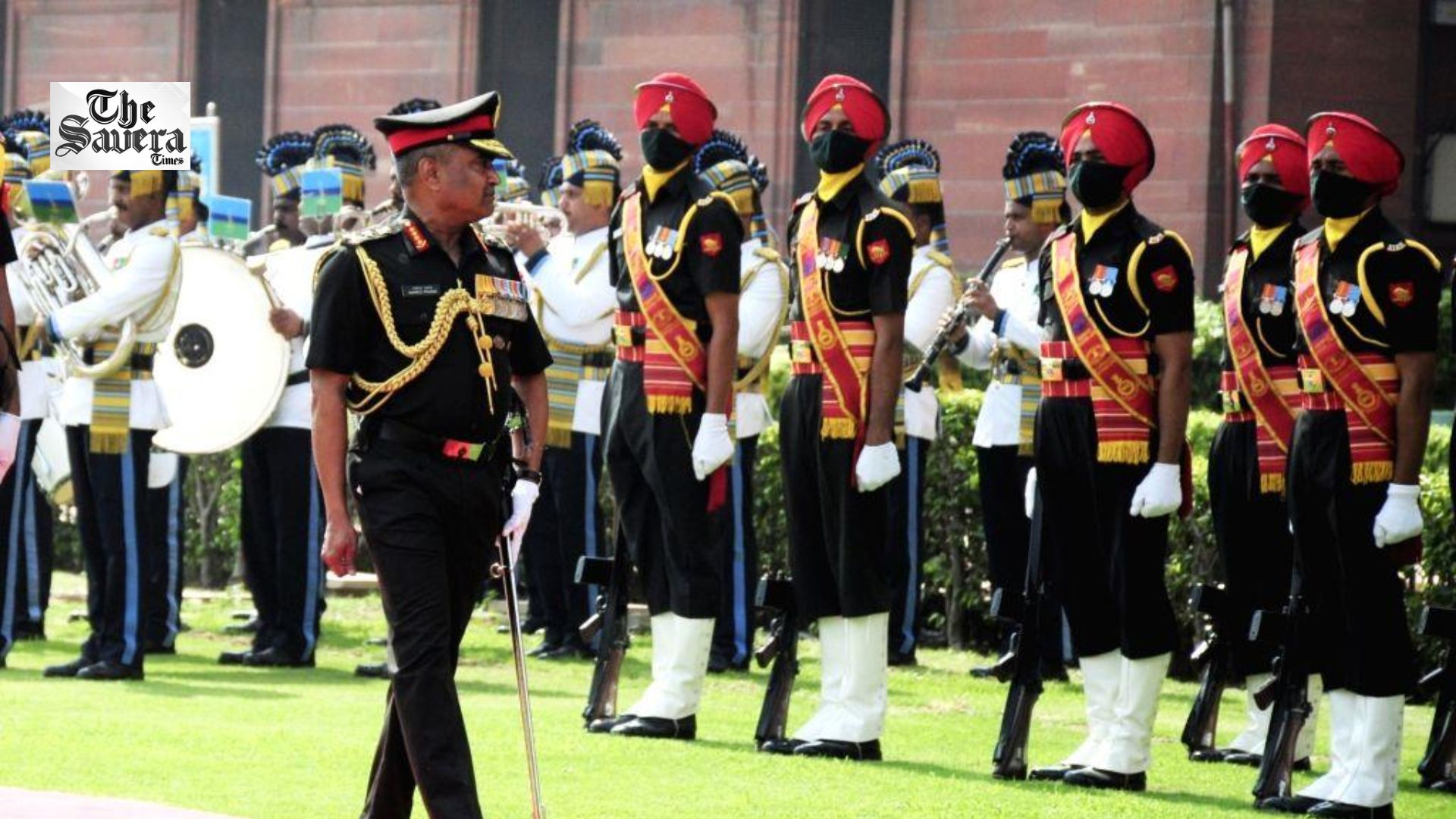
After assuming charge, the new Army Chief Dheeraj Seth took the guard of honour at South Block in New Delhi on Wednesday. Giving a new message to the Indian Army after assuming charge, the Army Chief said that the enemy is standing with an eye on our borders. Our aim should be victory over him. In Vijay, V means Vigilance and it gives the message of alertness. I means Innovation in the Army. J means Giantess, that is, all three wings of the Army, water, land and sky, should fight in unison. A means self-reliance and Y means Warrior First.
We believe that the Indian Army will need to be vigilant on all borders with neighboring countries. Meanwhile, the formation of five Integrated Battle Groups (IBGs) on the China border was formally initiated on Wednesday. We need to maintain heightened vigilance on both the Arunachal Pradesh and Ladakh borders with China. IBG groups will be deployed first on the Arunachal Pradesh border, then on the Ladakh border. Each IBG group will consist of 5,000 soldiers and will be commanded by a Major General. This deployment will be completed by mid-2027. These groups will consist of more than a brigade (3,000 to 3,500 soldiers) and less than a division (10,000 to 12,000 soldiers). The army components being consolidated and brought under the command of Major Generals include infantry, armored units, artillery, engineers, signals, air defense, and logistical support. The objective of bringing these components under a single command is to enable retaliatory action and strikes against designated targets within 24 hours of receiving orders. Actually, we began changing the Indian Army’s posture in 2001. This was called the Cold Start Doctrine. This meant that the Indian Army would no longer be merely defensive but would also be able to enter enemy territory and take action if necessary.
Operation Sindoor, under this directive, involved operations 350 kilometers deep into Pakistan. Following this, the following channels of military transformation were established: First, we should manufacture our own weapons and become self-reliant. This has undoubtedly been successful. India is now even exporting weapons to third-world countries. Second, the three branches of the military—air, land, and navy—will be brought under a unified command so that the right hand knows what the left hand is doing. Therefore, a Supreme Commander of the Army was also appointed. Third, the military changed its warfighting strategy. Now, the army not only defends its territory but also takes action deep inside the enemy’s territory. Under this initiative, Operation Sindoor destroyed terrorist bases deep inside Pakistan.
Now comes the IBG policy for deploying the army, in which the military’s top-level units will operate under the command of a Major General. With this, we aim to make the Indian Army the best, most disciplined, and most valiant army in the world. The father of the new Army Chief, Dheeraj Seth, is also a Lieutenant General (retired), and his brother an Admiral. Dheeraj Seth is well versed in the Indian Army’s traditions. Seth wants to give the army an aggressive stance. In our opinion, the current policy should be slightly modified. Currently, we are purchasing armor and state-of-the-art weapons from Russia and the United States.
Mumbai Police have filed an FIR against actor Imran Khan and others in connection with the August Kranti...
A first-year B.Tech student, identified as Aditya from Bihar's Purnia, was found dead in his hostel room at...

Delhi Police have detailed the conditions attached to the release of CJP leaders Abhijeet Dipke, Saurav Das and...
Delhi Police have debunked a viral video in which a man claimed to have quit as a Sub-Inspector...

Prime Minister Narendra Modi on Sunday extended his greetings to the nation on the occasion of Sharadiya Navratri....
CJP founder Abhijeet Dipke and co-convenors Saurav Das and Ashutosh Ranka were released on October 11 after preventive...
Aries: The day will be auspicious...