Last Updated: September 22, 2026
Last Updated: September 22, 2026





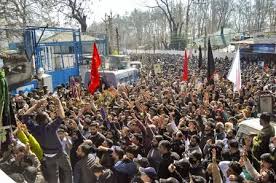
Seven years after the abrogation of Article 370 in Jammu and Kashmir, significant changes have been witnessed in the daily lives of people across the Valley, with improvements in infrastructure, governance, education, connectivity, tourism and law and order emerging as key indicators of transformation. One of the most notable achievements since August 5, 2019, has been the restoration of normalcy and the ordinary rhythm of life in the region. There was a time when introducing oneself as a Kashmiri outside Jammu and Kashmir often evoked associations with violence, curfews, shutdowns, stone-pelting incidents and uncertainty. This perception, it noted, was shaped by decades of conflict and unrest that frequently dominated national discourse. For those born during the 1990s and early 2000s, growing up in Kashmir often meant living amid uncertainty and disruption.
Families adjusted their daily routines around security concerns, markets shut abruptly, schools remained closed for prolonged periods and public life was frequently affected by instability. Before 2019, Kashmir’s political landscape differed significantly from that of most Indian states. Alongside elected governments and administrative institutions, other influential forces often shaped public discourse and political narratives. Many residents felt caught between competing interests, while ordinary citizens frequently bore the consequences of decisions over which they had little control. Kashmiris are widely known for their resilience, humility and emotional nature.
However, these characteristics often made sections of society vulnerable to manipulation by various political actors. Many residents felt that both mainstream political parties and separatist groups appealed to public sentiment whenever it suited their respective agendas. A recurring criticism among many Kashmiris was that ordinary citizens were encouraged to participate in protests, shutdowns and demonstrations, while those issuing such calls often remained insulated from the hardships that followed.
The burden of disruption was largely borne by daily wage earners, traders, students and ordinary families. It was not influential political leaders or members of elite families who suffered the most during years of unrest. Instead, it was the common Kashmiri, including farmers, shopkeepers, labourers, teachers and students who endured the greatest hardships. The departure of experienced teachers, professors and academics left a significant gap in the educational landscape of the Valley. Frequent shutdowns and prolonged disruptions further affected schools, colleges and universities, resulting in repeated interruptions to academic schedules. As a consequence, an entire generation of students faced challenges in competing for opportunities at the national level. The report emphasises that the issue was not a lack of talent, as Kashmir has consistently produced capable students, but rather the environment in which they were compelled to pursue their education.
Against this backdrop, developments following August 5, 2019, continue to remain a subject of political debate. Many residents point to visible changes in everyday life that go beyond political arguments. The transformation is evident not only in official statistics but also in roads, schools, public services, businesses and the confidence with which people now plan their futures. Infrastructure development has emerged as one of the most visible changes. The report notes that projects which once moved at a slow pace have seen faster execution in recent years. It cites the example of the Jehangir Chowk-Rambagh flyover in Srinagar, which took nearly a decade to become operational after being conceived. In contrast, several road and flyover projects have been completed in recent years to improve connectivity and ease traffic congestion. Residents frequently point to projects in areas such as Sanat Nagar, Nowgam, Sangrama and Delina as examples of development that directly impacts daily life.
Improved road infrastructure has reduced travel times and enhanced mobility for commuters. For residents of remote areas, such developments have significantly improved living conditions and quality of life. Technology-driven governance has also become a key feature of administrative reforms. According to the report, digital services, online certification systems, grievance portals and electronic governance mechanisms have reduced dependence on intermediaries and personal connections. Citizens are increasingly able to access government services through transparent and structured procedures. The expansion of Direct Benefit Transfer (DBT) mechanisms has further strengthened welfare delivery. Subsidies, scholarships, healthcare assistance, housing benefits and other government support programmes are now reaching beneficiaries more directly, reducing delays and leakages. Connectivity has witnessed a major boost with the completion of the Udhampur-Srinagar-Baramulla Rail Link.
The report describes the railway project as the fulfilment of a long-standing aspiration for the people of Jammu and Kashmir. Engineering marvels such as the Chenab Bridge and Anji Khad Bridge have attracted national and international attention. For many residents, the railway network represents more than just transportation; it symbolises greater accessibility, integration and economic opportunity. Tourism, one of Kashmir’s most important economic sectors, has also experienced a significant revival. Long celebrated for its natural beauty, the region often struggled to maintain consistent tourist inflows because of security concerns. However, the report notes that visitor numbers have risen substantially in recent years.
Popular destinations such as Pahalgam, Gulmarg and Sonamarg continue to attract tourists, while previously lesser-known areas such as Gurez are gaining recognition. The economic benefits of tourism extend well beyond hotels and resorts. Taxi operators, tour guides, artisans, restaurant owners, shopkeepers and numerous small businesses have benefited from increased tourist activity. The return of film production to Kashmir has further contributed to this revival. Once a preferred destination for filmmakers, the Valley witnessed a decline in film-related activity due to instability
New Delhi: The Centre has told the Supreme Court that the National Testing Agency (NTA) is being strengthened...
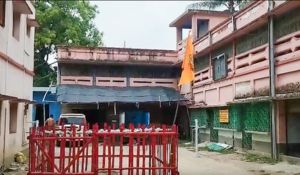
Shillong: The Meghalaya government has notified the MBOSE hostel at Laitumkhrah locality in Shillong as a temporary detention...
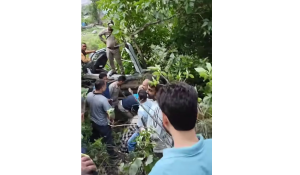
A tragic road accident occurred in Himachal Pradesh's Kullu district early Tuesday morning. A car lost control and...
The Supreme Court on Monday made important observations regarding the constitutional rights related to personal liberty and arrest.

Social media star and actress Anjali Arora will soon be seen in a new and challenging role.

New Delhi: The Delhi Police have arrested a 30-year-old man involved in an ATM card-exchange fraud in the...
Aries: The day will be auspicious...