Last Updated: October 21, 2026
Last Updated: October 21, 2026





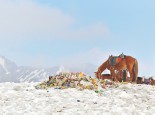
From the slopes above Pahalgam, the Kolahoi Glacier appears today as a thinning, fractured ribbon of ice draped across the western Himalayas. Once a vast white mass that fed rivers, forests, farms, and wildlife across south Kashmir, it is now retreating steadily, exposing bare rock, crevasses, and fragile alpine meadows in its wake.
For centuries, meltwater from Kolahoi sustained the Lidder and Sind rivers, irrigating rice paddies, apple orchards, saffron fields, and high-altitude pastures. As the glacier shrinks, that delicate web of life is being reshaped — with profound consequences for ecosystems and livelihoods alike.
“The retreat of the Kolahoi Glacier affects both ecosystems and communities in the Lidder valley,” says Dr. Talib Bashir Bhat, a Ph.D. scholar at SKUAST-Kashmir and visiting scholar at the University of Catania. “As new land is exposed, lower-elevation plant species move upward, altering alpine ecosystems. High-altitude animals such as the Kashmir musk deer and Himalayan ibex lose habitat, while leopards are increasingly recorded near villages.”
Changes in snowline elevation and melt patterns, he adds, directly affect river flows, irrigation cycles, orchards, and grazing lands — tying the glacier’s fate to both biodiversity and human survival.
Wildlife specialists warn that shrinking glaciers are destabilising Kashmir’s already fragile ecosystems. Dr. Mir Muskan Un Nisa, a forest products researcher from SKUAST-Kashmir, says glacial melt is directly affecting species such as the Hangul, Kashmir’s critically endangered red deer.
“Shrinking glaciers change water systems, forests, and grasslands, causing wetlands to dry and vegetation patterns to shift,” she explains. “These changes degrade habitats that the Hangul relies on for food and shelter, pushing animals closer to human settlements and increasing the risks of conflict, poaching, and habitat loss.”
Scientific data underscores these observations. Historical records show Kolahoi has been retreating since the mid-19th century. A 2020 satellite assessment found the glacier has lost nearly a quarter of its area over six decades, while its snout has retreated more than 900 metres since 1978. Between 1962 and 2018, agricultural land in the Lidder watershed declined by nearly 40 percent — a stark reflection of dwindling water availability.
“This glacier is the lifeline of the Lidder and Sind rivers,” says researcher Labeeb Gulzar. “Its loss could reshape the future of Kashmir’s water, agriculture, and ecosystems.”
Stay updated with the latest national, international, Punjab, political, business, crime, weather, sports and entertainment news with The...

The family of 5-year-old Fabiana Cabello in New York City, USA, is in deep shock after her death....

The Delhi High Court on Wednesday posed several questions to Cockroach Janata Party (CJP) leaders Sourav Das and...

Cockroach Janata Party (CJP) leaders Sourav Das and Ashutosh Ranka withdrew their petition from the Delhi High Court...

A suspicious explosion occurred on Tuesday at a building under construction on Jermiah Road in the Pulikesi Nagar...

The Ayushman Bharat Pradhan Mantri Jan Arogya Yojana (PMJAY) is proving to be a significant relief for poor...

Aries: The day will be auspicious...