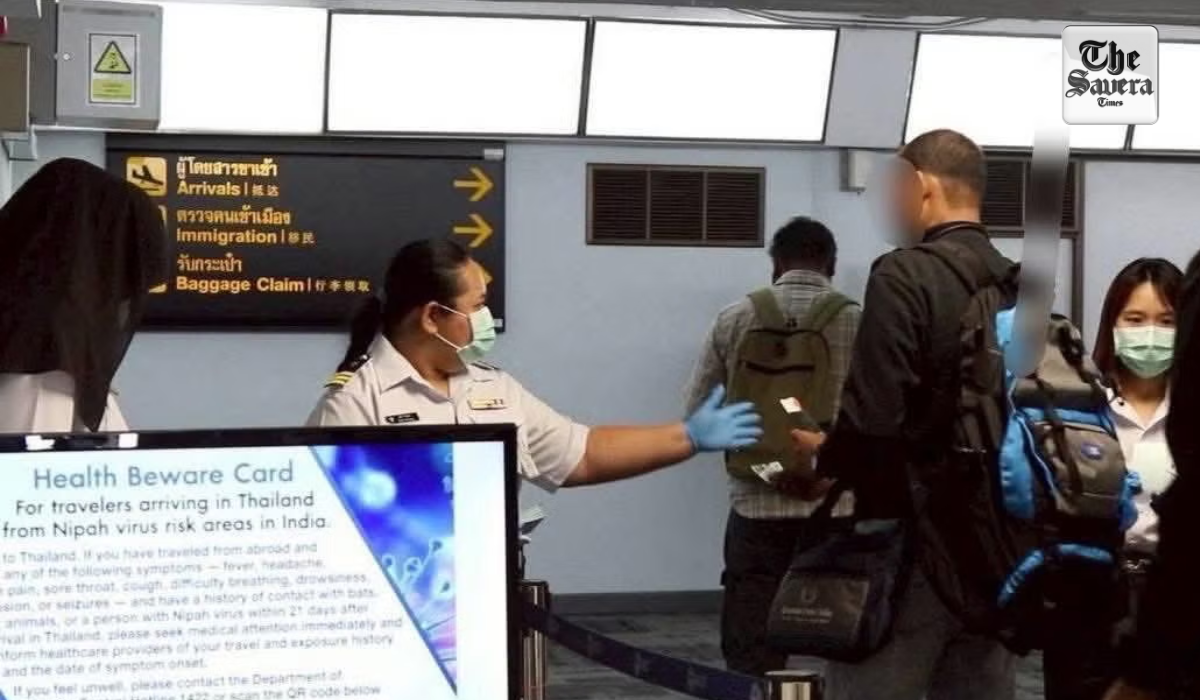
Airports in several Asian countries, including Thailand, Nepal, and Taiwan, have reintroduced COVID-style health checks following reports of Nipah virus cases in India. The screenings aim to prevent the virus from spreading through travellers after infections were detected in West Bengal.
What is Nipah Virus?
Nipah virus is a dangerous disease that can spread from animals, mainly bats and pigs, to humans. It can also pass from one person to another through close contact. The virus can cause symptoms such as fever, headache, muscle pain, vomiting, sore throat, severe breathing problems, and in extreme cases, brain inflammation that can be fatal.
According to Dr. Narendra Kumar Arora, President of AIIMS Bilaspur, the virus has a high death rate of 40–75%, and there is no vaccine available yet. Experimental treatments using monoclonal antibodies are being procured, but supplies are limited.
Current Situation in India
Authorities in India say the situation is under control, with only a few confirmed cases. The latest outbreak in West Bengal was first detected among five health workers, and investigations are ongoing to track 100–200 potential contacts.
Former West Bengal health advisor Dr. Sayan Chakraborty confirmed that only two confirmed cases have been reported in Barasat, near Kolkata. Suspected cases tested negative and have been discharged.
The quarantine period for Nipah is 21 days and primarily affects close contacts such as family members and hospital staff.
Travel Precautions in Asia
Countries across Asia are taking precautions to stop the virus from spreading through travellers:
-
Thailand: Airports including Suvarnabhumi, Don Mueang, and Phuket are screening passengers from West Bengal using fever checks, symptom monitoring, and health advisory cards. Measures have also been increased at Phuket International Airport.
-
Nepal: Tribhuvan International Airport and key land borders with India are intensifying passenger screening, with health desks to manage suspected cases.
-
Taiwan: Authorities plan to classify Nipah as a Category 5 notifiable disease, requiring immediate reporting and strict control measures. A Level 2 “yellow” travel alert remains for Kerala.
Advice for Travellers
The World Health Organization (WHO) lists Nipah as a high-priority pathogen due to its potential to cause epidemics and its high fatality rate.
Travellers are advised to:
-
Follow health protocols while in Kerala and West Bengal.
-
Monitor themselves for symptoms like fever, headache, sore throat, vomiting, or breathing issues.
-
Seek medical attention immediately if they feel unwell.
For UAE travellers visiting Kerala:
-
Avoid travel to containment zones.
-
Maintain strict hygiene and avoid raw or unwashed fruit.
-
Monitor health during and after travel.
How Nipah Spreads and Symptoms
Transmission:
-
Direct contact with infected animals (bats, pigs, etc.)
-
Eating contaminated food or drinks (like raw date palm sap)
-
Close contact with infected people’s body fluids
-
Respiratory droplets (airborne transmission possible)
Symptoms:
-
Early: Fever, headache, cough, sore throat, vomiting, muscle pain
-
Severe: Brain inflammation (encephalitis), confusion, seizures, coma
Complications:
-
Death rate between 40–75%
-
Long-term effects may include seizures, personality changes, and relapses
-
Some people may carry the virus without symptoms
Diagnosis & Treatment:
-
Early diagnosis: RT-PCR tests on throat, nasal swabs, urine, blood, or cerebrospinal fluid
-
Later diagnosis: ELISA tests for antibodies
-
No specific cure or vaccine; treatment is supportive—hydration, rest, fever control, and medications for nausea or seizures
-
Experimental monoclonal antibody treatments are being studied
Prevention Measures
To reduce the risk of infection:
-
Avoid contact with bats or their secretions
-
Do not consume raw date palm sap or contaminated fruit
-
Maintain hygiene and wear protective gear when caring for infected patients
-
Monitor symptoms after visiting high-risk areas
This proactive approach by Asian countries and strict monitoring in India aims to prevent the Nipah virus from spreading internationally.