Last Updated: October 21, 2026
Last Updated: October 21, 2026





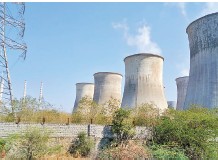
Asia’s largest power utilities are facing mounting financial losses as climate hazards intensify across the region. A new assessment by the Asia Investor Group on Climate Change and the MSCI Institute estimates that the sector is already absorbing around 6.3 billion dollars, or nearly Rs 53,915 crore, in annual losses linked to extreme weather and changing climate patterns. The report warns that these losses could rise by one third by 2050 if emissions are not sharply reduced and if companies fail to invest in climate-resilient infrastructure.
The analysis draws on detailed modelling of 2,422 power generation assets owned by 11 major utilities operating across Asia. These companies form the backbone of electricity supply for millions of households and businesses. The study concludes that climate impacts are no longer hypothetical future scenarios but immediate pressures with direct consequences for balance sheets, revenue stability and long-term planning. It also notes that disruptions to electricity supply caused by heat, heavy rain and storms will generate further economic losses in industries that depend on steady and affordable power.
The research identifies rising temperatures and more intense rainfall as the most persistent threats to generation assets. At the same time, tropical cyclones, flash floods and storm surges pose serious short-term risks capable of damaging equipment, halting operations and raising recovery costs. Coal-based plants emerged as some of the most vulnerable facilities. These plants often rely on large volumes of water for cooling and are commonly located along rivers or coastlines. As a result, they face multiple challenges, including declining river flows, water shortages during heat waves, higher flood exposure and reduced generation efficiency when temperatures soar.
Despite growing awareness, the assessment finds that meaningful action has been limited. Eight utilities have publicly acknowledged the risks and released broad adaptation plans. However, none of these companies reported specific capital or operational expenditure dedicated to adaptation measures. Only two firms set measurable targets to track progress, suggesting a gap between stated commitments and actual implementation.
Among the companies facing the heaviest financial exposure, India’s NTPC leads the list, followed by Malaysia’s Tenaga Nasional and Indonesia’s state-owned utility PLN. When the analysis is extended to the market value of listed companies, the potential impact varies sharply across jurisdictions. The study estimates that climate-related physical risks could affect between 3 per cent and 32 per cent of a utility’s market capitalisation, depending on location, asset mix and resilience levels.
AIGCC Chief Executive Rebecca Mikula-Wright said the findings demonstrate that climate hazards are already imposing billions of dollars in costs on the region’s power companies and the customers they serve. She said long-term reliability of energy systems depends on integrating resilience into routine planning and investment decisions. This includes strengthening critical infrastructure and protecting communities that rely on stable electricity.
Linda-Eling Lee, founding director of the MSCI Institute, said that understanding physical climate risk requires detailed analysis at the level of individual assets. She noted that exposure varies widely within a company’s portfolio depending on geography, technology and local climate conditions. According to her, only location-specific strategies can safeguard long-term asset value and ensure continuous electricity supply.
The report outlines a set of actions for utilities, policymakers and investors. For power companies, the authors recommend comprehensive assessments that quantify physical climate risks under different scenarios and disclose the financial implications. They urge utilities to work closely with governments to align protection standards, coordinate adaptation spending and map interconnected risks that could affect electricity supply. The study also advises companies to embed resilience measures into their energy transition plans, ensuring that boards oversee both decarbonisation and climate-proofing investments.
For policymakers, the report calls for stronger disclosure rules that align with global reporting standards and require companies to reveal asset-level risks and planned adaptation steps. It recommends integrating utility risks into national climate adaptation plans and setting minimum resilience benchmarks for infrastructure. The authors also highlight the need for regional cooperation through platforms such as ASEAN to support cross-border planning, data sharing and blended finance for adaptation projects.
Institutional investors are advised to engage more actively with utility boards on adaptation governance and insist on clearer disclosure of climate-related assumptions, financial impacts and planned spending. Investors are encouraged to assess whether current resilience measures match the scale of asset-level vulnerability and to tailor their engagement strategies accordingly.
The study concludes that climate change is already reshaping the financial landscape for Asia’s power sector. Without decisive action, the costs are likely to escalate sharply, affecting not only utilities but the wider economies that depend on uninterrupted energy
A fire in a hut in Nonapar village of Deoria district claimed three lives, including those of a...

Amit Shah paid tribute to police personnel who died in the line of duty at the National Police...

Reduced water levels at Har Ki Pauri and other Haridwar ghats have inconvenienced pilgrims during the Upper Ganga...

Six people returning from a Dussehra Mela were seriously injured when a car hit them on National Highway...

A bus travelling from Pachiound to Ramnagar fell into a gorge at Gulli Gula in Udhampur district. Nine...

Start your day with The Savera Morning Brief, bringing you the latest news from India and around the...

Aries: The day will be auspicious...