Last Updated: October 23, 2026
Last Updated: October 23, 2026





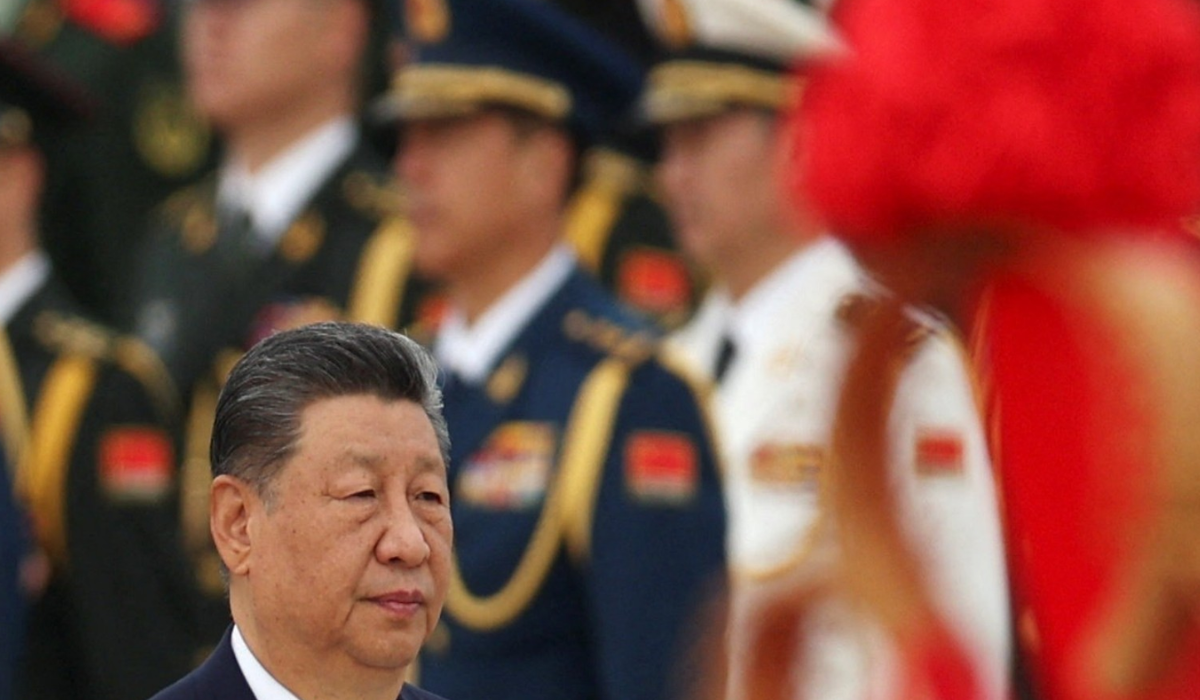
The ground forces of the People’s Liberation Army (PLA) has traditionally been the strongest and most numerical in China’s military. Chairman Xi Jinping has been working hard to drag the PLA, kicking and screaming if necessary, into the modern era. This included shedding 300,000 soldiers and officers in a restructure announced by Xi at a military parade in Tiananmen Square in September 2015. These thousands upon thousands of troops were dismissed from 2015-18, in a move designed to make the PLA Ground Force leaner. It is believed the army now makes up slightly less than half the PLA’s two million members. Nonetheless, despite the cull, China’s communist party-controlled PLA remains the largest military force in the world. The modernization of the PLA is perhaps better described as being deliberate rather than rapid. The overarching aims of the ongoing restructuring are, in the words of the government, “to basically complete national defense and military modernization by 2035”, and achieve a “world-class military” by 2049. A major restructuring in 2016 saw the PLA establish five theater commands to promote joint operations, as a replacement for the seven previous military regions. The five theaters are known as the Eastern, Southern, Western, Northern, and Central. The PLA also created its Strategic Support Force in December 2015 to focus on the increasingly important cyber, electronic warfare, and space domains as the PLA modernized into a digital force. However, the Strategic Support Force was disestablished and morphed into the Information Support Force in April 2024. Dennis Blasko, a former US defense attaché in Beijing and Hong Kong in the 1990s, and a prominent expert on the PLA, about these reforms, said that the PLA has now been operating joint headquarters in the Central Military Commission (CMC) and at the five theaters for about a decade. These joint headquarters and their joint operations command centers, in conjunction with the service headquarters, seem to be functioning well enough to maintain PLA operational readiness training and to conduct routine operations in the East China Sea around Taiwan, in the South China Sea, along the Line of Actual Control with India, in the Gulf of Aden and on multiple overseas United Nations peacekeeping missions. This was so in spite of serious gaps in many senior leadership positions (such as theater leaders and CMC members). Many of these gaps are due to widespread detentions under Xi’s vigorous anti-corruption campaign. This is especially true in the East China Sea where the PLA is incorrigibly threatening Taiwan, and in the South China Sea where China coerces and bullies competing territorial claimants such as the Philippines. Apart from the aforementioned massive 300,000 redundancies, Blasko pointed out that the PLA Ground Force has decreased in size marginally for another reason too. This is because roughly seven brigades were transferred to the PLA Navy Marine Corps (PLANMC) over the past decade. The PLANMC now has a total of eleven brigades: eight marine brigades, two special operations forces brigades and one aviation brigade.
Singapore’s iconic skyline is disappearing behind a thick blanket of haze. Air pollution has reached such alarming levels...

Pakistan believed that the Taliban’s return to power in Afghanistan would become strategic leverage in the region. However,...

Israeli Prime Minister Benjamin Netanyahu spoke with Prime Minister Narendra Modi over the phone on Thursday and invited...

Nearly 4,000 Indian pilgrims are reportedly stranded in the holy cities of Mecca and Medina in Saudi Arabia....

Yemen's Houthi rebels claimed on Thursday that their forces launched a rescue operation after Saudi Arabia attacked a...
New Delhi: India has objected to serious factual errors in the report of a United Nations (UN) Special...

Aries: The day will be auspicious...