Last Updated: October 20, 2026
Last Updated: October 20, 2026





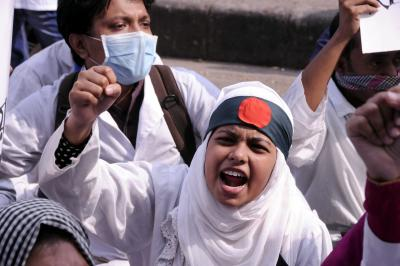
The protest by health assistants in Bangladesh has entered its 12th consecutive day, creating widespread disruption in the country’s public health services. Organized under the banner of the Bangladesh Health Assistant Association (BHAA), the sit-in is taking place at the Directorate General of Health Services (DGHS) in Dhaka and other key districts. Workers say the demonstration is a last resort after nearly three decades of unaddressed demands, including salary parity, job-grade upgrades, technical recognition, and promotion reforms.
Thousands of frontline health workers, responsible for essential services such as vaccinations, maternal and childcare, community health programs, and disease surveillance, have abstained from their duties. Their absence has caused significant disruption in routine health services across urban and rural areas.
The protest has affected several government health facilities, including district hospitals, upazila health complexes, and community clinics. Routine vaccinations for children, immunization drives, maternal health checkups, and outpatient services have either been delayed or completely halted. Public health experts warn that continued disruption could lead to setbacks in immunization coverage and other preventive health programs, particularly in remote regions that rely heavily on government-provided health services.
Authorities have reported temporary suspension of certain services and redirected patients to other facilities where possible, but the scale of absenteeism has made it difficult to maintain normal operations.
The protesters have outlined a six-point charter of demands, including:
Upgrading their entry-level posts from grade 16 to grade 14.
Eliminating existing salary disparities with comparable technical cadres.
Recognizing their work as technical and professional, in line with their responsibilities.
Amending recruitment and promotion rules to ensure career progression.
Regularizing benefits such as housing allowances, healthcare, and pensions.
Official notification of government assurances before resuming work.
The health workers argue that despite performing technically skilled work — from vaccinations to public health monitoring — they are not adequately recognized or compensated for their responsibilities.
The DGHS and the Ministry of Health have acknowledged the protests and initiated discussions to address some demands, particularly for certain professional categories such as pharmacists and medical technologists. Officials have promised negotiations to explore solutions, including possible grade upgrades and pay adjustments, but the protesting health assistants remain unconvinced, demanding formal written notifications before they resume duties.
Authorities face increasing pressure to resolve the issue swiftly, given the potential long-term impact on public health outcomes. Experts emphasize that a delayed response risks undermining vaccination campaigns, maternal and child health services, and other preventive programs, which could have serious consequences nationwide.
The ongoing strike has affected thousands of patients, particularly in rural areas. Families seeking routine vaccinations, antenatal care, and chronic disease management have had to travel long distances or delay treatments. Local communities report frustration and anxiety, especially amid ongoing efforts to combat infectious diseases and maintain preventive healthcare coverage.
Some patients have expressed concern that prolonged disruption may reverse progress in child immunization rates and routine health monitoring. Health experts note that sustained absenteeism among frontline workers can create a ripple effect, impacting both immediate care and long-term health indicators.
The Bangladesh health workers’ protest highlights long-standing grievances among grassroots healthcare providers, emphasizing the need for recognition, fair compensation, and structured career growth. The demonstration also underscores the critical role of health assistants in maintaining the nation’s public health infrastructure.
If unresolved, the strike risks weakening public trust in government health services and creating gaps in preventive care, particularly in rural and underserved communities. Policymakers now face the dual challenge of addressing the workers’ legitimate demands while ensuring that public health services continue without interruption.
The protest serves as a reminder of the importance of equitable treatment, timely recognition, and transparent negotiations in sustaining frontline health systems that are vital for national well-being.
Punjabi University is proud to have four of its scientists recognized among the nation’s 15 best scientists. The...
Before redrawing map, Pakistan must first address its deepening crisis of governance, accountability, and democratic representation that continues...
Iran's Islamic Revolutionary Guard Corps (IRGC) Navy claimed early Monday that an oil tanker, violating regulations, had struck...

Amid ongoing protests and violence in Italy, the Indian Embassy on Monday issued an advisory for Indian citizens...
The number of Ebola virus cases in Kenya has risen to eight. Health officials have confirmed that a...
Houthi rebels fired several ballistic missiles at a government army training camp in Yemen's Shabwa province on Monday.
Aries: The day will be auspicious...