Last Updated: October 24, 2026
Last Updated: October 24, 2026





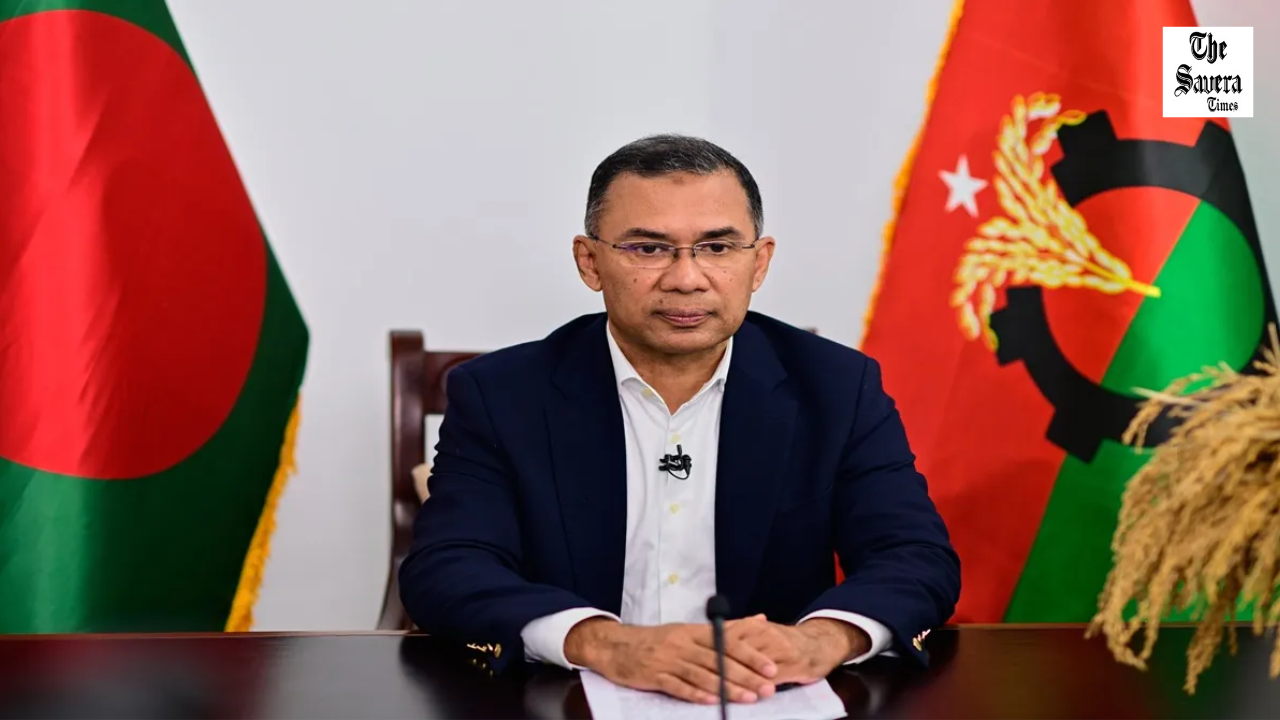
Dhaka, Feb 17 — Bangladesh finds itself in a constitutional and political standoff just days after the Bangladesh Nationalist Party (BNP) swept a historic election and Tarique Rahman was sworn in as Prime Minister. While the newly elected lawmakers took their ordinary parliamentary oaths, a controversy over a second oath linked to the so-called “July Charter” has thrust the nation into a tense debate over governance and constitutional reform.
The July Charter a set of 84 proposed reforms to the constitution was approved in a nationwide referendum held simultaneously with the elections. It mandated changes to Bangladesh’s political and institutional framework, and its implementation requires lawmakers to take an additional oath as members of a “Constitution Reform Council.”
Although the BNP secured a commanding majority winning over 200 seats the party declined to take the second oath intended to bind MPs to the July Charter reforms. BNP policy-making member Salahuddin Ahmed said the party’s lawmakers were not elected to be part of the Constitution Reform Council and therefore would not take that pledge.
This has ignited friction with allied political groups. Members of the right-wing Islamists of Jamaat-e-Islami initially refused to take the standard oath unless BNP leaders accepted the second pledge. Jamaat’s deputy chief Abdullah Mohammad Taher stated that “parliament without constitutional reform is meaningless.”
In some developments, Jamaat and its ally, the National Citizen Party (NCP), have gone ahead with both the regular and reform council oaths, deepening the divide with the BNP’s stance.
The July Charter born out of the student-led uprising of July 2024 that toppled the previous government is a comprehensive constitutional reform blueprint. Its 84 points cover changes to governance structures, judicial independence, parliamentary powers and checks on executive authority. However, critics say the referendum question was complex and difficult to interpret, making its implementation controversial.
While over 60 per cent of voters cast “yes” in the referendum, the Charter’s legal status remains unclear because the constitution does not explicitly provide for binding referendums on such sweeping reforms. That has left the incoming government in a double-oath dilemma: fulfil the referendum mandate or uphold the constitutional oath taken by elected MPs.
This constitutional impasse comes at a sensitive time: Tarique Rahman has just taken office after years in exile and following the BNP’s decisive electoral victory. While his administration has pledged to respect democratic processes, the refusal to take the second pledge shows the party’s uneasy relationship with parts of the reform agenda, particularly elements seen as overhauling the political system without broad legislative consensus.
Political analysts say the standoff could hinder parliamentary functioning and deepen divisions between the majority party and its smaller allies. In the longer term, it may also impact legislative mobilization on governance reforms and Bangladesh’s future constitutional path.
Observers and civil society figures have urged dialogue to resolve the impasse, warning that prolonged disputes could destabilize the nascent government and fuel street protests or political polarization. Bangladesh’s economy, which is still adapting after years of political transition, faces fresh uncertainty over how reform commitments will be carried out.
Washington: US President Donald Trump has acknowledged that the war with Iran has driven up oil prices and...
Washington: US President Donald Trump has announced a new labelling initiative to identify American-produced seafood, seeking to give...
Kinshasa: A major clinical trial to evaluate vaccines against the Bundibugyo Ebola virus began Friday in the eastern...
Washington: US President Donald Trump has warned that American forces could launch another round of military strikes against...
The Indian Army on Friday rejected claims on social media that the Army had taken action against the...
Abdul Majid Hakim Elahi, Iran's Supreme Leader's representative and senior diplomat, said on Friday that the US has...
Aries: The day will be auspicious...