Last Updated: October 22, 2026
Last Updated: October 22, 2026





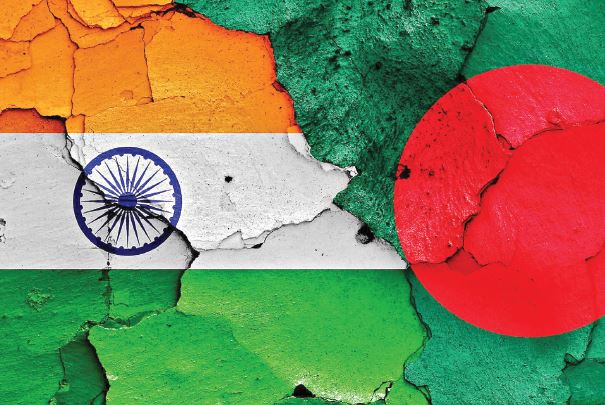
Concerns have grown in India over the possibility that Bangladesh could become a staging ground for anti-India activities, driven by recent political shifts in Dhaka and a visible improvement in ties between Bangladesh and Pakistan. The fall of the Sheikh Hasina government in August 2024 altered the political atmosphere in the country, and subsequent developments have prompted strategic unease in New Delhi. Statements from Lashkar-e-Taiba (LeT) leaders, reported visits by radical figures, and renewed defence-level engagement between Pakistan and Bangladesh have added to these concerns.
The issue drew attention after Saifullah Saif, identified as a senior commander of the Pakistan-based LeT, claimed publicly that preparations were underway to target India from Bangladeshi soil. Speaking at a rally in Khairpur Tamewali in Pakistan, Saif declared that the LeT was strengthening its presence in what he termed “East Pakistan,” referring to Bangladesh. He suggested that Hafiz Saeed, the LeT chief accused of masterminding attacks such as the 2008 Mumbai attacks and the 2001 Parliament attack in New Delhi, was planning to open a new front against India by using Bangladeshi territory. While the authenticity of the circulated clip has not been independently verified, the claim itself fuelled debate in security circles.
Reports from Bangladesh noted the arrival of Ibtisam Elahi Zaheer, General Secretary of Pakistan’s Markazi Jamiat Ahl-e-Hadith and a close associate of Saeed. His arrival in Rajshahi in late October, where he was greeted by a representative of an Islamic research institute linked to the Ahl-e-Hadith movement, drew attention. Zaheer then travelled through districts near the India-Bangladesh border, reportedly delivering speeches urging young people to commit themselves to religious struggle. Statements attributed to him framed this as a broader ideological battle against what he described as secular and liberal influences. His speeches also invoked Kashmir, presenting the conflict as central to a larger mission for unification among Muslims in South Asia.
This was noted to be his second visit since the change in government in Dhaka. The visit coincided with that of General Sahir Shamshad Mirza, Chairman of Pakistan’s Joint Chiefs of Staff Committee, who was on an official tour of Bangladesh. The timing contributed to speculation about closer coordination between political, religious and military channels. References made by Saifullah Saif at his rally praised Zaheer’s speeches in Bangladesh and framed them as a symbolic reclaiming of historical identity, invoking the events of 1971 and the division of Pakistan. Such rhetoric, while symbolic, can carry strategic implications when delivered by figures with documented links to organisations accused of cross-border terrorism.
In parallel to these religious and ideological engagements, visible military and diplomatic steps also pointed to warming relations between Dhaka and Islamabad. The arrival of Pakistan’s Naval Chief, Admiral Naveed Ashraf, in Dhaka marked a significant development, especially since Pakistan’s naval presence in Bangladesh has been minimal since the Liberation War. Ashraf met senior Bangladeshi military officials to discuss enhancing defence cooperation, joint training and expanded dialogue between the armed forces of the two countries. A Pakistani naval ship docked at Chattogram port in what was described as a goodwill visit, the first of its kind in several decades. The symbolism of this visit was not lost on observers, given the historical baggage between the two countries and the tensions that followed the independence of Bangladesh in 1971.
Recent diplomatic exchanges between Pakistan and Bangladesh have also included initiatives aimed at building closer economic and cultural ties. Meetings between Bangladesh’s leadership and senior Pakistani officials in international forums signaled a desire to redefine the relationship. New agreements on scholarships, trade facilitation and visa exemptions point to an attempt to normalise bilateral relations at a governmental level. Supporters of this shift frame it as an effort by Bangladesh to diversify its diplomatic options and rebalance its foreign policy toward multiple regional players.
However, the situation appears more complex when viewed from a security perspective. Analysts in Bangladesh and India have raised concerns that organisations linked to Jamaat-ud-Dawa, considered a front for the LeT, may be seeking to expand their ideological network within Bangladesh. Such influence has the potential to shape political discourse and possibly motivate radicalisation in vulnerable segments of society. Bangladesh has experienced periods of extremist activity before, and past governments have taken strong measures to restrict such groups. The current uncertainty involves determining whether monitoring and counter-extremism efforts will continue with the same intensity.
For India, the strategic concern lies in the possibility that hostile non-state actors could exploit geographic proximity and porous borders. India and Bangladesh share one of the longest land borders in South Asia, with close social and cultural ties across regions. Any increase in extremist activity in border districts could impact security and border management. Additionally, the extensive river networks and informal trade routes in the region create potential vulnerabilities that militant groups could attempt to use.
It is important to note that none of these recent developments amount to confirmed evidence of an imminent cross-border campaign. What is visible at present are signals, statements and symbolic actions that suggest shifting political relationships and the possibility of new alignments. The claims made by Saifullah Saif may reflect internal political messaging within Pakistan as much as any operational plan. Nevertheless, such statements assume importance in a climate of changing regional equations.
Going forward, the situation will require close observation. Bangladesh’s internal political stability, the direction of its foreign policy, and the actions of religious groups with transnational connections will shape the region’s security environment. India will be watching carefully for signs of organised attempts at cross-border mobilisation or increased extremist recruitment. The evolution of Pakistan-Bangladesh ties will also be an important element of the overall strategic picture in South Asia, especially as regional power balances continue to shift.
Pakistan's Defense Minister Khawaja Asif has questioned alleged plans by senior government officials to permanently settle abroad. He...
The Baloch Liberation Army (BLA) has claimed responsibility for carrying out 34 operations between October 9 and 20...
Russian President Vladimir Putin said on Wednesday that Russia's first tanker carrying 40,000 tons of diesel fuel will...

Ten people were killed and 44 others injured in a horrific road accident in Pakistan's Punjab province. The...
North Korean leader Kim Jong-un's influential sister, Kim Yo-jong, and a military marshal inspected fortification work along the...

New Delhi: US Secretary of State Marco Rubio has assured India that America’s relations with any country in...

Aries: The day will be auspicious...