Last Updated: October 12, 2026
Last Updated: October 12, 2026





-K Siva Prasad
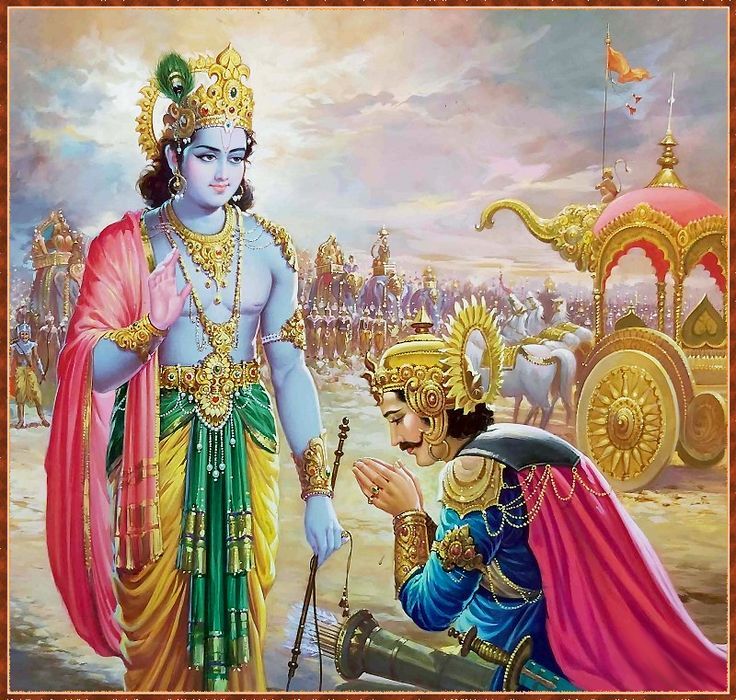
Lord Krishna clarifies: “Just as fire is obscured by smoke, and a mirror by dust (filth), and just as an embryo remains enveloped within the womb, so too is this knowledge obscured by desire. This knowledge of man is veiled by this insatiable form of desire—which resembles fire— and for the wise, it acts as a perpetual adversary.” (3.38-3.39) Earlier, Lord Krishna had stated that the ‘Gunas’ (qualities of nature) possess the power to delude us. Desire, born of “Rajoguna” (the quality of passion), does precisely the same. He further elaborated: “The senses, the mind, and the intellect— these are said to be its dwelling places. Through the medium of the senses, the mind, and the intellect, this desire obscures knowledge and thereby deludes the “Jivatma” (the individual soul).” (3.40) A mirror serves as the quintessential example of a witness. Its inherent nature is to reflect—without any classification or judgment— both the situations and the memories, and judgments—that comes to dominate us. Likewise, desires cast a shadow over the soul’s inherent wisdom, thereby plunging the soul into delusion. people that appear before it. It carries neither the burden of the past nor any expectations regarding the future; it exists perpetually in the present moment. However, when this clarity is obscured by dust, its effectiveness is diminished. While the metaphorical mirror represents our true essence, the “dirt” symbolizes the accumulated baggage of our past—the residue of our previous actions and desires. Similarly, our innate capacity to know—our consciousness— constitutes our true nature, which is boundless. Yet, we often identify ourselves solely with our limited, acquired knowledge. In essence, this “dirt” is the accumulation of our past—comprising information, pleasant or unpleasant A careful observation of our interactions in the workplace and within the family reveals that we constantly carry the heavy burden of our past, finding it difficult to truly appreciate the present moment. Consequently, this leads to diminished productivity in the workplace and fosters misunderstandings in our relationships. To live in the past is a misfortune; the key lies in ensuring that the past does not succeed in making us its slave. To do this, we can use the past as a tool until we permanently align ourselves with the present moment of consciousness
-Author is Retired Senior IAS officer in the Punjab Government
A Sudanese rights group says at least 72 gold miners were killed in an air strike near the...

An eyewitness has recounted the fatal Mini Cooper crash in Nedumbassery, Kochi, claiming the driver said his father...

Start your day with The Savera Morning Brief, bringing you the top India and world news, breaking developments,...

New Delhi: Chief Justice of India (CJI) Surya Kant has declined a request from the Congress-led INDIA bloc...

Chennai: Prime Minister Narendra Modi on Sunday said India is moving forward with the dream of hosting the...

A massive flash flood in Nepal’s Budhi Gandaki River swept away dozens of houses, bridges and infrastructure in...