Last Updated: October 15, 2026
Last Updated: October 15, 2026





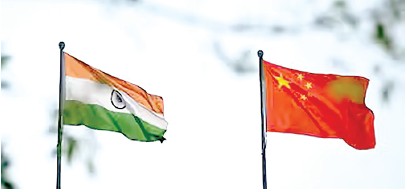
India and China share one of the most complex and consequential relationships in the world. Their ties go way back, rooted in ancient trade and cultural exchanges, but modern dynamics have been shaped by strategic competition, unresolved borders and shifting geopolitics. In the early years after independence, India was among the first non-communist countries to recognize the People’s Republic of China, hoping that goodwill and peaceful coexistence would sustain a stable partnership. For a while, this approach looked promising as diplomatic engagement expanded and economic contacts grew.
However, the relationship hit a major rupture in 1962 when a full-scale war erupted over disputed Himalayan frontiers, especially in Aksai Chin and along what later became known as the Line of Actual Control. That conflict was a watershed moment and continues to cast a long shadow. India felt betrayed by what it saw as a surprise attack, and the defeat reshaped New Delhi’s perception of China from a distant neighbour to a direct strategic rival. Since then, despite repeated dialogues and confidence-building measures, the two sides have never fully resolved the boundary issue. Multiple agreements in the 1990s and 2000s aimed to reduce tensions and create mechanisms for patrols and communication, but they stopped short of settling the core territorial disagreements. These frameworks helped prevent large-scale war for decades but did not erase distrust.
The border question came back into sharp focus with a brutal clash in 2020 in the Galwan Valley, where soldiers from both sides were killed. That confrontation, the deadliest in decades, rattled New Delhi’s confidence and exposed the fragile nature of the peace along the Himalayan frontier. In response, India accelerated infrastructure projects such as roads, tunnels and airstrips in high-altitude zones to improve mobility and logistics for its armed forces. These moves are defensive in intention but signal to Beijing that India is preparing for any future contingency rather than simply hoping tensions will fade. At the same time, India and China agreed a patrol arrangement in 2024 to reduce face-offs in some disputed sectors. That agreement restored patrolling protocols and created a buffer that could ease friction, but long-term resolution remains elusive.
Beyond borders, the strategic context plays a big role. China’s expanding presence in South Asia, including infrastructure and military cooperation with neighbouring countries, amplifies India’s security anxieties. Beijing’s deep ties with Pakistan and investments in port and transport projects across the Indian Ocean region are perceived in New Delhi as part of a broader pattern to encircle or outflank India’s influence. These moves complicate India’s ability to shape its neighbourhood and force it to hedge against potential vulnerabilities, particularly in zones like the Siliguri Corridor connecting the Northeast to the rest of the country.
Trade and economic cooperation have been a stabilising factor at times, with China becoming one of India’s largest trading partners. Still, economic interdependence has not translated into strategic trust. India often balances its economic interests with security concerns, restricting certain Chinese investments and technology ties on national security grounds. In parallel, New Delhi has strengthened strategic partnerships with other global players, deepening defence and diplomatic ties that serve as a counterweight to China’s rise.
Culturally and historically, there have been efforts to soften tensions through dialogue and people-to-people interactions, but geopolitics consistently assert themselves. Both countries understand that a direct conflict would be devastating, yet unresolved territorial claims and competing visions for regional order make the relationship inherently tense. India wants a multipolar Asia where it is a key partner, while China often seeks a dominant position in regional affairs, complicating alignment on shared goals.
Today, the India-China dynamic is best described as a cautious and competitive coexistence. There are regular diplomatic engagements, meetings at multilateral forums, and attempts to stabilise certain flashpoints. At the same time, both sides maintain robust military postures along the border and pursue national strategies that reflect lingering mistrust. The challenge for both governments is to manage their differences without letting rivalry spiral into open conflict, while finding pragmatic ways to cooperate on common interests like trade, climate and global governance. The relationship will likely stay defined by this fragile balance between wariness and engagement for years to come.
Singapore: Two Singapore-registered container vessels were reportedly struck by unknown projectiles while transiting the Strait of Hormuz on...
Shimla: The Himachal Pradesh government has constituted a four-member commission to examine the reorganisation of administrative units in...
New Delhi: The Supreme Court on Wednesday listed for November 17 the appeal filed by self-styled godman Asaram...

Ranchi: Doctors in Jharkhand launched a protest on Wednesday over a slew of demands concerning their safety and...

Greater Noida: Police and Anti-Narcotics Team in Uttar Pradesh’s Greater Noida have seized ‘ganja’ worth Rs 1 crore...

New Delhi: The Enforcement Directorate (ED) has attached assets worth Rs 2,032.81 crore belonging to Reliance Power Ltd...