Last Updated: October 17, 2026
Last Updated: October 17, 2026





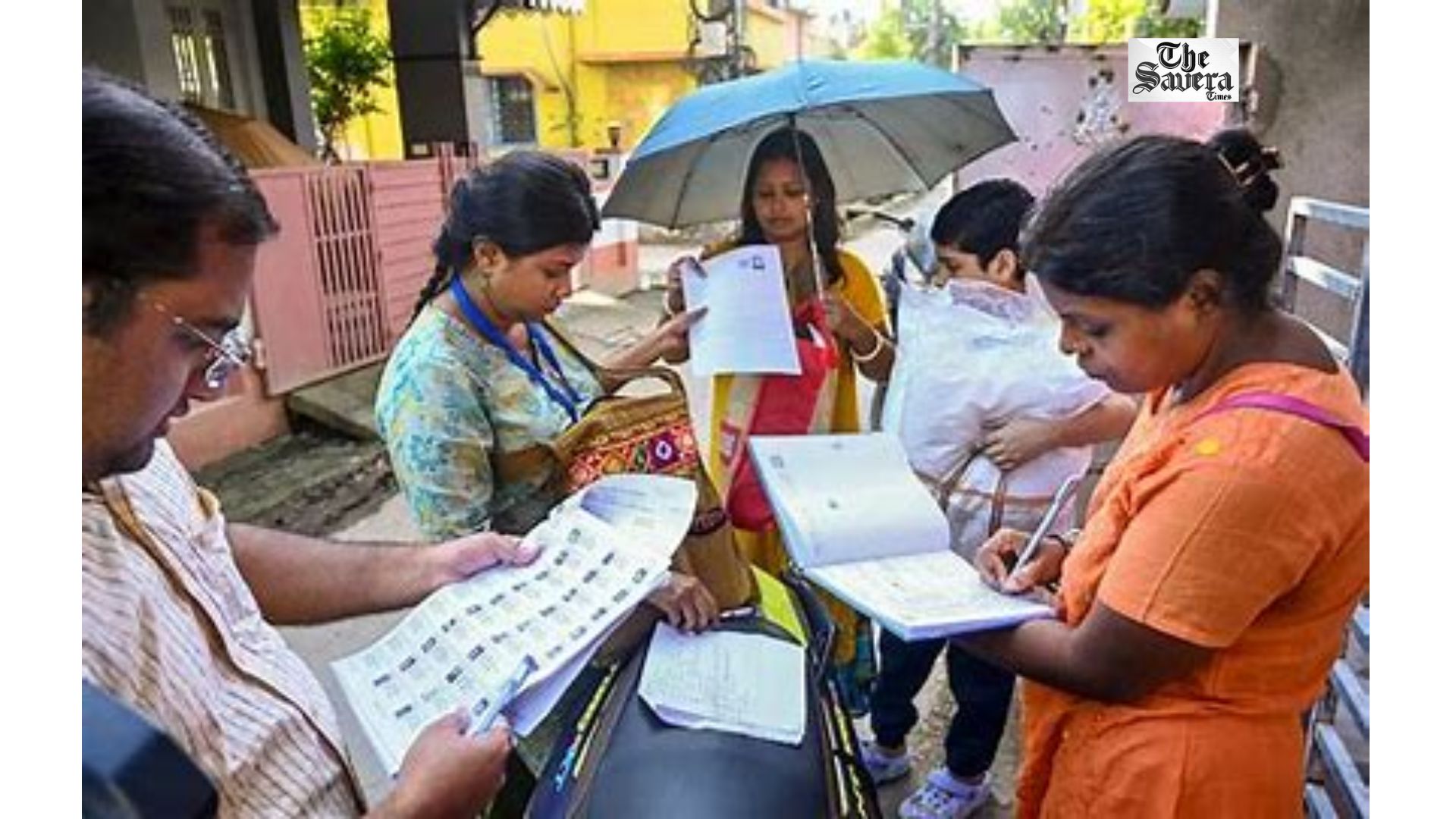
The political storm over West Bengal’s 2026 election results has now moved far beyond the boundaries of routine electoral debate. Ever since the results were declared, the Opposition, particularly Rahul Gandhi and leaders of the INDI Alliance, has tried to build a narrative that the Special Intensive Revision (SIR) of electoral rolls somehow influenced the outcome in favour of the BJP. Questions have been raised about voter deletions, the credibility of the Election Commission and even the legitimacy of the verdict itself. Yet, when the noise of political rhetoric is separated from facts and constitutional processes, a very different picture begins to emerge. The first and perhaps most important point often missing from the political discussion is that SIR was not a Bengal-specific exercise. Electoral roll revisions are not new to Indian democracy. Similar exercises have taken place in several states over the years under the supervision of the Election Commission of India. The purpose is simple – to remove duplicate entries, update records, correct addresses and ensure that voter lists remain accurate. In a country where migration, urbanisation and demographic movement constantly change the electoral landscape, such verification exercises are part of the normal functioning of the democratic system. The Opposition’s attempt to portray voter deletions as selective political targeting also becomes difficult to sustain when national figures are examined. BJP-ruled states such as Uttar Pradesh, Gujarat, Madhya Pradesh and Rajasthan reportedly witnessed deletion percentages comparable to or even higher than West Bengal during similar revision exercises. If the process itself was applied across states under the same framework, the argument that Bengal alone was singled out loses much of its force.Much of the criticism after the results also relied on the argument that the vote-share difference between the BJP and the Trinamool Congress was not large enough to justify such a major electoral shift. But Indian elections have never worked on simple arithmetic. Under the First-Past-The-Post system, even small swings in vote share can dramatically alter seat outcomes depending on how votes are distributed constituency by constituency. Indian politics has repeatedly witnessed such results in states across the country. Electoral outcomes are decided booth by booth and constituency by constituency, not merely through statewide percentages discussed on television debates.There is also an interesting contradiction in the Opposition’s argument. On one hand, leaders have raised concerns about duplicate voters, fake addresses and irregular entries in electoral rolls. On the other hand, they are opposing the very revision process designed to identify and correct such problems. In many ways, the allegations themselves reinforce why exercises like SIR become necessary in the first place. No electoral system can maintain public confidence if voter lists are not periodically verified and updated. Equally significant is the fact that the entire process unfolded under judicial scrutiny. Multiple petitions relating to electoral procedures, polling arrangements and administrative concerns were heard by the Supreme Court and the Calcutta High Court. After examining the issues raised before them, the courts allowed the Election Commission’s framework to proceed. This is important because repeated claims of a “stolen election” do not merely target the Election Commission; they also indirectly cast doubt on the constitutional institutions that supervised and reviewed the process throughout the election period. Beyond the controversy surrounding SIR, the election results themselves reflected political currents that have been visible in West Bengal for some time. The BJP retained constituencies it had already built influence in since 2019 and expanded further into regions such as North Bengal and Jungle Mahal. At the same time, the Trinamool Congress reportedly saw erosion in several traditional pockets. Bengal’s political history has always shown that when public sentiment begins to shift, the swing can be swift and dramatic. The collapse of the Left Front between 2006 and 2011 remains one of the strongest examples of how quickly political equations can change in the state. What is ultimately at stake in this debate is not just one election result but the larger public faith in democratic institutions. In every democracy, political parties are free to question decisions, challenge procedures and seek judicial intervention. That is part of the democratic process itself. But continuously dismissing electoral verdicts without clear evidence risks weakening public trust in institutions that form the backbone of the constitutional system. Democracy cannot become credible only when one political side wins. The strength of democratic culture lies equally in accepting defeat, respecting institutions and allowing constitutional mechanisms to function without constant political delegitimisation.
Read The Savera Times Evening Bulletin for the top India and world news, latest breaking headlines, major developments...

New Delhi: India and Vietnam on Friday reviewed their cooperation across key areas, including economic security, maritime engagements,...
New Delhi: The Union Ministry of Home Affairs (MHA) has sought detailed reports from the Punjab government on...
New Delhi: All India Students’ Association (AISA) National President Neha Bora was detained by the Delhi Police on...
New Delhi: The Directorate of Enforcement (ED) has provisionally attached assets and proceeds of crime worth Rs 136.44...

Mumbai: Jindal Saw on Friday reported a steep decline in its earnings for the second quarter of FY27,...

Aries: The day will be auspicious...