Last Updated: October 15, 2026
Last Updated: October 15, 2026





Dr sharad S chauhan IPS
DGP and Managing Director, Punjab Police Housing Corporation
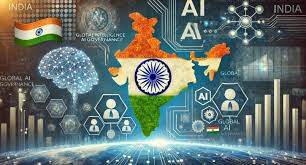
Prime Minister Narendra Modi’s assertion that India has the talent to become an AI powerhouse is a declaration of intent. It reflects a shift in national ambition. India is positioning itself not merely as a user of artificial intelligence technologies but as a creator, architect and global standard setter. The vision is rooted in inclusion, scale, sovereignty and responsibility. To translate this aspiration into structural reality, India must align infrastructure, talent, governance, innovation and global strategy into one integrated national movement.
The Bharat AI Mandala represents that integrated design. It brings together ambition, capability and purpose into a coherent framework for national transformation.
National Ambition: India Among the Top Three AI Superpowers
Global AI leadership rests on advanced computational capacity, high quality data ecosystems and deep research talent. In AI policy discourse, the word compute refers to the processing power required to train and operate advanced AI systems. It is now a standard term in global technology discussions. For India to compete at the highest level, access to large scale computational infrastructure must expand dramatically.
This includes sovereign AI cloud clusters capable of training frontier models, shared access pools of Graphics Processing Units and Tensor Processing Units for startups and academic institutions, and long term semiconductor partnerships to secure hardware resilience. Graphics Processing Units are specialized chips originally designed for visual rendering but now central to AI training. Tensor Processing Units are custom built processors optimized specifically for machine learning workloads. Broad access to such infrastructure democratizes innovation.
Institutional coherence is equally essential. The IndiaAI Mission must function in mission mode with coordinated authority across ministries. A national research grid connecting premier institutions, private laboratories and emerging universities can accelerate collaboration. Carefully designed regulatory sandboxes, meaning controlled environments where new AI applications can be tested under supervision before full scale deployment, can allow experimentation without regulatory uncertainty.
Ambition becomes credible when supported by durable institutions and infrastructure.
Talent and IT Strength: Leveraging India’s Technology Workforce
India’s most powerful asset remains its human capital. The country has built one of the largest technology workforces in the world. The next step is to transition from services scale to innovation depth.
Advanced doctoral programs, global research partnerships and competitive fellowships must expand the top tier of AI researchers. At the same time, millions of engineers require structured upskilling in machine learning, data science and AI systems integration. Industry aligned certification frameworks and collaborative university programs can rapidly elevate national capability.
At the broadest level, AI literacy must extend beyond the technology sector. Managers, civil servants, teachers, healthcare professionals and entrepreneurs must understand how to use AI tools effectively. A national apprenticeship ecosystem linking industry with universities can ensure that students graduate with real world AI deployment experience.
India’s demographic dividend can become an AI dividend if skilling is continuous, structured and inclusive.
Skilling and Youth: Preparing a Generation for the AI Economy
Artificial intelligence will reshape work rather than eliminate it. The response must therefore focus on transition and preparation. AI fundamentals should enter school curricula. Coding literacy and data awareness must begin early. Higher education must integrate interdisciplinary AI modules so that agriculture students, medical students, social scientists and engineers collaborate in solving real world problems.
Continuous learning systems, modular certifications and micro credentials can allow workers to reskill without leaving employment. The future workforce will operate in partnership with intelligent systems. Preparing youth for that reality is central to national competitiveness.
Inclusive Development: AI for Farmers, Healthcare, Education and Rural India
The true test of India’s AI vision lies in its ability to serve Bharat. Artificial intelligence must expand opportunity across agriculture, healthcare, education and rural development at scale.
In agriculture, AI can enable precision farming, seed optimization, crop disease recognition through image analysis, soil nutrient mapping, yield forecasting, weather risk modeling, irrigation scheduling, water table monitoring, livestock health analytics, dairy productivity modeling, fisheries tracking, supply chain optimization, storage loss prediction, farm credit risk assessment, agricultural insurance automation, carbon credit measurement, drone based crop analytics, organic certification monitoring, market price forecasting and climate resilience planning. It can support cooperative farming networks, rural warehousing intelligence and sustainable land use planning.
In healthcare, AI can strengthen radiology interpretation, pathology image analysis, early cancer detection, tuberculosis screening, maternal risk monitoring, neonatal care analytics, mental health triage systems, telemedicine support, clinical decision assistance, drug discovery acceleration, hospital workflow optimization, emergency response routing, epidemic modeling, public health surveillance, personalized treatment recommendations, elderly care monitoring, preventive health alerts, genomic analysis, rural ambulance dispatch prediction and medical supply chain forecasting. It can assist in non communicable disease tracking, nutrition analytics and health awareness personalization.
In education, particularly rural education, AI can power personalized learning pathways, multilingual tutoring in regional dialects, speech to text systems for local languages, dropout prediction analytics, scholarship targeting, special education assistance, teacher workload automation, lesson planning support, adaptive assessments, digital classroom analytics, remote laboratory simulations, STEM enrichment tools, vocational skill mapping, entrepreneurship guidance, literacy acceleration programs, remedial diagnostics, career counseling analytics, examination integrity systems, adult education platforms and women literacy initiatives. It can connect rural classrooms to global knowledge resources while tailoring content to local contexts.
Beyond sectoral applications, AI can support smart village planning, rural credit modeling, microfinance analytics, renewable energy optimization, solar grid balancing, water resource management, flood prediction, drought monitoring, land record intelligence, welfare targeting efficiency, artisanal cluster development, tourism analytics, forest resource monitoring, fisheries sustainability, disaster early warning systems, rural logistics mapping, e commerce enablement for village enterprises and digital governance transparency.
This breadth of possibility demonstrates how AI can act as a multiplier for development rather than a narrow technological upgrade.
Digital Public Infrastructure: The Backbone of AI Scale
India’s Digital Public Infrastructure provides a foundational advantage. Identity systems, digital payments architecture and interoperable platforms create a scalable environment for AI deployment. Layering open AI interfaces onto these digital rails can accelerate innovation. Curated public datasets, built with privacy safeguards, can stimulate research and startup growth.
Interoperability across ministries ensures that AI applications do not remain siloed.
Few nations possess such a comprehensive digital backbone. Leveraging it effectively can transform AI from an elite capability into a mass utility.
Ethical and Responsible AI: Building Trust Capital
Technological power must be anchored in public trust. A risk tiered regulatory framework can differentiate between low risk automation and high risk systems in finance, healthcare or public administration. Algorithmic audits for sensitive applications can enhance accountability. An AI safety institute can coordinate standards and testing protocols. Clear grievance redress mechanisms can protect citizens from harm.
Human centric safeguards ensure that innovation strengthens democracy rather than undermines it. Trust will determine the durability of India’s AI ecosystem.
Atmanirbhar Bharat: Self Reliance in AI Innovation
Strategic autonomy in AI requires domestic capability at every layer of the technology ecosystem. This includes semiconductor design, cloud infrastructure, data management systems, foundational AI models, application development and governance expertise. Indigenous large language models trained in Indian languages can preserve cultural nuance and reduce dependency. Domestic hardware capacity can enhance resilience. Balanced data governance policies can protect citizens while enabling innovation.
Self reliance in AI is about resilience and confidence, not isolation.
Global Positioning: India as a Responsible AI Leader for the Global South
The global governance landscape of artificial intelligence remains unsettled. India has the opportunity to shape a development oriented AI model rooted in inclusion and ethical deployment. By sharing digital infrastructure blueprints, offering AI capacity building programs to emerging economies, providing scholarships, and participating actively in multilateral forums, India can influence global norms.
Strategic partnerships with advanced AI economies can accelerate domestic capability while preserving autonomy. Leadership will not be measured solely in patents or valuations but in the ability to define standards and principles.
Overcoming Structural Risks
To sustain momentum, India must address structural vulnerabilities. Regulatory fragmentation must give way to coherence. Public investment in deep research must increase. Urban rural disparities in digital access must narrow. Brain drain must be countered by opportunity at home. Innovation must be encouraged without excessive regulatory burden.
A stable long term roadmap supported by consistent policy, enhanced research funding and clear governance enforcement can provide the confidence needed for sustained growth.
Conclusion
The Bharat AI Mandala is more than a symbolic framework. It represents the integration of ambition, talent, infrastructure, ethics and global vision into a single national direction. India possesses scale, demographic strength and digital foundations unmatched by most emerging economies. If infrastructure expands, youth are systematically prepared, rural communities benefit meaningfully, governance builds trust and strategic autonomy strengthens resilience, the vision of becoming an AI superpower can move from aspiration to reality.
India has the talent. The roadmap now demands execution with clarity, confidence and purpose.
Punjab AGTF and Haryana STF arrested Gurlal Singh in connection with Ajmeet Singh’s September 11 murder in Naushera...

Uttar Pradesh Police arrested a 28-year-old alleged criminal after an encounter in Noida’s Sector 63. Police said around...

Indian equity benchmarks opened higher on Thursday, with the Sensex rising 183.91 points and the Nifty gaining 48.60...

Union Home Secretary Govind Mohan has tendered an unconditional apology to the Supreme Court over alleged non-compliance with...

Union ministers and chief ministers paid tribute to former President APJ Abdul Kalam on his birth anniversary, recalling...

Start your day with The Savera Morning Brief, bringing you the latest headlines and important developments from India...

Aries: The day will be auspicious...