Last Updated: October 19, 2026
Last Updated: October 19, 2026





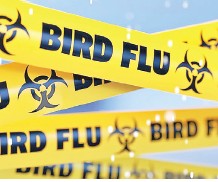
There is a quiet assumption in publishing that some subjects are best left untouched, and COVID is one of them. After years of lockdowns, fear and exhaustion, many people want that chapter sealed shut. The problem is that closing the book too tightly also locks away the lessons we learned the hard way: how fragile preparedness really is, how early warnings are routinely ignored, and how systems meant to protect us can fail at the exact moment they are needed.
Those lessons matter again, because another threat is steadily advancing in the background: highly pathogenic avian influenza, or bird flu. For now, bird flu poses a low risk of sustained human-to-human transmission. But low risk does not mean low impact. H5 strains have been devastating for animals. Around nine million birds have died directly, while hundreds of millions more have been culled. More worrying is the virus’s growing ability to infect mammals. At least 74 species, ranging from seals to polar bears, have experienced outbreaks, signalling repeated opportunities for the virus to adapt. This is not happening in isolation. Industrial poultry farming creates ideal conditions for cross-species transmission. In the United States alone, more than a thousand dairy herds have tested positive in the past two years, with viral fragments even detected in milk. Each spillover is a trial run for the virus. Europe is seeing a similar surge, with infections in wild birds quadrupling between autumn 2024 and autumn 2025.
Human cases remain rare but serious. Since 2003, fewer than 1,000 confirmed H5N1 infections have been recorded worldwide, yet nearly half were fatal. The Americas have reported 75 cases since 2022, and the US recorded its first H5N5 death in November. Europe has not reported human cases, but health agencies warn that widespread animal circulation raises the risk. The deeper issue is not just the virus, but how warnings fail. Early signals are being detected by veterinarians and scientists, yet surveillance systems are weakening. Budgets have been cut, expertise drained and data-sharing slowed. In the US, delayed and incomplete reporting has made it harder to track viral evolution. In the UK and parts of Europe, reduced surveillance capacity and staff shortages blunt early detection.
When institutional signals fade, public awareness fades with them. Polls show most people barely register bird flu as a threat, especially since human symptoms can be mild and easily missed. None of this means a new pandemic is inevitable. Preparedness is better than it was before COVID, and the probability remains low. But low is not zero. With little existing immunity and weakened trust in public health expertise, the cost of complacency could be enormous. Ignoring the warning signs now risks repeating the same mistake we once swore we would not make again.
Rajasthan Police and the Anti-Gangster Task Force have detained three people, including a juvenile, at Kota railway station...

CJP leaders Saurav Das and Ashutosh Ranka are due to appear before a Special Executive Magistrate at 2...

Two young men died after a pickup van hit their motorcycle on NH-80 in Lakhisarai. In a separate...

Dushyant Kumar Gautam took oath as the 21st Governor of Sikkim in Gangtok on Monday. He succeeds Om...

Telangana BJP president N. Ramchander Rao has hit back at Rahul Gandhi over his vote chori allegations, accusing...

Karnataka Police have arrested Mamtaz Mallik in Kalaburagi and are investigating his alleged links with Pakistan-based individuals and...

Aries: The day will be auspicious...