Last Updated: October 15, 2026
Last Updated: October 15, 2026





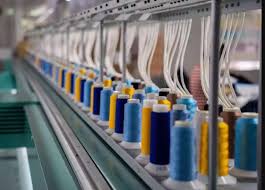
The Union Budget 2026–27 signalled renewed support for the Indian Textile sector, promoting market expansion, modernisation, upgrading skills and sustainability. The slew of initiatives announced include a National Fibre Scheme to promote self-reliance in natural and new industrial fibres, and a textile expansion and employment scheme focused on modernising traditional clusters through capital support, technology upgrades and common testing facilities.
A National Handloom and Handicraft programme will integrate existing schemes to support artisans. Additionally, the Tex-Eco Initiative and Samarth 2.0 aim to promote sustainable textiles and modernise skilling through industry–academia collaboration.
Textiles, which encompass fibres, yarns, fabrics and apparel, are a major contributor to the Indian Economy. It is estimated to account for 2.3 per cent of the country’s GDP, 13 per cent of industrial output and 12 per cent of exports.
The sector provides direct and indirect employment to over 45 million people. It is expected to see a compound annual growth rate of 10 per cent per annum, to reach $350 billion market value by 2030, with exports potential of $100 billion.
However, with the rise in climate change, worsening environmental issues and changing world order, the sector faces multi-faceted challenges. Some are legacy issues while others are emerging as the world transforms towards a greener economy.
One of the biggest challenges is to make financial support accessible to the large number of small- and medium-scale textile enterprises (SME), which even include households. A few are are registered in defined industrial areas while some fall outside the legal purview.
Apart from the legality, the other major challenge is environmental. Different processes in the sector have various impacts on the environment. The dyeing process, also known as wet processing, is an energy- and water-intensive method.
At present, the process generates heat, usually through coal or other emission-intensive fuels, contributing to both air and water pollution. The process of dyeing alone consumes 43 per cent of the total energy required in textile industry. SMEs use small or baby boilers that are not efficient and are installed in large numbers.
An effective solution to the problem is the installation of centralised or common boilers for steam generation at every textile cluster.
Indian equity benchmarks opened higher on Thursday, with the Sensex rising 183.91 points and the Nifty gaining 48.60...

Union Home Secretary Govind Mohan has tendered an unconditional apology to the Supreme Court over alleged non-compliance with...
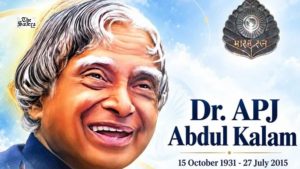
Union ministers and chief ministers paid tribute to former President APJ Abdul Kalam on his birth anniversary, recalling...
Start your day with The Savera Morning Brief, bringing you the latest headlines and important developments from India...

Prime Minister Narendra Modi extended Navratri greetings on the fifth day dedicated to Maa Skandamata, wishing love and...
DMK chief M.K. Stalin condemned the arrests of CJP functionaries Saurav Das and Ashutosh Ranka in Delhi and...

Aries: The day will be auspicious...