Last Updated: September 24, 2026
Last Updated: September 24, 2026





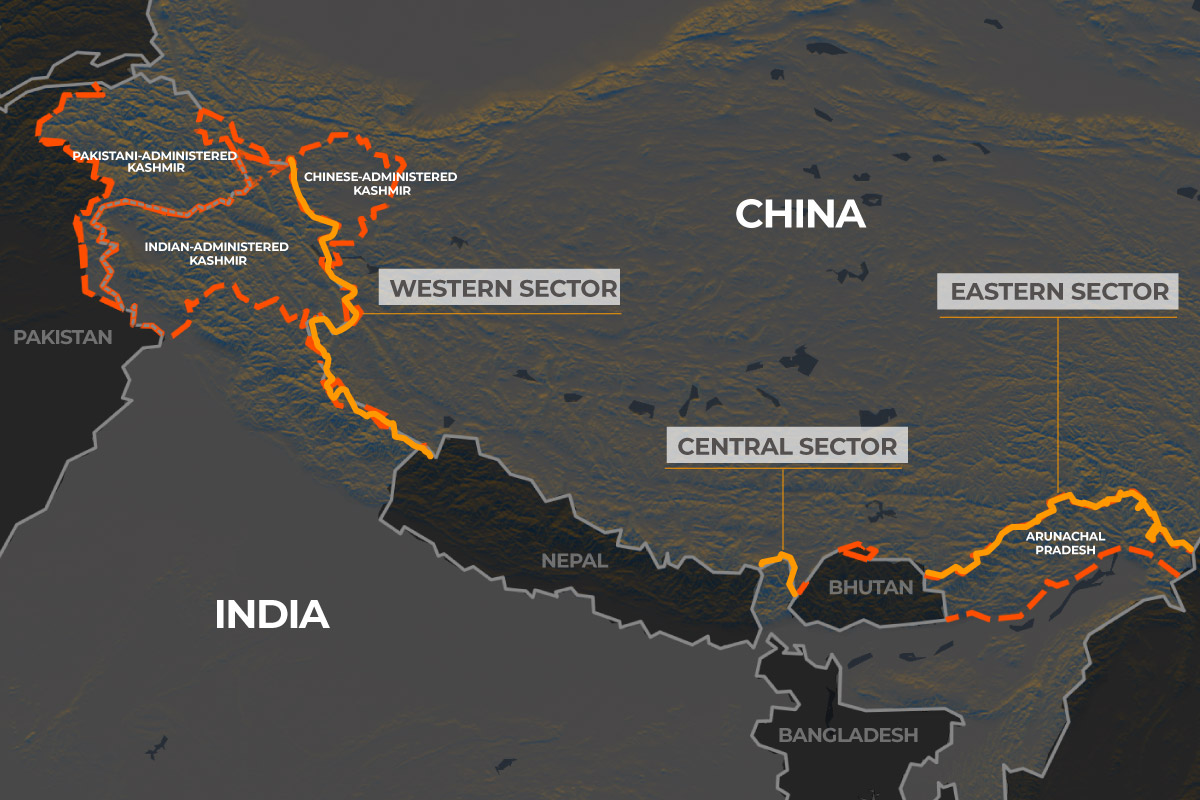
The special representative (SRs) mechanism to resolve Indo-China border dispute was instituted during then Prime Minister Atal Behari Vajpayee’s visit to Beijing in 2003. The first round of talks took place in Oct 2003. It is 23 years and twenty-five rounds of talks. Result nothing concrete and substantiative on dispute resolution except crisis management to keep the borders cool especially during high level bilateral or multilateral visits. During Premier Wen Jiabao’s visit in 2005, agreement on the political parameters and guiding principles for the settlement of India-China boundary questions were signed. During 15 th round of Special Representative talks, agreement for establishment of diplomacy led platform Working Mechanism for Consultation and Coordination on India-China border affairs (WMCC) was signed in 2012. There have been 23 rounds of Corps Commander level talks on eastern Ladakh standoff and Corps Commander level flag meeting on September 6 and 7 2026 on easing tensions between both countries on Tasking border dispute in Upper Subansiri district of Arunachal Pradesh. Civilian and military level talk push by India have not been able to stop Chinese “Nibble and Negotiate approach”. Engagement is desirable to maintain peace and tranquility. Necessity of continuous engagement also indicate flux Indo-China front loaded with claims and counter claims. Considering unstable India-China border with Doklam 2017, Galwan 2020, Depsang and Demchok standoff lurking with Saksham valley and Aksai Chin in tandem and Tasking 2026 calls upon India to maintain eagle eyed approach and not fall in Chinese good unneighborly trap. Ministry of defence annual report 2025-2026, reveals reduction in Chinese troop levels opposite Northern front of ten combined arms brigade size forces. The annual report does not reveal Chinese force levels in the Northern sector, their assessed threat and retaliation potential. Report credits bilateral interaction at political, diplomatic and military levels for positive developments all along northern frontier and terms border stable consequent to engagement with China. What has been achieved through continuous engagement is managing issues of concern, restoring peace and tranquility along borders and not border dispute redressal. China is likely to be once again a future trigger for surprise from across if India lowers eagle eyed approach and falls in Chinese trap of troop reduction as sign of its good neighbor intentions ignoring historical lessons. India need to strategically and realistically appreciate at National Security Council Secretariat (NSCS) and military commanders’ level, why China has reduced its forces along Northern front. Is it because of continuous engagement and thaw in bilateral relations or is it because China has attained its political and military aims along Northern front. Realistic ground assessment will provide answers and help in better preparations and aggressive retaliation to future Chinese escapades and daredevilry. India also need to sit up and analyze that 2005 agreement on political parameters and guiding principles for settlement of IndoChina border dispute. It almost stands rendered infructuous. Article IV which calls for giving due consideration to each other’s strategic and reasonable interests and principle of mutual respect and equal security was torn to shreds by China in Doklam and eastern Ladakh. Similarly, Article VII calls for safeguarding due interests of settled populations in border areas in reaching boundary settlement. Locals have raised alarm over Beijing restricting settled population out of their grazing pastures not only in Eastern Ladakh but Arunachal too. Tribal groups in Arunachal Pradesh have raised alarm over Chinese activities. It also meant safeguarding Arunachal Pradesh especially territories like Twang. Indian governments past and present interpreted Article VII as saving territories and population. China has undone it through its policy of constructing hundreds of dual border villages called “Xiaokang” all along Line of actual control (LAC) aimed at strengthening territorial claims and strengthening its defence posture all along the frontier especially opposite Arunachal Pradesh. What is Chinese outlook, strategy and tactics in continuous bilateral political, diplomatic and military level engagement? Is it to settle border dispute or continue with nibble and negotiate approach behind the façade of talks. It is for political executive and military leadership to draw deductions and decipher Chinese approach. In about 23 years of Special Representative mechanism and 14 years of Working mechanism for consultation and coordination, despite 36 meetings, there is no movement on boundary settlement. If an analysis of Indian position post Galwan is done, India is struggling to invoke disengagement through negotiations, settlement of friction and patrolling points, buffer zones rather than settlement of boundary dispute. SR and WMCC have become more of mechanisms for non-escalation, disengagement, peace & tranquility along borders. Original mandate of settlement of border dispute is long forgotten. A cursory look at media release by ministry of external affairs reveals that eight points of outcomes and consensus reached at 25 th round of SR level talks on 25 August 2026 have turned it into a mechanism for crisis management to avert conflicts, avoid misunderstanding and miscalculation. SR mechanism like WMCC mechanism have become more of peace ensuring rather than border dispute resolution mechanisms. Boundary issue is complex with differing perceptions. Outcome achieved during 25 August talks is agreement to set up groups for boundary delimitation and border management. The specific terms of reference for expert group on boundary delimitation and working group on border management are yet to be finalized and settled. Finalization of TOR effectively shift to 2027. Let’s consider western sector. Instead of going into history, fact is that Aksai chin is under illegal Chinese occupation and XinjiangTibet highway passes through Aksai Chin thus torpedoing Indian claim over Aksai China. On 21 Oct 1959, Ten CRPF brave hearts lost their lives at hot springs and about 38000 Square Kms of Ladakh land is under illegal Chinese occupation. Pakistan gifted Shakgam valley to China in 1963 under Sino-Pakistan boundary agreement. The CPEC road network passes through Xinjiang-Gilgit Baltistan, literally challenging Indian sovereignty over the area. Pakistan-China operationalizing boundary commission despite no boundary existing between Pakistan & China is an attempt to further sabotage Indian claims over Pak occupied territories and make boundary question trilateral. It is only in Central sector about 2000 Square Kms from Barahoti to Shipki La that maps were exchanged in 2000-2001 under agreement of November 29, 1996. McMohan line was agreed upon by China in notes exchanged between Henry Mcmohan and Lonchen Shatra in Shimla in March, 1914. Chinese Plenipotentiary initialed the draft in April 1914 but China disowned it. Britain and Tibet signed fresh version of convention on boundary on 03 July 2014 without China. Chinese rests its claim on Arunachal Pradesh on disowning the initialed draft, an illegal claim on 90000 Square Kms of area with Tawang holding centerstage since sixth Dalai Lama Tsangyang Gyasto was born near Tawang. Tawang holds special place in future reincarnation of Dalai Lama and poses challenge to China to control Tibetan religious succession, hence urgency to control Arunachal Pradesh. Important question is why China unwilling to settle border question. Simple answer lies in the fact that it aims to achieve its political and military aims on boundary dispute before resolution. It considers use of force and duress as authorization to nibble taking shield of cartographic confusion. India need to position itself at high ground of military power to tame China. It may take time but is need of hour and desirable. India must strengthen its military posture all along Chinese front. India must act urgently to stop migration of population from border areas especially in eastern and central theatre and develop border areas and population as envisaged in Vibrant village programme to stop migration. Unless migration is stopped, salami slicing and nibbling will continue. Unless India strengthens economically and militarily, all mechanisms, be it special Representatives or WMCC will remain strong on paper and weak on negotiations table with gaze and focus on crisis management, not border dispute resolution. Political executive must decide which way it wants to proceed, orchestrated management for peace and crisis management or permanent dispute resolution. It requires diplomatic heft and statesmanship approach from those at helm.
Saudi Arabia issued civil defence alerts for Mecca, Jeddah, Yanbu, Tabuk and Taif, warning of potential danger and...
Pakistan carried out fresh airstrikes in Afghanistan's Kandahar, Paktia and Khost provinces, with the Taliban claiming four civilians...
Nepal has begun deporting 88 Chinese nationals over alleged visa violations and is investigating 329 more who entered...
Washington: Two Republican lawmakers urged President Donald Trump to press China for reliable access to its soybean and...

A deep depression formed in the Bay of Bengal hit the coast of North Andhra Pradesh and South...
US President Donald Trump gave Chinese President Xi Jinping a rare airport welcome, as Washington announced a two-month...
Aries: The day will be auspicious...