Last Updated: October 7, 2026
Last Updated: October 7, 2026





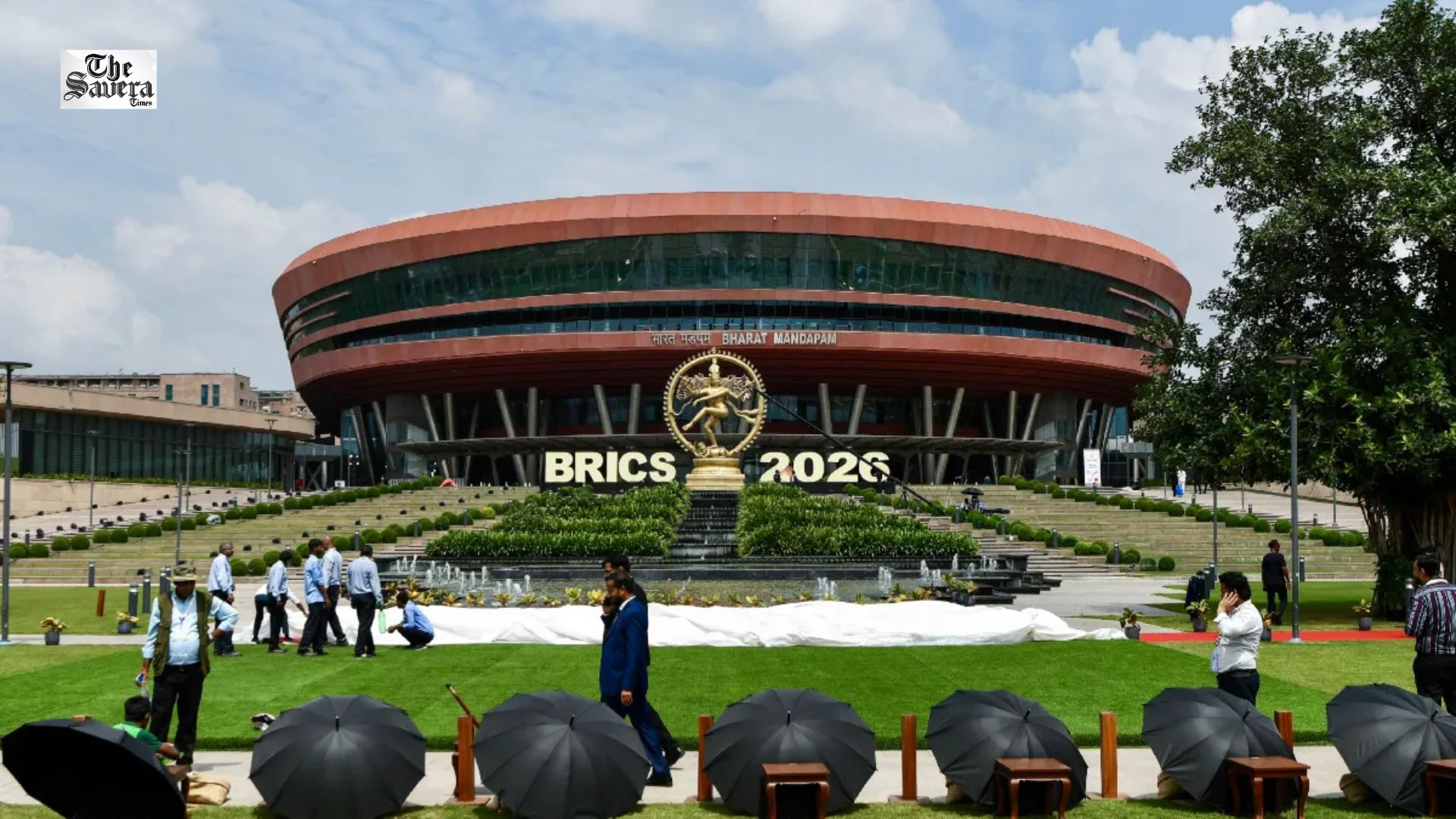
New Delhi: The BRICS Summit in New Delhi on Saturday adopted the New Delhi Declaration, marking a major diplomatic outcome for India and calling for greater participation of the Global South in shaping future technologies and the rules governing them.
Announcing the declaration at Bharat Mandapam, Prime Minister Narendra Modi said the changing global order could not be steered by outdated institutions and stressed the need for reforms, greater representation and more responsive rule-making.
“Alongside the diversity of our views, our shared commitment to BRICS cooperation has also clearly emerged. Today’s discussion makes it evident that the changing world cannot be steered by outdated institutions; reforms are essential in representation, responsiveness, and rule-making,” Modi said.
“We also emphasised that the Global South must have equal participation in the development of future technologies and the rules governing them. The gap between decisions and their outcomes must be bridged through partnership and collective action,” he added.
BRICS Condemns Pahalgam Terror Attack
A major highlight of the New Delhi Declaration was the strong condemnation of the April 22, 2025, terror attack in Jammu and Kashmir, in which 26 people were killed and several others injured.
The BRICS countries described terrorism as “criminal and unjustifiable” and called for zero tolerance towards terrorism in all its forms and manifestations.
“We express strong condemnation of any acts of terrorism as criminal and unjustifiable, regardless of their motivation, whenever, wherever and by whomsoever committed,” the declaration said.
It specifically condemned the April 22, 2025, terrorist attack in Jammu and Kashmir and reaffirmed the grouping’s commitment to combating terrorism, including the cross-border movement of terrorists, terrorism financing and safe havens.
The declaration also stressed that terrorism should not be associated with any religion, nationality, civilisation or ethnic group. It called for all those involved in terrorist activities and their support to be held accountable and brought to justice under relevant national and international law.
The BRICS countries further called for zero tolerance for terrorism, rejected double standards in countering terrorism and emphasised the primary responsibility of states in combating terrorist threats while ensuring that counter-terrorism efforts comply with international law.
UNSC Reform, Global South Representation
The declaration also called for reforms to the United Nations Security Council and greater representation for developing countries.
China and Russia reiterated their support for India and Brazil’s aspirations for a greater role in the UN Security Council. The declaration also called for correcting the underrepresentation of African countries in the Council in line with the Ezulwini Consensus.
Prime Minister Modi stressed that changing global realities require reforms in international institutions so that representation and decision-making better reflect the present world order.
BRICS Opposes Unilateral Tariffs And Sanctions
The BRICS countries expressed serious concern over the increasing use of unilateral tariffs and non-tariff measures that distort trade and are inconsistent with World Trade Organisation rules.
The declaration also strongly condemned unilateral coercive measures and secondary sanctions, describing them as contrary to international law.
The grouping called for greater engagement in conflict prevention, including efforts to address the root causes of conflicts. It reaffirmed its commitment to resolving international disputes peacefully through dialogue, consultation and diplomacy.
BRICS also advocated a multilateral approach that takes into account diverse national perspectives on key global issues, while stressing dialogue and cooperation in addressing international challenges.
De-Dollarisation And Local Currency Settlements
The BRICS members reaffirmed their efforts to advance the BRICS Cross-Border Payments Initiative and promote trade settlements in local currencies.
At the same time, the grouping stressed that there should be “no one-size-fits-all approach” in advancing payment and settlement mechanisms.
On international financial institutions, BRICS called for progress on the 17th General Review of Quotas to increase the voting shares and representation of developing countries in institutions such as the International Monetary Fund and World Bank.
BRICS Pushes AI Governance
Artificial intelligence was another key area covered in the New Delhi Declaration.
BRICS reaffirmed its commitment to the Leaders’ Statement on Global Governance of Artificial Intelligence, building on discussions at India’s AI Impact Summit and the World AI Conference in Shanghai.
The grouping’s emphasis on equal participation for the Global South in developing future technologies and shaping the rules governing them was also reflected in the declaration.
Overall, the New Delhi Declaration placed emphasis on reforming global institutions, strengthening the voice of developing countries, opposing unilateral trade and coercive measures, combating terrorism and developing a more inclusive framework for emerging technologies.
Good Evening Viewers, we hope you spend your evening well with The Savera Times Evening Bulletin. Stay updated...

New Delhi: Leader of the Opposition in the Lok Sabha Rahul Gandhi, Congress MP Priyanka Gandhi Vadra, and...

Three years ago, on October 7, 2023, Israel woke up to one of the deadliest attacks in its...

Accra: External Affairs Minister (EAM) S Jaishankar arrived in Ghana on Tuesday as India looks forward to productive...
New Delhi: The Central government on Tuesday cleared the appointment of Air Marshal Ashutosh Dixit as the next...
Ujjain: A bus travelling from Ujjain to Indore caught fire after one of its rear tyres allegedly burst...

Aries: The day will be auspicious...