Last Updated: October 8, 2026
Last Updated: October 8, 2026





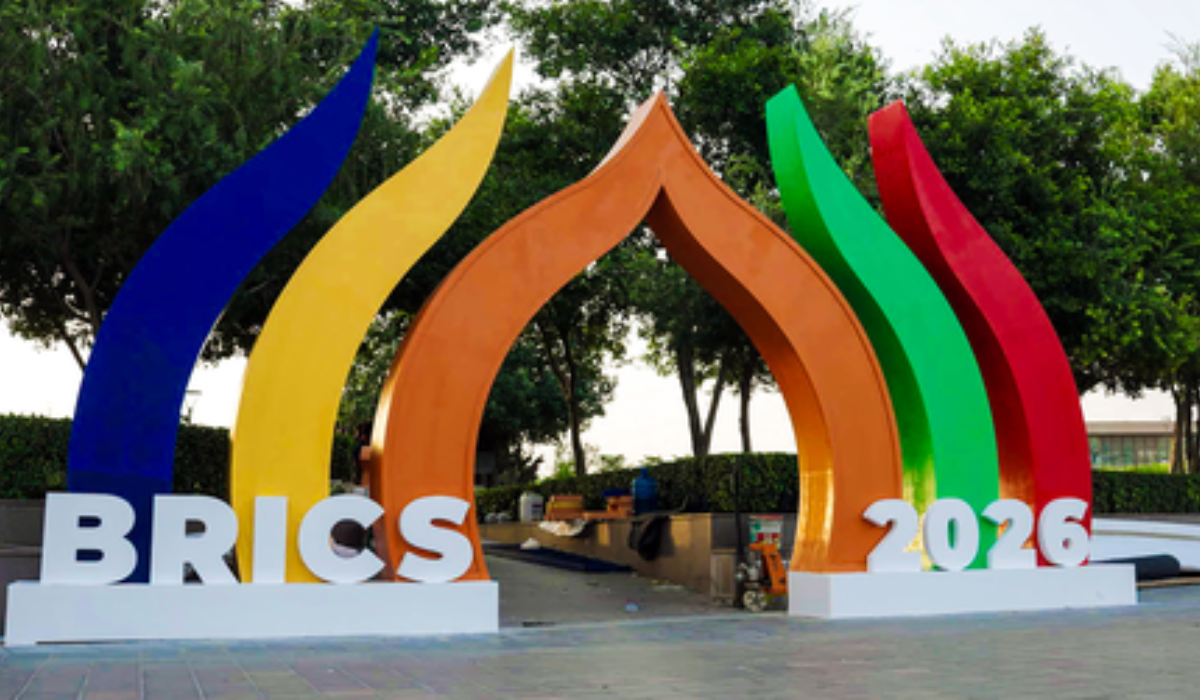
India’s 2026 BRICS presidency has succeeded in highlighting that the concerns of developing countries should not be treated as peripheral to global governance, and made a positive contribution to the development agenda of Global South. India has brought some practical contributions to the table which include its experience with digital public infrastructure and the crucial need for development finance. Over the past decade, New Delhi has built a digital ecosystem that has changed how millions of Indians access payments, banking and public services. Aadhaar, UPI and the broader India Stack have become important examples of how digital systems can be designed for mass adoption. UPI, which began as an Indian payment infrastructure, has become a reference point in conversations about accessible and interoperable digital payments. Its internationalisation has spread with UPI-based payment services being introduced in countries such as France, Sri Lanka, Mauritius and the UAE. India’s experience provides developing countries with a working example of how digital public systems can be built around everyday economic activity. The initiative is significant because it moves the conversation from technology as a marker of national prestige to technology as a means of expanding economic participation. It also underlines that finance is another area where India’s BRICS engagement carries wider significance as for the developing world, the problem is not merely a shortage of investment. It is the cost of accessing it and the difficulty of securing funds for projects that may not offer immediate commercial returns. The New Development Bank, established by BRICS in 2015, was an important step towards addressing this imbalance. Headquartered in Shanghai, the bank was created to finance infrastructure and sustainable development projects in member countries. Its founding members committed equal initial capital, giving the institution a structure distinct from the voting arrangements of traditional Bretton Woods institutions — the World Bank and the IMF. The bank’s importance lies in the fact that it creates an additional source of development finance to the World Bank or other development lenders at a time when infrastructure requirements across the Global South remain enormous. India has been one of its principal beneficiaries. NDB financing has supported projects in India, including the Madhya Pradesh Major District Roads Project, which was approved to improve road connectivity and transport infrastructure. Such projects illustrate how the bank’s role can extend beyond the language of financial reform to the everyday requirements of development. Yet the larger question remains whether BRICS finance can reach beyond major infrastructure. India’s emphasis on MSMEs, investment cooperation and local-currency financing is relevant here. Small businesses are often more exposed to credit constraints and currency volatility than large corporations. Easier access to finance could make a difference to employment, entrepreneurship and local economic activity. This serves to provide a BRICS financial agenda that goes beyond large state-backed projects and expands the opportunities available to smaller economic actors to create more jobs and incomes for the poor masses. India’s BRICS presidency has also sought to place health, agriculture, sustainability and innovation on the agenda all of which are closely tied to the resilience of societies. Trade, investment, strategic cooperation and the vision of a multipolar world dominated discussions on the second day of the 18th BRICS Summit, with experts and industry leaders describing the grouping as an increasingly important platform for the Global South. tariff-related challenges facing many economies were not created by BRICS nations but were a consequence of the broader global trade environment, particularly the impact of US policies. BRICS members had agreed to address such challenges through collective cooperation and economic coordination. The three key outcomes emerged from the summit: efforts to boost bilateral and multilateral trade, positive progress toward resolving border-related issues between India and China, and an understanding between India and Russia to expand bilateral trade to $100 billion. These developments could strengthen both economic and strategic cooperation among BRICS countries. The Delhi Declaration adopted at the summit as an important document for global security and international cooperation. The event provided world leaders with an opportunity to gain a closer understanding of India and reinforced the need for collective action on issues such as climate change, security and economic development. BRICS’ original objective is to strengthen a multipolar world order, where global decision-making is not limited to a few countries. Precisely, BRICS had emerged as one of the most influential examples of Global South cooperation, representing more than half of the world’s population and around 40 per cent of global GDP.
New Delhi: Prime Minister Narendra Modi welcomed policymakers, maritime leaders, and experts from around the world to the...
New Delhi: The outlook for onion availability has strengthened considerably with robust market arrivals and the commencement of...

New Delhi: The Delhi High Court on Wednesday permitted a senior director of Vivo Mobile India to travel...
New Delhi: INDIA bloc leaders, including Leader of Opposition in the Lok Sabha Rahul Gandhi and Congress MP...

Varanasi: Uttar Pradesh Chief Minister Yogi Adityanath on Wednesday said that the state has undergone a major transformation...
Chandigarh: The Punjab Vigilance Bureau (VB) during its ongoing drive against corruption in the state, the Punjab Vigilance...
Aries: The day will be auspicious...