Last Updated: October 8, 2026
Last Updated: October 8, 2026





~Abhishek Vij
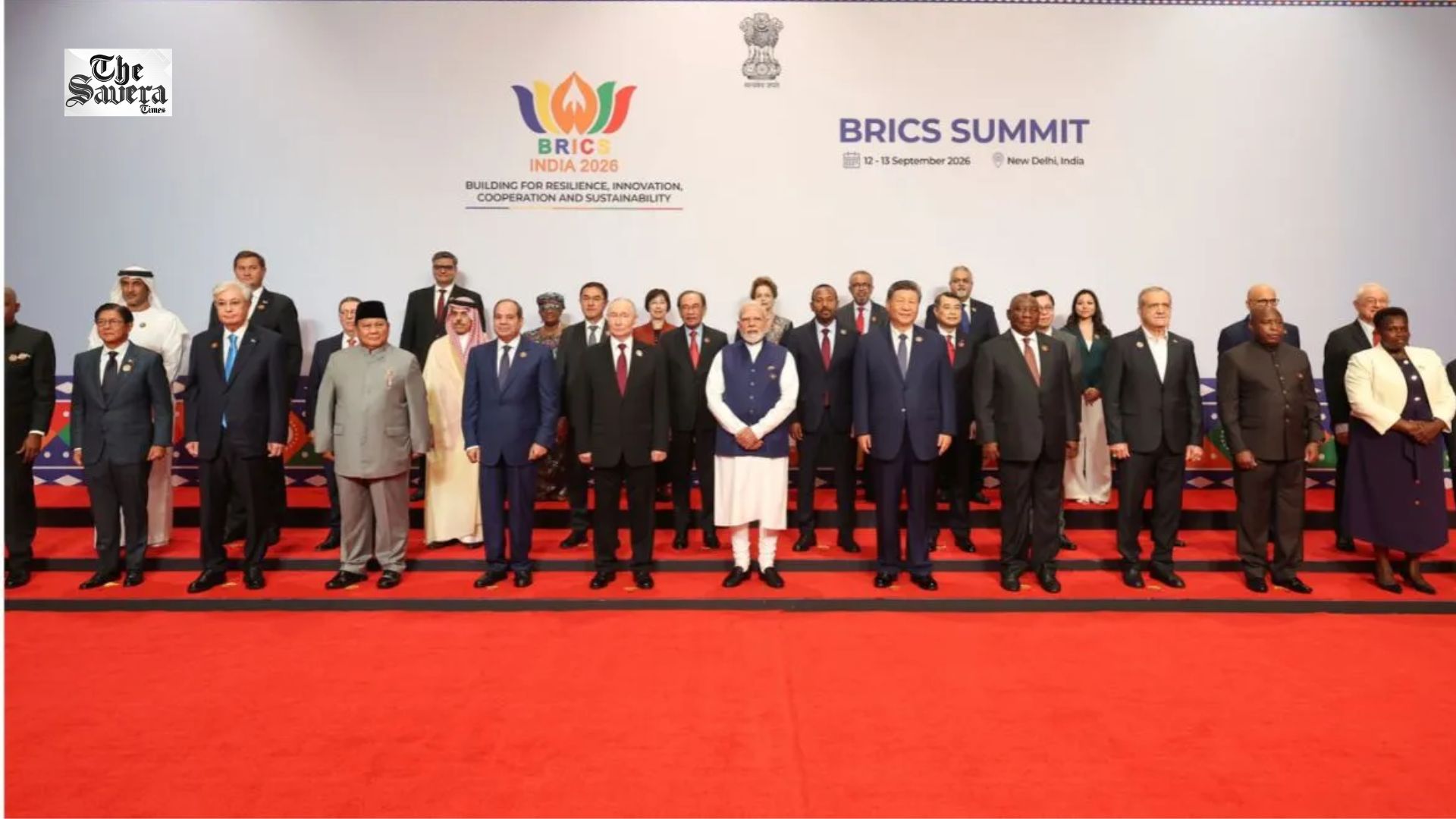
Sunday marked the concluding day of the twoday 18th BRICS Summit. Prior to the summit, experts had been predicting that this year’s BRICS Summit would be a litmus test for host India’s diplomacy. It remains to be seen how India’s coordination with Russia and China, and what stance Iran and its rivals, including the pro-US countries UAE and Saudi Arabia, take on any particular issue. From India’s perspective, this 18th Summit appears to be fruitful for India. Our most notable achievement was that on Saturday, all countries, including Russia and China, unanimously condemned the Pahalgam massacre in India in a joint statement. Member countries stated that they would take joint action against those who harbor terrorists. There was also consensus against those who finance terrorism and provide safe havens. It is significant that Iran, Saudi Arabia, and the UAE, which have differing positions, unanimously agreed on action against terrorism.
The summit also saw some significant developments. Prime Minister Narendra Modi held a bilateral meeting with Chinese President Xi Jinping. Another significant development was that Prince Khalid bin Mohammed of Abu Dhabi, who was targeted by Iranian missile and drone attacks during the US-Iran conflict, met with Iranian President Masoud Pezeshkian. The two leaders discussed measures to contain tensions in West Asia and prevent the situation from escalating. Pezeshkian stated unequivocally that the Middle East does not need US policing. Furthermore, an important demand raised by the finance ministers of the BRICS countries before the International Monetary Fund is that emerging markets and developing economies should be given greater importance at the World Bank.
Without naming any country, the BRICS countries stated, “We express serious concern over the unilateral imposition of trade and BRICS-related actions, including the increase in tariffs and non-tariff measures. Such actions disrupt trade and are contrary to World Trade Organization rules. Clearly, the reference was to US tariff bullying. The conference strongly recognized that the dominance of dollar exchange over international trade must be challenged.” Currently, there are no plans for a common currency, such as the rupee, ruble, yuan, or any alternative currency. Instead, BRICS countries prefer to trade with each other in their own currencies. It should be noted that in all the countries with which India has signed free trade agreements, the priority has been given to trade in their own currencies. It should not be forgotten that BRICS countries represent nearly half of foreign trade, and if they decide to trade in their own currencies, it would be a major blow to the dollar.
However, there are significant obstacles between making decisions and translating them into action. Currently, the United States is a major power. Many countries depend heavily on its exports. India is no exception. If BRICS countries opt to trade in their own currencies, it is natural for the United States to be upset, given the declining importance of the dollar. It remains to be seen to what extent the BRICS countries can tolerate America’s displeasure. Leaving aside this practical concern, the issues raised at the BRICS summit regarding terrorism and challenging the dominance of the US dollar offer a meaningful reflection in themselves.
New Delhi: Prime Minister Narendra Modi welcomed policymakers, maritime leaders, and experts from around the world to the...
New Delhi: The outlook for onion availability has strengthened considerably with robust market arrivals and the commencement of...
New Delhi: The Delhi High Court on Wednesday permitted a senior director of Vivo Mobile India to travel...
New Delhi: INDIA bloc leaders, including Leader of Opposition in the Lok Sabha Rahul Gandhi and Congress MP...

Varanasi: Uttar Pradesh Chief Minister Yogi Adityanath on Wednesday said that the state has undergone a major transformation...
Chandigarh: The Punjab Vigilance Bureau (VB) during its ongoing drive against corruption in the state, the Punjab Vigilance...

Aries: The day will be auspicious...