Last Updated: October 21, 2026
Last Updated: October 21, 2026





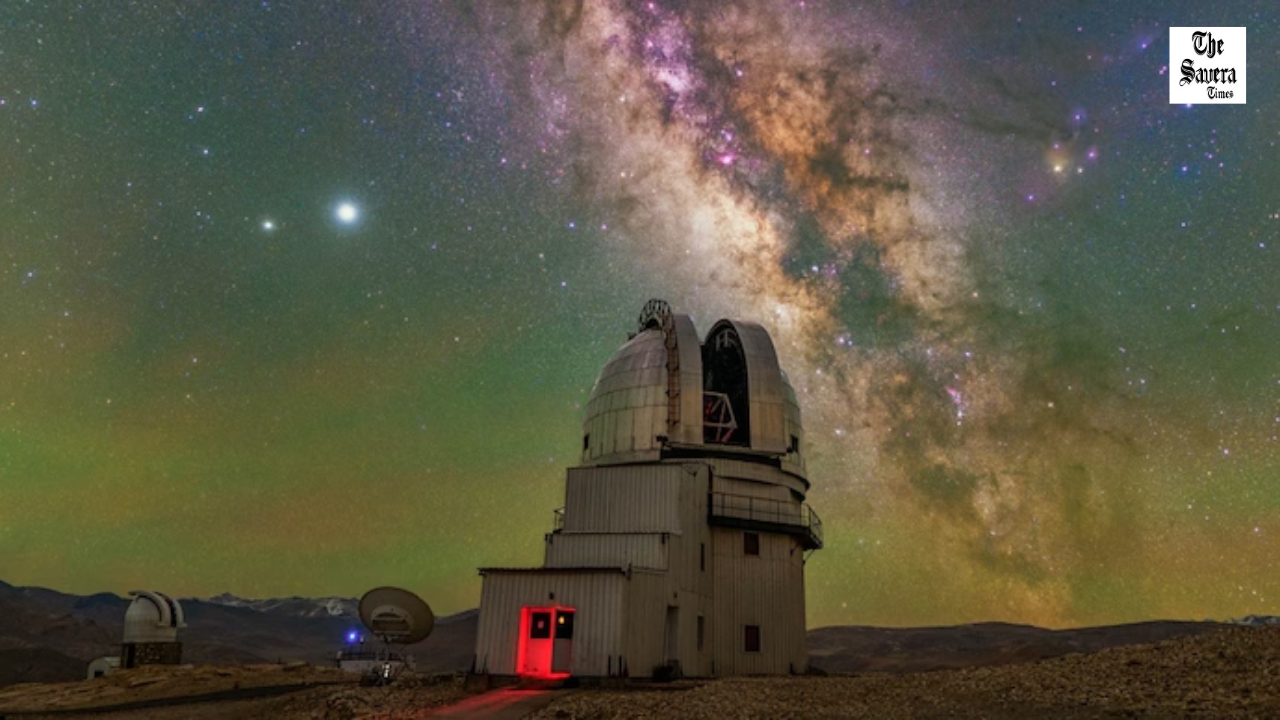
In a significant push for space science and astrophysics research, Finance Minister Nirmala Sitharaman announced in Union Budget 2026–27 that the government will set up and upgrade four major telescope and astronomy facilities to strengthen India’s observational capabilities and support cutting‑edge research in astronomy and astrophysics. The initiative is expected to enhance India’s role in global astronomical studies and inspire a new generation of scientists.
Under the plan announced during the Budget speech, the four facilities to be established or upgraded include:
National Large Solar Telescope (NLST) – Designed for high‑resolution solar observations, this facility will help scientists study solar activity, magnetic fields, and space weather events that can impact communication systems and power grids on Earth.
National Large Optical Infrared Telescope (NLOT) – Aimed at strengthening India’s capabilities to observe faint and distant celestial objects such as exoplanets, galaxies, and nebulae, the NLOT will support frontier research in cosmology and stellar evolution.
Himalayan Chandra Telescope (HCT) Upgrade – The existing telescope in Ladakh’s Hanle region will be upgraded to improve its sensitivity and instrumentation, taking advantage of the high altitude and exceptional atmospheric conditions for precise observations.
COSMOS 2 Planetarium – Planned as a modern public outreach and education centre, this planetarium will play a key role in popularizing astronomy and space science among students and the wider public.
The Budget’s telescope initiative reflects the government’s intent to build world‑class scientific research infrastructure in India. By enhancing observational tools and facilities, the move aims to deepen understanding of the Sun, stars, galaxies, and the universe, and position Indian researchers to contribute more significantly to global astrophysics projects.
Improved observational capabilities will allow scientists to conduct precise measurements and data collection that were previously limited by existing infrastructure, particularly in high‑altitude and low‑light pollution locations such as Ladakh.
Beyond research, the development of advanced facilities such as the COSMOS 2 Planetarium will enhance public engagement with space science, making astronomy more accessible to students and enthusiasts across the country. The focus on outreach highlights the broader aim of nurturing scientific curiosity and inspiring future careers in STEM fields.
Start your day with The Savera Morning Brief, bringing you the latest news from India and around the...

Union Home Minister Amit Shah will pay tribute to police martyrs at the National Police Memorial in New...
Four more people, including two women, have been arrested in the Tiger Shroff firing case. Delhi Police are...
We are very proud that at present India is the number one country in the world by surpassing...

Every investor wants the wealth-creating power of equity and the reassuring stability of debt. Balanced Advantage Funds attempt...

Tourism is a major source of government revenue in our country. There are different types of tourism. Scenic...

Aries: The day will be auspicious...