Last Updated: October 21, 2026
Last Updated: October 21, 2026






In a remarkable demonstration of vision and ambition, Arvind Kejriwal, AAP’s national convener, and Punjab Chief Minister Bhagwant Mann recently laid the foundation stone for more than 3,000 sports stadiums across Punjab. The event, held in Kaljharani village in Bathinda district, marked the beginning of a transformative project aimed at reshaping the state’s rural sports landscape and fostering a culture of health, discipline, and athletic excellence among the youth. With a total investment of Rs 1,184 crore, these multi-purpose stadiums are set to become the epicenters of sporting life in villages, providing modern infrastructure that will nurture talent and encourage young people to lead active, productive lives.
For Mann, the initiative is deeply personal as well as political. Speaking at the event, he highlighted Punjab’s rich sporting heritage and the pride the state has brought to the nation. From Shubham Gill of Fazilka in the Indian cricket team to Harmanpreet Kaur of the women’s national team from Moga, and Harmandeep Singh in hockey, Punjab has consistently produced athletes who have excelled on the global stage. Yet, he observed, for all this talent, the state had struggled with inadequate facilities and limited opportunities for youth to fully realize their potential. The new stadiums, he said, represent more than just concrete and turf; they are symbols of a renewed commitment to the younger generation, providing the right environment to channel energy positively and away from destructive paths such as drug abuse.
Kejriwal echoed this vision, framing the initiative within a broader narrative of governance and empowerment. Punjab, he said, stands at a pivotal moment where development is not merely about infrastructure but about creating a society in which every citizen, especially the youth, has access to opportunities that allow them to thrive. “The Punjab model of development is focused on empowering people — be it in education, healthcare, or sports,” Kejriwal remarked. The stadiums, he emphasized, are not merely venues for competition; they are incubators of discipline, resilience, and the values that sports inherently teach.
The two leaders also used the occasion to underscore the social dimension of sports infrastructure. Mann pointed out that previous governments had failed to provide meaningful opportunities for Punjab’s youth, leading to social and economic distress in rural areas. In contrast, the AAP-led government seeks to address these structural gaps comprehensively, ensuring that young people have access not only to sporting facilities but also to employment, healthcare, and education. Kejriwal highlighted that under Mann’s leadership, 55,000 jobs had been provided to youth purely on merit — a figure unprecedented in the state’s history. Unlike earlier regimes, he emphasized, these opportunities did not require any monetary influence, showcasing a transparent and accountable approach to governance.
Beyond numbers, the stadiums embody a larger social vision. Punjab, historically a land of warriors and athletes, has seen its sporting culture eroded over decades by neglect and misplaced priorities. Mann and Kejriwal’s project is a deliberate attempt to revive this ethos, reconnecting rural youth with a tradition of excellence and discipline. The stadiums are designed to be multi-purpose, accommodating a variety of sports, and will serve as community hubs where local talent can train, compete, and grow under professional guidance. By providing such opportunities close to home, the government hopes to cultivate a generation that not only excels in sports but also imbibes the values of teamwork, perseverance, and fair play.
The vision extends beyond mere athletic achievement. The leaders framed sports as a tool for social transformation, particularly in the fight against drug abuse, a problem that continues to plague parts of Punjab. Mann remarked on the symbolic importance of empowering youth through constructive engagement, suggesting that opportunities in sports, education, and employment collectively create an ecosystem that can counter the allure of drugs and other social vices. Kejriwal reinforced this message, arguing that transparent governance, combined with tangible initiatives like stadiums and merit-based employment, creates hope and channels the aspirations of young people toward productive ends.
The foundation-laying ceremony also reflected a clear political narrative. Both leaders contrasted the current government’s approach with the failures of past administrations. Mann pointed to the systemic neglect of Punjab’s youth, while Kejriwal critiqued the entrenched culture of corruption and dynasty politics that, he argued, had long hindered the state’s progress. The event, though primarily about sports infrastructure, also served as a statement of intent: that governance can be visionary, people-centric, and transformative. By focusing on health, discipline, and opportunity, the government aims to reorient the state’s priorities around human capital rather than political expediency.
As the sun set on Kaljharani village, the symbolism of the stadiums’ foundation was palpable. These are not just physical structures, but beacons of hope for thousands of villages across Punjab. They represent a future where talent is nurtured, potential is recognized, and every young person has the means to aspire and achieve. In Mann and Kejriwal’s vision, sports is not just a game — it is a pathway to empowerment, resilience, and societal renewal.
With construction slated to begin imminently, the ambitious project promises to transform the sporting landscape of Punjab and, more importantly, to offer its youth a renewed sense of purpose and pride. Through these stadiums, the state is staking a claim on the future, where every village becomes a cradle of talent, every athlete a symbol of aspiration, and every young citizen an embodiment of a healthier, stronger, and more vibrant Punjab.
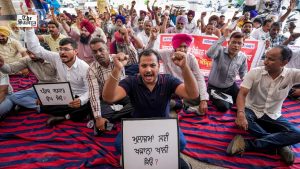
Punjab government employees are observing a two-day mass casual leave protest on October 21 and 22. The agitation...
Punjab Police have arrested seven people in a suspected drug, arms and explosives smuggling case in Amritsar. A...

Punjab has reported 404 stubble-burning incidents, with Tarn Taran and Amritsar accounting for the highest numbers. Authorities have...

The CBI has taken over the investigation into anti-drug activist Parvinder Singh Jhota’s killing in Mansa and registered...
Punjab Chief Minister Bhagwant Mann was allegedly detained for three hours at Delhi airport upon his return from...

The Punjab Vigilance Bureau (VB) during its ongoing drive against corruption in the state, has apprehended Inspector Gulshan...
Aries: The day will be auspicious...