Last Updated: October 21, 2026
Last Updated: October 21, 2026






Dr Tanu Jain
Chief executive officer Bareilly cantonment board Ministry of defence
In 2014, when the Swachh Bharat Mission (SBM) was officially launched on 2nd October by Honourable Prime Minister Narendra Modi on the occasion of Mahatma Gandhi’s birth anniversary the depth of its vision was yet to be absorbed by the nation. It was not just about sweeping streets or installing dustbins.
It was envisioned as a nationwide movement to achieve the dream of a “Clean India” by Gandhi’s 150th birth anniversary in 2019. More than an administrative programme, it was an effort to build national consciousness, to awaken the collective spirit of cleanliness and responsibility towards the environment. The mission was about shaping citizens into custodians of their surroundings. Yet, ideals often clash with reality.
Recently, while walking across the Mumbai oceanfront in the quiet of an early morning, I was struck by two worlds coexisting side by side. On one hand, there was the eternal beauty of nature rocky islands rising like guardians of the sea, flocks of chirping birds filling the air with music, and the vast ocean stretching endlessly into the horizon. Sitting there, one could feel the heartbeat of creation itself soothing, nurturing, infinite.
But this vision of serenity was shattered by the path I had to take to reach it. A stretch of filth lay in between: heaps of plastic bottles, torn polythene wrappers, foul-smelling waste, and a landfill spilling into the ocean. The smell was nauseating, the sight disheartening. And then, the most disturbing moment my eyes caught a man carrying a sack of garbage and without hesitation, throwing it straight into the sea.
I instinctively raised my voice in anger, but by then the damage was done. The ocean had swallowed yet another wound. What pierced me more than his action was the casualness with which it was done like it was the most natural thing in the world to dump filth into nature. At that moment, a truth struck me with great force: cleaning every day will never be enough if polluting every day continues.
We often believe that the solution to filth is more cleaning. But the real solution is less littering. If our rivers, oceans, streets, and hills continue to be treated as dumping grounds, no amount of government machinery, NGOs, or volunteers can keep pace. The cycle of cleaning and re-polluting is endless unless the mindset is changed. The true challenge is not waste management, but consciousness management. People need to understand that their small act throwing a bottle, tossing a wrapper, burning plastic has immense collective consequences.
And yet, the reverse is also true. One person refusing to use plastic, one family composting at home, one community adopting a lake, one school teaching its children to segregate wastethese are sparks that can ignite a movement. The path forward lies in combining systems with sensitivity, education with emotion, and enforcement with empowerment.
Community awareness drives must move beyond statistics and touch the heart. Citizen ownership of local spaces must turn duty into pride. Schools must raise a generation that treats sustainability as second nature. Instead of only punishing offenders, society must celebrate role models households that compost, neighbourhoods that go plastic-free, businesses that shift to green practices.
Enforcement must go hand in hand with alternatives biodegradable packaging, waste-to-art projects, and plastic-free zones. And most importantly, we must connect culture with cleanliness: if we revere Ganga as Mother, how can we pollute her waters? When spirituality aligns with sustainability, the message penetrates deeper. That morning by the ocean made me reflect: nature is infinitely forgiving, but it is not infinitely resilient. For centuries, rivers have absorbed our waste, air has absorbed our smoke, and land has absorbed our toxins. But today, we are reaching a tipping point. Climate change, rising pollution, dying speciesall are signals that Earth is no longer able to heal herself alone. What we need is not just cleaning, but caring. To care is to treat the Earth as we treat our own home, our own body. We do not litter in our bedroom; why do we litter in our rivers? We do not dump garbage in our dining room; why do we dump it in the oceans that feed us? When caring becomes the norm, cleanliness becomes effortless.
The Bhagavad Gita teaches us: “One who sees all beings in the Self and the Self in all beings, never turns away from it.” If we truly see ourselves in the fish that die from plastic, in the birds that choke on waste, in the children who fall ill from pollution then to pollute becomes impossible. Osho beautifully said that cleanliness is not only an outer act but an inner discipline. When the mind is cluttered, the world is dirty. When the mind is pure, the world naturally shines. To keep our environment clean is not a favour we do to the Earthit is a favour we do to ourselves, our children, and our future. It is not charity; it is dharma. The Earth is not ours to exploit and discard. The Earth is ours to love, nurture, and protect. And in that protection lies not just survival, but the blossoming of human dignity and spiritual harmony. Let us go beyond the act of cleaning. Let us awaken the art of caring. For when consciousness changes, the world itself becomes clean.
Start your day with The Savera Morning Brief, bringing you the latest news from India and around the...

Union Home Minister Amit Shah will pay tribute to police martyrs at the National Police Memorial in New...

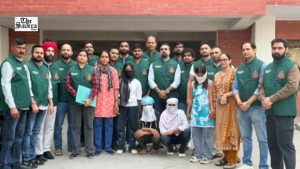
Four more people, including two women, have been arrested in the Tiger Shroff firing case. Delhi Police are...
We are very proud that at present India is the number one country in the world by surpassing...

Every investor wants the wealth-creating power of equity and the reassuring stability of debt. Balanced Advantage Funds attempt...

Tourism is a major source of government revenue in our country. There are different types of tourism. Scenic...

Aries: The day will be auspicious...