Last Updated: October 12, 2026
Last Updated: October 12, 2026






New Delhi: According to the Tea Board of India, tea is consumed in approximately 88% of Indian households. A survey by the Coffee Board of India found that 84% of people consider tea or coffee their favorite beverage.
In many homes, even young children are given tea and coffee. Parents often think that a sip or two occasionally won’t do any harm, but it directly affects their child’s health.
The caffeine in tea and coffee affects children more than it does adults. Children’s brains and nervous systems are still developing. Therefore, caffeine affects their sleep, appetite, behavior, and concentration. Its effects may not be immediately apparent, but in the long run, it can cause serious problems.
Tea and coffee may be a daily ritual for adults, but experts caution that these popular beverages are not suitable for young children. Pediatricians and nutritionists say that caffeine, a key ingredient in both drinks, can have harmful effects on children’s developing bodies and minds.
Caffeine Can Affect Growth and Sleep
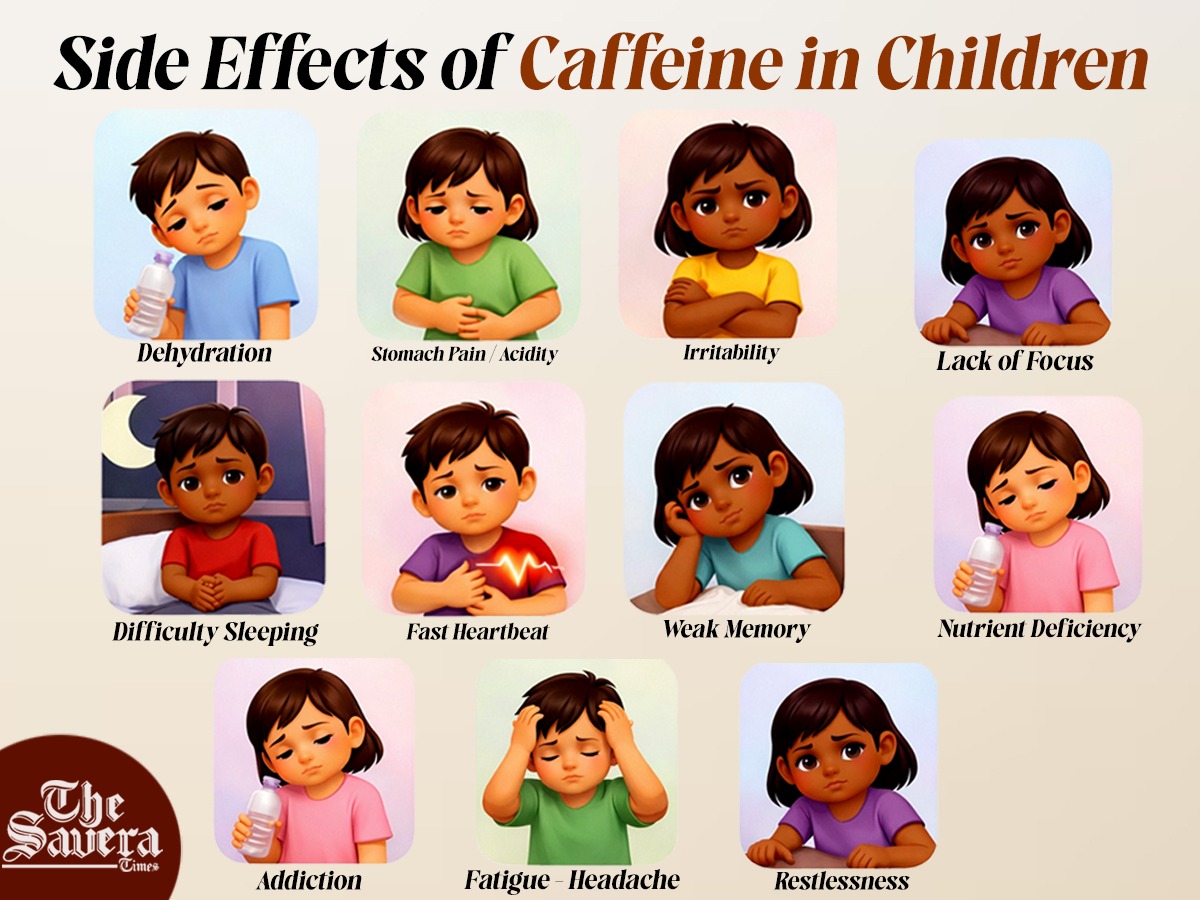
Caffeine is a stimulant that can interfere with a child’s sleep pattern and overall growth. According to Dr. Priya Sharma, a pediatrician at Jaipur Children’s Hospital, “Even small amounts of caffeine can make young children hyperactive, irritable, and affect their concentration. Sleep disruption, in particular, can have long-term consequences on growth and cognitive development.”
Bone Health May Be Compromised
Tea and coffee can also reduce calcium absorption in the body, which is essential for building strong bones in children. Experts warn that giving these beverages regularly may increase the risk of weak bones and other nutritional deficiencies.
Other Health Concerns
Excess caffeine may lead to increased heart rate, jitteriness, upset stomach, and even headaches in children. The acidic nature of coffee and some teas may also harm dental health by causing enamel erosion and staining teeth.
Healthy Alternatives
Nutritionists suggest replacing tea or coffee with healthier beverages such as milk, fresh fruit juices, or herbal infusions like chamomile or peppermint (without added sugar). These options provide hydration, essential nutrients, and promote better sleep without the side effects of caffeine.
When Children Grow Older
Experts recommend that children under 12 should avoid caffeinated drinks entirely. Even after this age, intake should be minimal, preferably limited to very occasional consumption. Parents are encouraged to set an example by reducing their own caffeine consumption at home to create healthier habits.
Caffeine can affect children differently than adults because their bodies are still growing and developing, and several organs and systems are more sensitive to stimulants. Here’s a detailed explanation:
1. Nervous System and Brain
Caffeine is a stimulant that affects the central nervous system. In children, whose brains are still developing:
It can make them hyperactive, anxious, or irritable.
It may disrupt sleep patterns, which is critical because deep sleep is needed for brain development, memory consolidation, and learning.
Poor sleep can lead to behavioral problems, reduced attention, and lower academic performance.
2. Heart and Circulatory System
Caffeine increases heart rate and blood pressure temporarily. For children:
Their cardiovascular system is more sensitive, so even small doses can cause palpitations or jitteriness.
Repeated exposure may contribute to long-term cardiovascular stress.
3. Growth and Bone Health
Caffeine can interfere with calcium absorption, which is essential for strong bones and teeth.
Since children’s bones are actively growing, high caffeine intake may lead to weaker bones or slower skeletal development.
4. Digestive System
Caffeine can irritate the stomach and digestive tract:
It may cause acid reflux, stomach pain, or nausea in children.
Coffee and some teas are acidic, which can also affect tooth enamel.
5. Dependency Risk
Even small amounts of caffeine can make children dependant on it, leading to:
Headaches, irritability, or fatigue if they skip caffeine.
Difficulty forming healthy energy habits, like relying on sleep and balanced nutrition instead of stimulants.
Amidst heavy security and barricades by the Delhi Police, INDIA Bloc leaders began a protest march towards the...

The Reserve Bank of India (RBI)'s new measures to curb speculation in the rupee and maintain stability in...

Gold exchange-traded funds (ETFs) witnessed a sharp rise in investor interest in September, with net inflows surging 71.4...

Rahul Gandhi accused the Modi government of protecting Chief Election Commissioner Gyanesh Kumar, criticised security restrictions in Delhi...

Chief Justice Surya Kant said every citizen can approach the Supreme Court through a petition after declining a...

A Sudanese rights group says at least 72 gold miners were killed in an air strike near the...

Aries: The day will be auspicious...