Last Updated: October 22, 2026
Last Updated: October 22, 2026





Written By: Sheena Sandhu
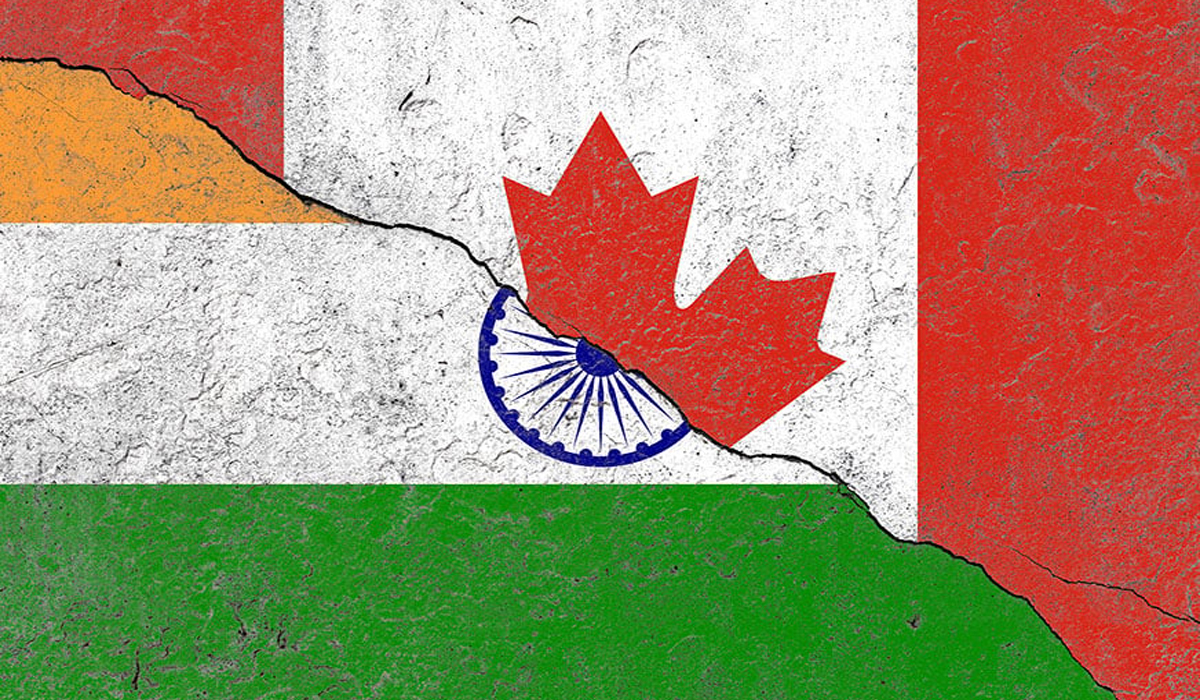
In a Montreal courtroom this week, Federal Court Judge Benoit M Duchesne delivered a verdict that could reshape Canada’s overburdened asylum landscape. Upholding the Refugee Appeal Division’s rejection of claims by Indian couple Amandeep Singh and Kanwaldeep Kaur, the judge labeled their assertions of persecution due to pro-Khalistan activities in Canada as “disingenuous and lacking good faith.”
The pair, who initially fled alleged harassment over a property dispute, pivoted to Khalistan advocacy— complete with protest photos and voter cards from Sikhs for Justice (SFJ)—only after arriving in Canada on temporary visas. This case isn’t isolated; it’s a symptom of a broader exploitation of Canada’s generous refugee system, particularly by some Indian claimants, many from the Sikh community, encouraged by separatist groups like SFJ.
As asylum claims from India skyrocket, this judgment signals a much-needed crackdown on fabricated narratives, potentially stemming the tide of agenda-driven applications and restoring integrity to a system meant for the truly persecuted. Canada’s asylum framework, administered by the Immigration and Refugee Board (IRB), has long been a beacon for those fleeing genuine threats. But recent data reveals a system straining under unprecedented volume, with India emerging as a top source country. In 2024 alone, the IRB recorded 32,563 asylum claims referred from India, a staggering figure that dwarfs previous years.
Of the 2,175 claims finalized that year, 1,688 were accepted—yielding an acceptance rate hovering around 55-63% for Indian applicants, particularly those from Punjab, a Sikh-majority state. This is notably higher than global averages, where overall IRB acceptance rates for 2024 stood at about 50% across all countries. The surge is dramatic: Indian claims at Canadian airports alone jumped over 500% in Q2 2024 compared to 2023, totaling around 6,000 in that period—more than the entire year’s claims in 2023 (4,720). By mid-2024, claims had already doubled the previous year’s total, contributing to a backlog of 37,270 pending Indian cases as of December 2024.
The influx isn’t coincidental. Punjab, India’s wealthiest state per capita, accounts for a disproportionate share— up to 63% of Indian asylum seekers hail from here, despite its relative prosperity and lack of widespread persecution. Many are Sikhs, who form 2.1% of Canada’s population— the highest national proportion worldwide outside India. Historically, Sikh migration to Canada dates back to 1903, with waves fleeing colonial-era discrimination and the 1984 anti-Sikh violence following Indira Gandhi’s assassination, when over 2,800 sought refuge.
But post-2014, under Narendra Modi’s tenure, claims began rising steadily, accelerating amid diplomatic tensions like the 2023 Hardeep Singh Nijjar assassination allegations. A 300% spike in Sikh claims from 2016 2018 underscores this shift, often citing religious or political persecution tied to Khalistan—a proposed independent Sikh state banned in India. Yet, beneath these numbers lies a troubling pattern: the gaming of the system, often fueled by pro-Khalistan organizations like SFJ.
Founded by Gurpatwant Singh Pannun—a dual US-Canadian citizen and vocal Khalistan advocate—SFJ has been accused of orchestrating “Referendum 2020,” a non-binding global poll on Sikh independence, while providing templates for asylum claims. Reports reveal SFJ and affiliates like Shiromani Akali Dal (Amritsar) supplying forged letters alleging Indian government persecution, enabling claimants to fabricate stories of threats upon return.
In Canada, this manifests as individuals arriving on student or work visas—over 319,000 Indian students in 2022, many Punjabi Sikhs— then pivoting to asylum by claiming newfound Khalistan support. A notable example: Edmonton student Karamjit Kaur, who entered on a visa and later asserted life threats due to Khalistan ties, aided by legal firms specializing in such narratives. This tactic isn’t new. Investigations in the UK and Canada expose law firms charging thousands to concoct tales of torture, beatings, and death threats linked to Khalistan sympathy, complete with fake medical reports and antidepressants as “evidence.” SFJ’s role is pivotal: their voter cards and protest endorsements serve as “proof,” luring gullible youth with promises of jobs and visas while inflating Khalistan’s perceived support base.
As one report notes, these false claims “corrupt the integrity of the asylum system” and misrepresent India as a “police state,” straining bilateral ties amid accusations of foreign interference. Genuine Sikh asylum seekers, fleeing real issues suffer as backlogs balloon—nearly 250,000 cases pending overall in 2024— and resources stretch thin.
Enter the Duchesne judgment: by validating the IRB’s scrutiny of “chronology” and “genuineness,” it sets a precedent for dissecting opportunistic claims. No longer can post-arrival Khalistan “conversions” evade red flags; courts now have a blueprint to probe motives, especially when initial claims (like property disputes) morph into political ones. This could deter SFJ-orchestrated applications, reducing frivolous filings that clog the system—over 13,000 international student claims in the first eight months of 2024 alone, many Indian.
As immigration consultant Kanwar Sierah noted in the case, “fraudulent claims clogging the system” harm the genuine, and this ruling empowers adjudicators to prioritize them. Canada must build on this. Tighten visa screenings, collaborate with India on verifying claims, and penalize enablers like SFJ—already banned in India for terrorism links. Without action, the asylum facade risks eroding public trust, fueling anti Indian sentiment, and undermining a system designed for protection, not exploitation. The Montreal decision isn’t just a denial—it’s a safeguard for fairness in an era of migration manipulation.
Author Sheena Sandhu is a retired civil servant and views are personal
JALANDHAR: Aam Aadmi Party (AAP) Member of Parliament (MP) Gurmeet Singh Meet Hayer thanked Punjab Chief Minister Bhagwant...

One person died and more than 100 were injured during the traditional Devaragattu Banni Utsav stick fight in...

New Delhi: Cockroach Janata Party (CJP) leaders Saurav Das, Ashutosh Ranka and Ajinkya Shinde have been summoned by...
Kiren Rijiju has condemned the alleged racial abuse of a Tripura youth by Delhi-based content creator Amir Shokeen....

Kolkata: Police said on Thursday that a Bharatiya Janata Party (BJP) worker was first brutally hacked and then...
A day after their release from judicial custody, CJP leaders Saurav Das and Ashutosh Ranka have been summoned...

Aries: The day will be auspicious...