Last Updated: October 1, 2026
Last Updated: October 1, 2026





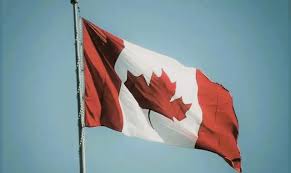
For much of the past decade, Canada projected itself as a moral outlier in an increasingly securitised world—an open society where compassion guided immigration policy and asylum was treated as a near-sacred commitment. That reputation is now being recalibrated. The passage of Bills C-12 and C-9 marks not merely legislative change, but a deeper ideological shift: from expansive liberalism to guarded pragmatism.
These laws did not emerge in a vacuum. They are a response to mounting pressures—statistical, political and social—that exposed structural vulnerabilities within Canada’s immigration and public order frameworks.
The numbers tell the first part of the story. In the mid-2010s, Canada processed a relatively modest number of asylum claims annually. Over the past few years, however, the system has witnessed an unprecedented surge. By 2024, claims had crossed well over 150,000, with a backlog running into hundreds of thousands. Among the most striking trends has been the sharp rise in claimants from India, now among the largest cohorts seeking asylum in Canada.
This increase is not easily explained by a sudden deterioration in India’s domestic conditions. Rather, it reflects a shift in migration strategies. A significant proportion of claimants have been temporary residents—students or workers—who, upon arrival or after overstaying, have sought asylum as a means to prolong their stay. High rejection rates in recent years suggest that many such claims fail to meet the legal threshold of persecution under international refugee law.
What has compounded the issue is the role of organised intermediaries. Reports of templated narratives—near-identical claims of political persecution or fabricated threats—have surfaced with increasing frequency. Immigration agents, operating across borders, have been accused of coaching applicants to fit asylum criteria. The result is not merely an administrative burden but a distortion of the very purpose of refugee protection.
Bill C-12 must be read against this backdrop. By tightening eligibility—especially for delayed claims—and expanding the government’s authority to manage applications and revoke temporary statuses, the legislation seeks to restore credibility to a system seen as overstretched and, at times, misused. Critics argue that such measures risk excluding genuine refugees. That concern is valid. Yet, the counterpoint is equally compelling: a system that is easily gamed ultimately undermines its own humanitarian mandate.
Parallel to the pressures on the asylum system has been another, more politically sensitive development—the rise of polarising and, at times, extremist rhetoric within segments of the diaspora. In recent years, public events in Canada, including certain Nagar Kirtans, have drawn attention for the display of imagery and slogans associated with individuals or organisations linked to past acts of violence. Indian diplomatic missions have reported instances of intimidation, and bilateral relations have been strained by differing perceptions of free expression and national security.
It is important to tread carefully here. The Sikh diaspora in Canada is diverse, deeply rooted and overwhelmingly law-abiding. Political expression, including advocacy for contentious causes, falls within the ambit of democratic rights. However, when such expression intersects with the glorification of violence or the intimidation of communities and institutions, it raises legitimate concerns.
Bill C-9, framed as a measure to combat hate and protect public spaces, attempts to draw that line. By targeting the display of symbols associated with designated terrorist organisations and criminalising acts of intimidation at places of worship and community gatherings, it signals a willingness on the part of the Canadian state to move beyond a posture of passive tolerance.
The challenge, as always, will lie in enforcement—ensuring that the law addresses genuine threats without casting an indiscriminate shadow over legitimate political discourse.
Taken together, C-12 and C-9 reflect a broader recalibration. Canada is not abandoning its commitment to openness, but it is redefining its boundaries. The implicit message is clear: humanitarian systems cannot function in the absence of integrity, and liberal democracies cannot afford to be indifferent to the misuse of their freedoms.
For India, these developments carry both immediate and long-term implications. In the short term, stricter asylum norms may reduce the incentive for irregular migration pathways that have, in some cases, ensnared vulnerable individuals in cycles of debt and deception. In the longer term, Canada’s approach to extremist symbolism and diaspora politics could influence the tenor of bilateral engagement, particularly on issues of security cooperation.
Yet, this is not solely Canada’s moment of introspection. It is also a reminder for countries like India to engage more actively with their diasporas, addressing grievances before they are amplified in foreign political contexts. Migration, after all, is not merely a movement of people but also of ideas, identities and conflicts.
Canada’s course correction is, in many ways, inevitable. Every open system must eventually reconcile ideals with operational realities.
The true test will not be in the passage of laws, but in their application—measured, fair and anchored in the principles they seek to protect.
If Canada succeeds, it may yet offer a different kind of example: not of unbounded liberalism, but of a democracy capable of self-correction without losing sight of its core values.
The Savera Times Evening Wrap brings you the top India and world news, covering major developments across politics,...

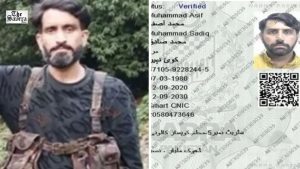
Pakistan-based LeT terrorist Mohammad Asif alias Hashim Moosa, wanted in the Pahalgam terror attack case, was killed in...
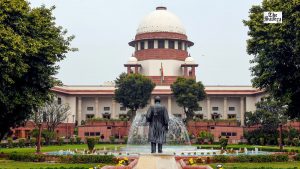
The Supreme Court has ruled out both a complete firecracker ban and unrestricted 24-hour use, indicating that permissible...
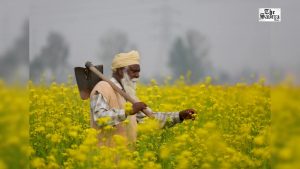
The Centre has approved higher MSP for all mandated Rabi crops for the 2027-28 marketing season, with safflower...
Traders’ organisations have withdrawn the October 2 “No UPI Day” protest after meeting Finance Minister Nirmala Sitharaman over...

Ahmedabad: A Nigerian national allegedly acted as a link between a Gujarat-based wanted accused and a wider drug...
Aries: The day will be auspicious...