Last Updated: October 21, 2026
Last Updated: October 21, 2026





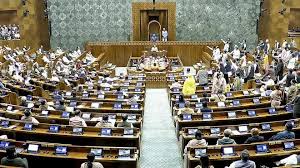
The ongoing debate around the proposed Central Armed Police Forces (Group A Officers) Service Conditions and Cadre Management Bill, 2026 has triggered strong reactions, particularly among sections of directly recruited Group A officers within CAPFs, who view it as a dilution of their status. A closer reading, however, suggests the bill is not a rollback but a long-overdue effort to bring clarity, balance, and legal certainty to India’s internal security framework.
A key criticism is that the bill overturns the Supreme Court’s judgment granting Organised Group ‘A’ Service (OGAS) status to CAPF officers. This is a misreading. The Court emphasised parity in service conditions and the need for structural clarity.
The bill advances this objective by replacing fragmented executive instructions with a comprehensive statutory framework, ensuring legal enforceability and long-term stability. Parliament, within its constitutional mandate, is fully empowered to legislate on such matters, particularly when national security and administrative coherence are involved.
Concerns that the bill blocks promotions overlook its structural design. By creating additional senior posts—including new ADG roles and expanded SP-level positions—the proposal broadens the promotional pyramid. Mechanisms like non-functional financial upgradation reflects systemic expansion rather than restriction. With over 90,000 vacancies across CAPFs, the real challenge lies in capacity building and timely recruitment—not redistribution of limited posts.
The charge that the bill disproportionately favours IPS officers also lacks context. Limited IPS deputation at senior levels is a long-standing administrative practice rooted in operational necessity. IPS officers, constitutionally recognised under Article 312, bring inter-state coordination, policing expertise, and strategic oversight—critical for addressing hybrid threats such as insurgency, terrorism, and urban extremism. Meanwhile, CAPF cadre officers continue to anchor field operations and retain the majority of leadership roles.
Far from weakening CAPFs, the bill institutionalises coherence across forces managing some of India’s most complex security challenges—from border management to counter-insurgency. Improvements in outcomes, including the sharp decline in Maoist-affected districts, underscore the value of coordinated leadership.
Ultimately, this reform should not be framed as cadre versus deputation. It is a governance reform that replaces ambiguity with structure and uncertainty with predictability. In a domain as critical as internal security, such clarity is not just desirable—it is essential.
Good Evening Viewers! Catch up on the day's biggest stories with The Savera Times Evening Bulletin. Get the...

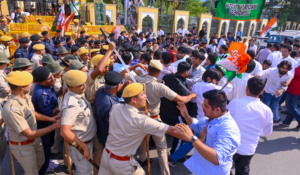
Congress leaders continued their protest outside the Jaipur Police Commissionerate on Tuesday, demanding the registration of a zero...
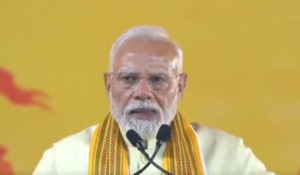
On the auspicious occasion of Vijayadashami, Prime Minister Narendra Modi on Tuesday called on the countrymen to unite...
A historic milestone was achieved on Tuesday in the expansion of Chhattisgarh's rail networkA historic milestone was achieved...

Model Shraddha Dubey, one of the main accused in the death of Lucknow businessman Shiv Sharma, has been...

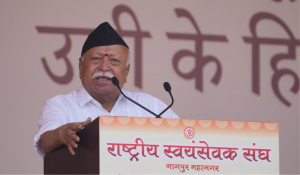
Rashtriya Swayamsevak Sangh (RSS) chief Mohan Bhagwat on Tuesday called for strengthening national unity, social harmony, indigenous practices...
Aries: The day will be auspicious...