Last Updated: October 21, 2026
Last Updated: October 21, 2026





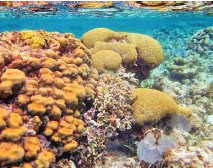
Hard corals across the Caribbean have fallen by nearly half in a little over four decades, according to new global monitoring data that links the collapse to rising sea temperatures, bleaching events and fast-spreading diseases. The latest assessment by the Global Coral Reef Monitoring Network reports a 48 per cent decline in hard coral cover between 1980 and 2024. This is significant because these corals form the limestone framework on which entire reef ecosystems depend.
The GCRMN Caribbean region spans 24,230 square kilometres, accounting for almost 10 per cent of global coral reef area. Early records show that hard coral cover ranged between 29 and 38 per cent before 1983. By 2019-2024, this had dropped to 14.6 per cent. The steepest declines coincided with major bleaching events triggered by extreme heat in 1998, 2005 and the ongoing 2023-24 global bleaching episode. The latest figures are likely conservative because data collection is still under way.
Acropora corals, once dominant reef builders, suffered a dramatic collapse. They made up about 16 per cent of benthic cover in the 1970s but declined sharply even before 1980 due to human-driven stress and widespread outbreaks of white band disease. Their cover has remained extremely low since then, averaging only 1.8 per cent. The report also warns of the severe impact of stony coral tissue loss disease, first detected in 2014 near Miami. It has spread to more than 30 Caribbean countries and affects over 30 coral species. Its rapid progression and high mortality rates are undermining reef recovery across the region.
The decline of the sea urchin Diadema antillarum, once a key herbivore, has further worsened reef conditions. Mass die-offs in the 1980s and again in 2022 reduced grazing pressure, allowing turf and macroalgae to expand. Macroalgae cover has increased by nearly 85 per cent since 1980, while overall reef complexity and biodiversity have declined. Some coral groups show mixed trends. Orbicella species fell sharply after the 1998 bleaching event and have stabilised at about 5 per cent cover. Porites corals, however, recorded a 164 per cent rise over four decades, reaching around 3.7 per cent in recent years.
Long-term warming trends have added further stress. Sea surface temperatures across Caribbean reef zones rose by 1.07°C between 1985 and 2024, with the fastest warming seen in Mexico’s Gulf of Mexico region, Guatemala and the Flower Garden Banks. Human pressures are rising as well. The population living within 20 km of reefs increased by 27.6 per cent between 2000 and 2020.
Invasive species are compounding these threats. Lionfish have been a major problem for almost twenty years, while rapidly spreading soft coral invaders such as Unomia stolonifera, Xenia umbellata and Latissimia ningalooensis are now reshaping reef communities. Their fast growth is helping them overtake hard corals, adding to the ecological strain on already weakened Caribbean reefs.
A fire in a hut in Nonapar village of Deoria district claimed three lives, including those of a...

Amit Shah paid tribute to police personnel who died in the line of duty at the National Police...

Reduced water levels at Har Ki Pauri and other Haridwar ghats have inconvenienced pilgrims during the Upper Ganga...

Six people returning from a Dussehra Mela were seriously injured when a car hit them on National Highway...

A bus travelling from Pachiound to Ramnagar fell into a gorge at Gulli Gula in Udhampur district. Nine...

Start your day with The Savera Morning Brief, bringing you the latest news from India and around the...

Aries: The day will be auspicious...