Last Updated: October 13, 2026
Last Updated: October 13, 2026





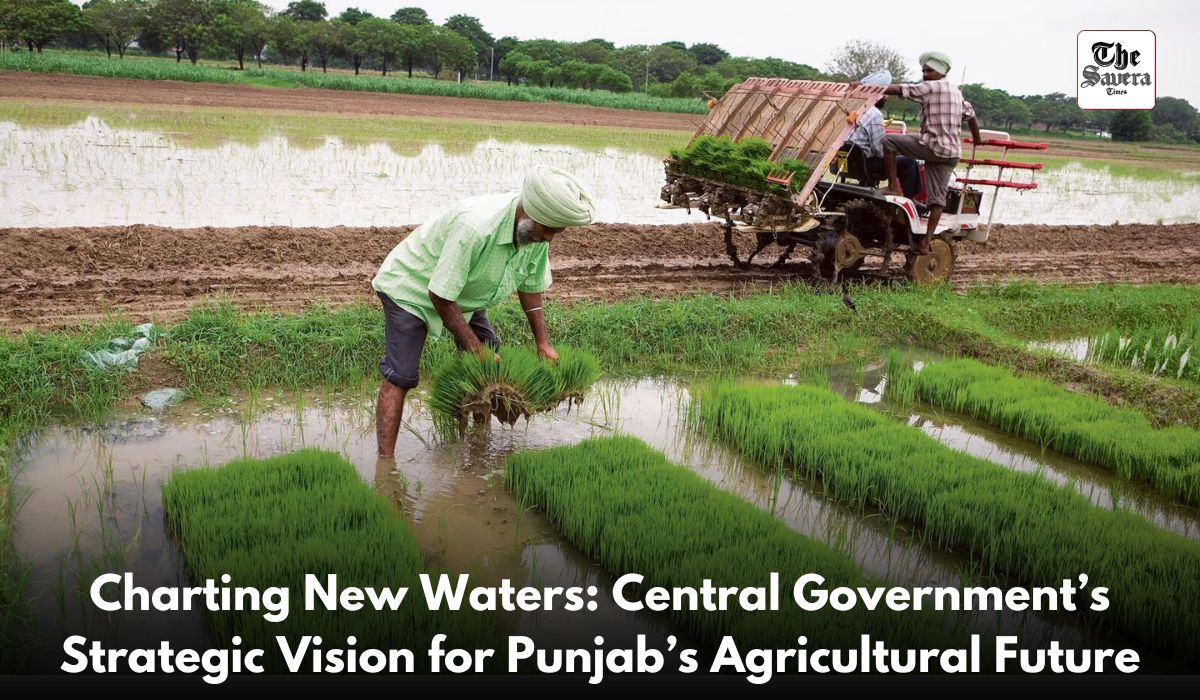
Written by Sheena Sandhu: In the face of mounting water scarcity challenges across North India’s agricultural heartland, the Central Government has embarked on an ambitious and transformative water security initiative that promises to reshape the agricultural landscape of Punjab and its neighbouring states. The feasibility study for a comprehensive canal system to link water resources with Punjab, Haryana, and Rajasthan represents far more than an engineering project—it embodies a strategic commitment to ensuring the long-term viability of India’s agricultural economy and food security.
A Visionary Infrastructure Initiative
The Centre’s comprehensive canal linking project represents a paradigm shift in water resource management, proposing to channel substantial water volumes from northern river systems to Indian states currently grappling with severe water stress. This ambitious undertaking extends beyond mere water transfer—it constitutes a strategic approach to optimising India’s water resources while addressing the urgent needs of its agrarian communities. The proposed canal network will integrate with existing canal structures across multiple states, creating an interconnected infrastructure that enables optimal utilisation of available water resources. This comprehensive system will ensure that precious water resources are efficiently distributed to areas facing acute shortages. Government officials have expressed confidence in completing this transformative project within an accelerated timeline, underscoring the administration’s commitment to rapid implementation of water security initiatives.
Addressing Punjab’s Agricultural Crisis
Punjab’s agricultural sector, the backbone of India’s food security, faces an existential crisis. The state’s ground-water extraction has reached critically unsustainable levels, with farmers withdrawing far more water than can be naturally replenished. This dangerous trajectory threatens the very foundation of Punjab’s agricultural economy, with pro -jections indicating severe depletion of groundwater reserves in the coming decades. The Centre’s canal project directly addresses these challenges by providing alternative water sources that will reduce dependence on rapidly depleting groundwater reserves. By redirecting available water flows to Punjab, the initi-ative promises to balance regional water availability and strengthen India’s water resilience against climate variability and changing rainfall patterns.
Strategic Infrastructure Development
The government’s multipronged approach includes several supporting infrastructure developments that will maximize the project’s impact:
Canal Enhancement Programs:
The Centre is considering expanding existing canal networks to ensure comprehensive water distribution systems across affected regions.
Reservoir Optimization:
Ongoing efforts to enhance water storage and usage capacity through improved reservoir man-agement and maintenance.
Hydroelectric Integration:
The government is accelerating work on key hydroelectric projects to enhance water utilization while generating clean energy, creating dual benefits for water management and power generation.
Economic and Agricultural Transformation
The canal project’s economic implications extend far beyond water security. By ensuring reliable water supply, the initiative will enable Punjab’s farmers to diversify crop patterns away from water-intensive cultivation toward more sustaina-ble alternatives. This diversification is crucial, as Punjab’s current agricultural model requires excessive water usage that is environmentally unsustainable. The project aligns with ongoing state-level water conservation initiatives that have already demonstrated significant reductions in water consumption in pilot projects. By providing alternative water sources, the canal system will give farmers the confidence to adopt water-saving technologies without compromising their livelihoods.
Regional Water Security Framework
The canal project addresses not only Punjab’s needs but also the acute water crisis in neighbouring states, where multiple districts are facing severe drinking water shortages. The interconnected canal system will ensure that surplus water reaches waterstressed regions, creating a more equitable distribution of India’s water resources. This regional approach recognizes that water security cannot be achieved in isolation. The project’s integration with existing infrastructure ensures that water reaches multiple states while optimizing utilization of available water re-sources across the region.
Climate resilience and Sustainability
The Centre’s water transfer plan represents a proactive response to climate change challenges that threaten tradi-tional water sources. With changing rainfall patterns and increasing frequency of extreme weather events, diversified water sources become essential for agricultural sustainability. The project’s design incorporates modern water management principles, ensuring that strategic water reallocation enhances regional water resilience against future climate variability. This forwardthinking approach positions Punjab and neighbouring states to maintain agricultural productivity despite changing environmental conditions.
National Food Security
Imperative Punjab’s agricultural output remains critical to India’s food security, contributing significantly to the national grain reserves that feed over 1.4 billion people. The canal project recognizes this strategic importance by ensuring that India’s key agricultural regions maintain their productive capacity despite mounting water challenges. By providing reliable water sources, the initiative enables Punjab to continue its role as a major contributor to national food security while transitioning toward more sustainable agricultural practices. This dual objective— maintaining production while promoting sustainability—reflects the government’s comprehensive understanding of the challenges facing Indian agriculture.
Implementation Timeline and Vision
The project’s preliminary feasibility studies are progressing rapidly, with an ambitious timeline for completion that reflects the government’s recognition of the urgency surrounding water security issues and its commitment to de-livering tangible solutions to affected communities. The phased implementation approach ensures that benefits begin accruing even as construction progresses, providing immediate relief to water-stressed regions while building long term infrastructure for sustained agricultural growth.
Conclusion
The Central Government’s initiative to develop comprehensive water linking infrastructure represents more than an engineering project—it embodies a strategic vision for India’s agricultural future. By addressing immediate water scarcity challenges while building long-term resilience, this initiative positions Punjab and its neighbouring states to thrive in an increasingly waterstressed world. This transformative project demonstrates the Centre’s unwavering commitment to supporting India’s agricul-tural communities and ensuring that the nation’s food security remains secure for generations to come. As Punjab pre-pares to embrace this new era of water security, the canal project stands as a testament to what can be achieved when vision, resources, and political will align in service of agricultural prosperity and national development.
(The writer is a retired civil servant, views are personal)
Good Evening Viewers! Stay updated with The Savera Times Evening Bulletin for the latest news from Punjab, India...

Punjab BJP President Kewal Singh Dhillon on Monday said a poster promoting a protest being held in Delhi...

eader of the Opposition in the Lok Sabha, Rahul Gandhi and 10 other INDIA bloc leaders have moved...

Amidst protests in central Delhi, the Delhi Metro Rail Corporation (DMRC) announced the reopening of entry and exit...
The Enforcement Directorate (ED) has arrested Harcharan Singh Bhullar, the then Deputy Inspector General (DIG) of the Ropar...

In accordance with the instructions of the Election Commission of India, the Special Intensive Revision (SIR) of Electoral...

Aries: The day will be auspicious...