Last Updated: October 21, 2026
Last Updated: October 21, 2026





The first article about discovered the inner process and the workings of the mind. He was, at his core, a. businessman and a systematiser, a man who had built a commercial empire on the basis of precise method and who brought that same precision to the investigation of the mind.
When he described how mental chemistry actually produces results, he was describing a process with identifiable ingredients, a specific sequence, and predictable outcomes. Get the combination right, and the reaction occurs. Get it wrong, and nothing happens — or worse, something unintended happens instead.
The First Ingredient: Clarity of Thought
Not wishful thinking, not vague longing, not the half-formed desire that most people carry through their days like an unaddressed letter. Haanel was insistent on this point to the degree of severity. A thought that is not clearly defined cannot direct the subconscious with any precision.
The subconscious, remember, builds what it receives. Give it a blurred blueprint and it will produce a blurred structure. Give it a sharp, detailed, unambiguous mental image and it has something to work with.
Haanel instructed his readers to be able to close their eyes and see their desired outcome with the same vividness and specificity with which they could see a familiar room. That order of clarity, applied to a desired outcome, is the first element of the mental chemical reaction.
The Second Ingredient: Concentration
Haanel defined concentration not as the tense, effortful gripping of a thought that most people associate with the word, but as the ability to hold a single thought in the field of attention without allowing it to be displaced by competing thoughts, distractions, or the habitual gravitational pull of worry and doubt.
He regarded this capacity as a skill — one that could be developed through daily practice and one whose development was, in his view, the single most important intellectual achievement available to a human being. It is only when force is concentrated, when the lens focuses the scattered rays of sunlight into a single burning point, that the power to ignite becomes real.
The Third Ingredient: Feeling Emotion
This, Haanel regarded as the activating agent of the entire reaction. Without it, clarity and concentration remain inert — like two chemical elements placed in proximity but not yet brought into actual contact.
Haanel understood, a century before the neuroscience existed to confirm it, that thought without emotion does not penetrate the subconscious with any force. The subconscious is a feeling organ. It responds to the emotional temperature of a thought far more powerfully than to its intellectual content. A thought held with passionate conviction sinks into the subconscious like a stone into still water. A thought held without feeling floats on the surface and evaporates.
This is why the repetition of affirmations without emotional engagement produces so little result, and why the same words spoken from a place of genuine inner certainty can reorganise a life.
Research conducted at Stanford University by Dr. Alia Crum on the placebo effect and mindset has demonstrated with elegant precision what Haanel was pointing toward. In one landmark study, hotel housekeepers who were informed that their daily work constituted significant physical exercise — and who genuinely believed this — showed measurable improvements in weight, blood pressure, and body mass index compared to a control group doing identical work but holding no such belief. The physical reality of their bodies changed in response to a shift in inner conviction. The belief, held with genuine feeling, produced a biochemical result. The mind did not merely influence the body. It instructed it, and the body obeyed.
Haanel compared the individual mind sending a charged thought into the Universal Mind to a wireless telegraph operator transmitting a signal through the ether. The signal, he wrote, must be clear, it must be strong, and it must be sustained. The receiving station — the Universal Mind, the infinite field of supply — responds only to what it actually receives. And what it receives is determined entirely by the quality, the force, and the sustained coherence of what the individual transmits.
*This is the formula.* Clarity defines the target. Concentration sustains the transmission. Feeling energises the signal and drives it deep enough into the subconscious to set the whole organism — body, perception, behaviour, and the mysterious circuits of synchronicity — moving in alignment with the chosen outcome. Remove any one of the three and the reaction fails. Combine all three with discipline and consistency, and the result is as inevitable as salt from sodium and chlorine.
When the Reaction Goes Wrong: The Poison of Fear and Doubt
There is a detail in Haanel’s book that stops the careful reader cold. The same laws, he wrote, that build also destroy. Mental chemistry is not a system designed exclusively for the production of good outcomes. It is a natural law, and natural laws do not discriminate.
Haanel had observed that the majority of human beings spend the greater part of their mental lives in a state that functions, in terms of mental chemistry, as a precise instruction for the production of the very outcomes they most fear. Worry is not a neutral activity.
Consider what worry actually is. It is clarity — the worried mind is extraordinarily specific about the disaster it anticipates. It is concentration — the worried mind holds its dreadful image with a tenacity that most people cannot bring to bear on their desired outcomes. And it is feeling — worry is among the most emotionally charged states a human being can occupy. By every criterion Haanel identified as essential to powerful mental chemistry, worry is a masterclass. It is simply aimed in precisely the wrong direction.
Fear operates by the same mechanism, but at a deeper and more corrosive level.
A reader from Amritsar wrote to this column some months ago describing a pattern she had been unable to break for over a decade. Every business venture she attempted collapsed within eighteen months. What she had not changed, was the instruction she was delivering to her subconscious laboratory each night as she lay awake cataloguing her fears, rehearsing failures that had not yet occurred, and constructing in vivid, emotionally charged detail the mental image of another collapse.
She was, in Haanel’s terms, an exceptionally skilled chemist producing, with great consistency and considerable effort, exactly the compound she did not want.
> Get the combination right, and the reaction occurs. Get it wrong, and nothing happens — or worse, something unintended happens instead.
Modern psychoneuroimmunology — the study of the relationship between psychological states, the nervous system, and immune function — has given this ancient understanding a molecular vocabulary. Research pioneered by Dr. Candace Pert, whose work on neuropeptides demonstrated that emotions are not merely psychological events but biochemical ones, has shown that states of chronic fear and stress flood the body with cortisol and adrenaline in quantities that, sustained over time, suppress immune function, impair memory and accelerate cellular ageing. The fearful mind does not merely produce fearful thoughts. It produces a fearful body.
THE REMEDY
Haanel’s remedy for this was not the forced positivity that has given so much of the self-help tradition its reputation for unreality. His remedy was more demanding and more honest. This is not done in a weekend workshop or a moment of inspiration. It is done the way a musician builds technique — daily, patiently.
The poison, in other words, has an antidote. But the antidote must be administered with the same consistency, the same clarity, and the same emotional charge as the poison has been.
The Practical Formula: How to Work the Law
1. The first and non-negotiable requirement: Daily Silence
A chosen, deliberate, protected silence of no less than fifteen minutes in which the surface activity of the conscious mind is allowed to settle. The connection between the individual mind and the Universal Mind cannot be made through noise. It is made in the gap between thoughts.
Sit. Be still. Allow the mental chatter to subside without fighting it, the way sediment settles in a glass of water when the glass is finally set down. This alone, practised daily with genuine commitment, will begin to alter the quality of thought, and in time the quality of outer circumstance.
2. The second requirement: Definition
Before the silence ends each day, bring into the mind a single, clearly defined image of the condition, the achievement, or the reality you intend to create. A decision — held with the specificity of an architect’s drawing rather than the vagueness of a daydream. See it complete. See it in its finished state. See yourself within it, not observing it from a distance but inhabiting it, moving through it, living inside the reality of it.
3. The third requirement: Feeling
As you hold the defined image in the silence, allow the emotional reality of its achievement to arise within you. Genuine inner warmth of a person who knows — not hopes, not wishes, but knows — that what they are holding in mind is real at the level of cause and is therefore inevitable at the level of effect.
This is known as entering into the spirit of the thing. It is the moment the chemical reaction actually begins.
4. The fourth requirement: Vigilance Throughout the Day
The fifteen minutes of morning silence are the ignition. The hours that follow are the journey, and what happens during those hours either sustains the chemistry that has been set in motion or quietly dismantles it. Every time fear surfaces, acknowledge it without indulging it and return, consciously and without self-reproach, to the image and the feeling of the intended reality. Every time doubt whispers its familiar persuasions, recognise it for what it is — an old chemical compound seeking to reassert itself — and substitute, deliberately and firmly, the compound you have chosen.
5. The fifth requirement: The Requirement of Giving
The Universal Mind is a living field of abundance whose nature is perpetual expression and perpetual expansion. The individual who aligns with it does not merely receive — he becomes a channel through which the intelligence and generosity of the whole flows outward into the world. The mind that is oriented toward contribution rather than mere acquisition aligns itself with the expansive nature of the Universal Mind and draws from it with a freedom and a force that the grasping, self-enclosed mind can never access.
Begin, then, with fifteen minutes. And practise the science of becoming, through the precise and disciplined use of your own mind, the conscious architect of your own life.
The outer world, as Haanel knew and as a century of converging evidence now confirms, is always and only the mirror of the inner one. Change what stands before the mirror, and what the mirror shows must change.
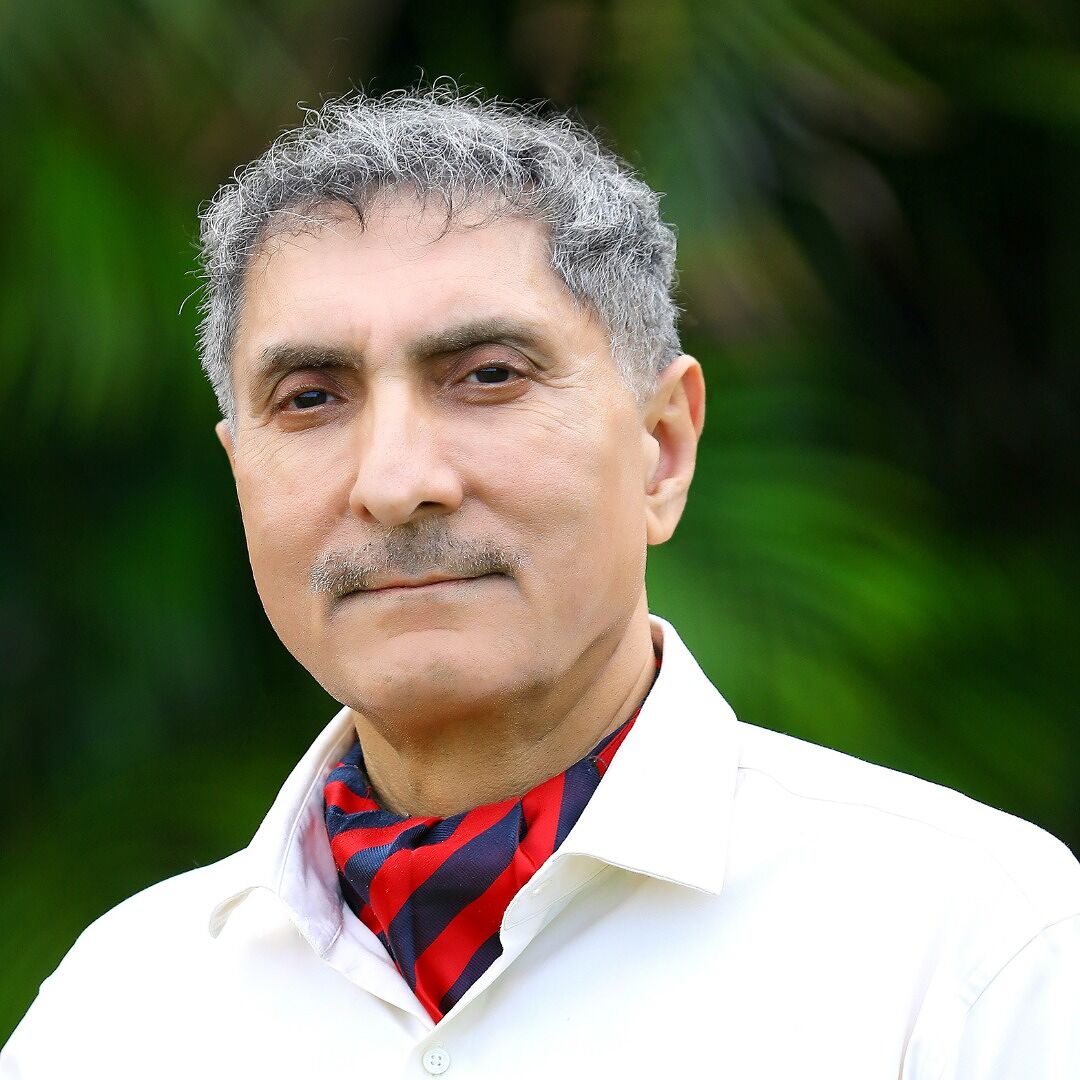
Parneet Sachdev, IR
_The Chairman of Real Estate Regulatory Authority and a leading author._
Good Evening Viewers! Catch up on the day's biggest stories with The Savera Times Evening Bulletin. Get the...

Congress leaders continued their protest outside the Jaipur Police Commissionerate on Tuesday, demanding the registration of a zero...

On the auspicious occasion of Vijayadashami, Prime Minister Narendra Modi on Tuesday called on the countrymen to unite...

A historic milestone was achieved on Tuesday in the expansion of Chhattisgarh's rail networkA historic milestone was achieved...

Model Shraddha Dubey, one of the main accused in the death of Lucknow businessman Shiv Sharma, has been...

Rashtriya Swayamsevak Sangh (RSS) chief Mohan Bhagwat on Tuesday called for strengthening national unity, social harmony, indigenous practices...
Aries: The day will be auspicious...