Last Updated: October 9, 2026
Last Updated: October 9, 2026





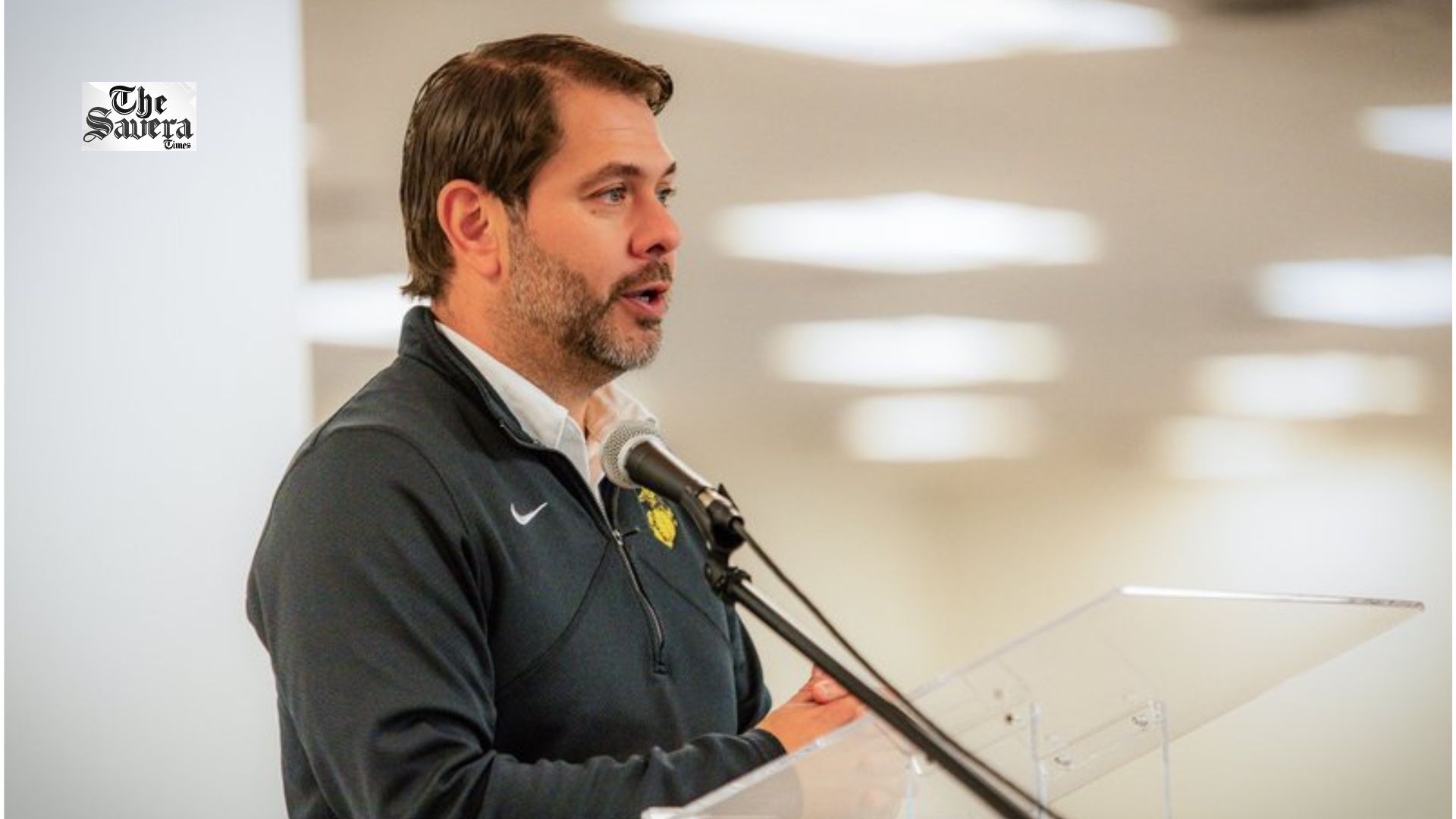
Washington: Two US senators have warned that China could gain a strategic advantage in shaping global standards for 6G wireless networks and satellite communications unless the Trump administration moves quickly to appoint a leader for the American delegation to a major international telecommunications conference scheduled for 2027.
Democratic Senator Ruben Gallego of Arizona and Republican Senator Jim Banks of Indiana have urged US Secretary of State Marco Rubio to appoint the head of the American delegation before November 30, when regional negotiations are due to begin in Bogotá, Colombia.
In a bipartisan letter dated September 29, the senators said the 2027 World Radiocommunication Conference (WRC-27) would play an important role in determining international rules for radio spectrum used by next-generation wireless networks and satellite communications.
The conference is scheduled to take place in Shanghai in October and November 2027, bringing together the United States and 193 other member states.
Senators Raise Concerns Over China’s Influence on 6G Standards
The lawmakers warned that China could use its position as host to influence negotiations in favour of its domestic technology companies, including Huawei.
They argued that Beijing’s influence over spectrum allocation and telecommunications standards could have long-term implications for global connectivity and the competitive position of US technology companies.
The senators stressed that Washington must coordinate its negotiating positions with allies and partners well before the conference to counter proposals they believe could favour Chinese interests.
They also pointed to difficulties during preparations for the 2023 World Radiocommunication Conference, when the head of the US delegation was replaced at short notice. According to the lawmakers, the change cost Washington valuable time in building relationships and securing support from regional partners.
They cautioned that the United States could face similar challenges at WRC-27 if the delegation leader was not appointed early enough.
6G Development and Satellite Communications at Stake
The senators said decisions on 6G were particularly important because the technical standards for the next generation of wireless communications are still being developed.
They warned that proposals supported by Huawei could influence future standards before the United States and its partners establish coordinated alternatives.
The letter also highlighted the growing number of non-geostationary satellite constellations, which has increased the need for international coordination over radio spectrum.
Such decisions affect how countries manage frequencies for mobile networks, satellite services and other wireless communications systems.
US Urged to Strengthen International Partnerships
The senators acknowledged that the Trump administration had already taken steps to prepare American positions for the conference.
The National Telecommunications and Information Administration (NTIA) and the Federal Communications Commission (FCC) have submitted US proposals to the Inter-American Telecommunication Commission (CITEL).
Washington plans to submit its remaining positions at the next meeting of CITEL’s Permanent Consultative Committee II, scheduled to begin on November 30 in Bogotá.
Gallego and Banks urged the administration to appoint the delegation leader before the meeting so the official could help develop the positions the United States would present at the international conference.
They also sought details of Washington’s plans to work with international partners to develop trusted telecommunications supply chains, particularly by providing countries in the Global South with alternatives to Huawei and other Chinese companies.
The senators requested a written response or briefing by October 23, along with a closed-door briefing by spring 2027 on the US strategy to counter Chinese influence at WRC-27.
The World Radiocommunication Conference is organised by the International Telecommunication Union, a specialised agency of the United Nations responsible for coordinating international telecommunications. Its decisions help determine how radio frequencies are allocated for mobile networks, satellites and other wireless services worldwide.
India and Liberia have condemned attacks on commercial ships and seafarers in the Gulf and Black Sea, calling...

The Trump administration has suspended eight major technology companies, including Infosys, TCS, Wipro, HCL Technologies and Microsoft, from...
Israel will honour Indian pilot Smit Machchhar with its Presidential Award for Civilian Heroism following his reported role...

US President Donald Trump has honoured Microsoft CEO Satya Nadella, Elon Musk and four other technology leaders with...
The Pakistan security establishment has issued an urgent directive recalling retired army personnel for re-enlistment to combat severe...
India on Thursday condemned the attacks targeting Abha International Airport and King Khalid International Airport in Riyadh over...
Aries: The day will be auspicious...